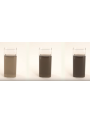
Adding Color to Alcohol-Based Perfume: Stability Considerations
Question
I would like to add color to an alcohol-based perfume. Is it possible to use food coloring, and what are the considerations regarding stability and appearance?
Answer
Using Color in Alcohol-Based Perfume
It is possible to add color to alcohol-based perfumes, but careful consideration is needed to ensure stability and appearance.
Using Food Coloring
- You can attempt to use food coloring, but stability testing is mandatory.
- Food colorings are typically water-soluble, which may lead to issues like fading, color change, or precipitation in a high-alcohol base over time or when exposed to light.
- Test your colored perfume by storing it under various conditions (e.g., exposed to light, in a dark place) for an extended period (e.g., 30 days or more) to observe any changes in color or clarity.
Other Colorant Options
- Look for colorants specifically designed for use in alcohol-based cosmetics or fragrances. These are formulated to be stable in such systems.
- Some cosmetic colorants are pigments, which disperse rather than dissolve. While they might offer better stability in alcohol, ensure they are finely milled and suitable for liquid dispersion to avoid sedimentation.
- Always check the solubility and recommended usage for any colorant you consider using.
Regardless of the type of colorant chosen, rigorous stability testing is the most critical step to ensure the quality and appearance of your final perfume product.
Updated Review: May 2026
This section was added after reviewing the original answer against current product availability and formulation knowledge at the stated point in time.
Update as of 2026-05-31
The earlier guidance is still valid: color can be added to an alcohol-based perfume only after stability testing. Based on the current catalog, for a clear high-alcohol perfume, start by testing cosmetic solvent/oil-soluble dyes that list ethanol or solvent solubility, such as Solvent Red 48 (D&C Red 27, Oil/Solvent Soluble) or Solvent Yellow 16 (CI 12700). Use very low levels, add gradually, and confirm that the color remains clear with no fading, precipitation, or fragrance/base interaction.
Water-soluble colors, EasyWash™/HiStain™ colors, natural color powders, and food colors are not the first choice for a mostly alcohol perfume unless the actual formula contains enough compatible water phase and passes testing. If using water-soluble dyes, note that light/UV exposure can still cause fading, so test under light and dark storage for at least 30 days or longer. Always follow the permitted cosmetic use area and maximum usage limits for the chosen colorant; some solvent dyes are for external cosmetic use only and not for oral products, food, or medicines.
Related Products Mentioned

Fluorescent Yellow Pigment

Fluorescent Orange Pigment

Fluorescent Pink Pigment

Yellow Tartrazine (CI19140) EasyWash™

FD&C Yellow No.6 (CI15985) EasyWash™

Black Color EasyWash™

D&C Yellow No.7 (CI 10316) EasyWash™

Caramel Color EasyWash™

FD&C Red No.4 (CI 14700) EasyWash™
Acid Red 52 (Direct Dyes)
Acid Orange 7 (Direct Dyes)

Acid Yellow 3 (Direct Dyes)

Black Color HiStain™

Caramel Color HiStain™