Allantoin: Solubility, Usage, and Comparison for Sensitive Skin
Question
I have questions about Allantoin: its solubility at 0.5% and whether Natural Betaine is needed and in what amount, its recommended maximum usage rate (0.2%) and effectiveness for irritation reduction in refrigerated cream, its ability to reduce allergies versus just irritation, and how it compares to Dipotassium Glycyrrhizate for sensitive skin.
Answer
Allantoin and Related Ingredients
Here are the answers to your questions based on the product information:
1. Allantoin 0.5% Solubility with Natural Betaine
Yes, it is recommended to use Natural Betaine to help increase the solubility of Allantoin in water, which can improve efficiency. The solubility of Allantoin in water is limited to about 0.5% at 25°C. While Natural Betaine helps with dissolution, the exact amount needed to dissolve 0.5% Allantoin is not specified. Natural Betaine itself is typically used at a rate of 2-10% in formulations for its moisturizing and anti-irritant properties, and its ability to help dissolve ingredients like Allantoin.
2. Allantoin Usage Rate in Refrigerated Cream and Effectiveness
Based on the product information, if you store the finished product in a cool place at 6-8°C, the recommended maximum usage rate for Allantoin in the water phase is 0.2% due to its lower solubility at colder temperatures.
A concentration of 0.2% Allantoin is within the general recommended usage range of 0.1-2.0% for reducing irritation. While 0.5% is often recommended for general use at room temperature, 0.2% can still be effective for providing anti-irritant benefits, especially considering the solubility limit in refrigerated formulas.
3. Allantoin for Reducing Allergies vs. Irritation
Allantoin is described as helping to "Reduce irritation" and "Resists various skin allergies (soothing and anti-irritating)". This indicates that Allantoin can help reduce both general skin irritation and provide resistance against various skin allergies, offering soothing and anti-irritating effects.
4. Allantoin vs. Dipotassium Glycyrrhizate for Sensitive Skin
Both Allantoin and Dipotassium Glycyrrhizate are suitable for sensitive skin due to their soothing and anti-irritant properties.
- Allantoin helps reduce irritation, resists various skin allergies, and supports the creation of new tissue.
- Dipotassium Glycyrrhizate is a licorice extract known for reducing inflammation, reducing allergies, and strengthening the skin. It is widely accepted for reducing skin irritation.
Both ingredients are effective for calming sensitive skin. The choice between them, or using them together, might depend on the specific needs of the formulation and desired benefits beyond irritation reduction.
Related Products Mentioned
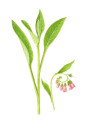
Allantoin