Anti-Acne Cleansing Gel Formula for Combination Skin, Easy Rinsing, HEC Dissolution and pH Adjustment

Asked by: kobmrang On: May 29, 2026 Product Type: Cosmetics Answered

Question

I would like advice on an anti-acne cleansing gel formula for combination skin. I want a cleansing gel that rinses off easily and does not leave a slippery feeling on the skin.

Ingredients:

Ingredient %
Lauryl Glucoside 5%
Cocamidopropyl Betaine 5%
Allantoin 0.3%
EDTA 0.2%
Safe-B3™ (Vitamin B3, Niacinamide) 5%
Liquid Salicylic Acid (40% Active Salicylic, Cationic For Wash-Off) 2.5%
Natural Betaine (Crystal) 2%
Sodium Lactate (60% Liquid, Natural) 2%
Polysorbate 20 (Tween 20) 2%
Fragrance 1%
Phenoxyethanol (Extra Pure) 1%
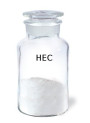
Hydroxyethyl Cellulose (HEC) (2000mPa.s) (Super Clear Gel) 1.5%
DI Water Remaining amount to 100%

Adjust pH with AHA.

Is this formula complete according to what I want?

For dissolving Hydroxyethyl Cellulose (HEC) (2000mPa.s) (Super Clear Gel), if I do not adjust the pH to 8-9, can I instead dissolve it with 70°C water? If it must be dissolved by adjusting pH, can I use baking soda dissolved in water to adjust it? What ratio should be used?

Please also help suggest the mixing steps.

Answer

Overall, this formula can be developed into a wash-off anti-acne cleansing gel for combination skin, but for the exact feel you want — easy rinse, no slippery/film feel — the main items to optimize are HEC, Sodium Lactate, total humectants, fragrance solubilization, and final pH.

Formula review

Item Assessment
Cleansing system Lauryl Glucoside 5% + Cocamidopropyl Betaine 5% is a mild cleanser system. It should be gentle, but cleansing/foam will not be very strong. If the formula feels slippery, adjust thickener/humectants first before increasing surfactant.
Anti-acne active Liquid Salicylic Acid 2.5% gives about 1% active salicylic acid, matching the catalog recommendation for mild acne in wash-off use. It is compatible with HEC/HPMC/non-ionic thickeners.
Niacinamide Safe-B3™ 5% is suitable and within catalog guidance. Keep final pH about 5.0–5.5 for good compatibility.
Slippery after-feel HEC 1.5% + Sodium Lactate 2% + Natural Betaine 2% + Niacinamide 5% may leave a hydrated/film-like slippery feel after rinsing. Trial: reduce HEC to 0.8–1.2% first, or reduce Sodium Lactate 60% to 0–1% and compare rinse feel. Keep Natural Betaine 2% if you want irritation reduction from salicylic acid.
Fragrance/solubilizer Fragrance 1% + Polysorbate 20 2% must be tested with the actual fragrance. A 2:1 solubilizer:fragrance ratio may or may not be enough; watch for cloudiness, separation, odor change.
Preservative Phenoxyethanol 1% is within the catalog maximum and compatible with this pH range, but Phenoxyethanol alone should not be assumed to fully preserve every formula. For sale, do a preservative challenge test.

Recommended final pH: about 5.0–5.5. Do not make the formula very low pH to emphasize AHA exfoliation, because this is a wash-off cleanser and already contains 5% niacinamide.

HEC dissolution / pH 8–9 / baking soda

  • HEC does not always require adjusting the whole formula to pH 8–9. For Hydroxyethyl Cellulose (HEC) (2000mPa.s) (Super Clear Gel), the catalog also supports using about 70°C water with continuous mixing.
  • The key is to disperse and hydrate HEC correctly. If HEC is poured too quickly, the outside wets first and forms lumps while the inside remains dry; it will look “undissolved” even with heat.
  • Baking soda is not recommended as the main pH-up agent for this formula. When you later adjust down with AHA/lactic acid, sodium bicarbonate can release CO₂, create bubbles/air, and make pH or viscosity less stable. Therefore, do not use a fixed % of baking soda. If pH must be raised, use a controllable alkaline solution and adjust by measurement step-by-step.

Suggested mixing procedure

  1. Phase A – water gel base
    Add about 65–75% DI water into the main vessel. Start gentle mixing, then add Disodium EDTA 0.2% until fully dissolved.

  2. Hydrate HEC
    Heat Phase A to about 70°C. Slowly sprinkle HEC onto the water surface little by little while mixing. Do not dump it in one portion. Continue mixing until fully dispersed and hydrated into a smooth gel.

  3. Dissolve Allantoin
    While still warm, add Allantoin 0.3% and mix until no visible particles remain. This helps reduce later crystallization risk.

  4. Cool down
    Cool to below about 45°C before adding heat-sensitive/less heat-needed ingredients.

  5. Add water-soluble actives/humectants
    Add Safe-B3™ 5%, Natural Betaine 2%, and Sodium Lactate 60% 2%. Mix until uniform.

  6. Fragrance premix
    Premix fragrance 1% + Polysorbate 20 2% in a separate beaker until clear or uniform, then add to the main batch. If the batch becomes cloudy or separates, reduce fragrance or adjust solubilization based on testing.

  7. Add surfactants slowly
    Add Lauryl Glucoside 5% and Cocamidopropyl Betaine 5% slowly with low–medium mixing to avoid foam. If Lauryl Glucoside is too viscous, warm it separately to about 50–60°C before adding.

  8. Add salicylic acid and preservative
    Add Liquid Salicylic Acid 2.5% and mix well. Add Phenoxyethanol 1% when the batch is below 60°C.

  9. Make up to 100% and adjust pH
    Add remaining DI water to 100%. Measure pH directly without dilution. Adjust down with Lactic Acid (AHA) 90% or Citric Acid solution little by little to about pH 5.0–5.5. After each addition, mix 10–15 minutes and re-measure.

  10. Rest and test
    Let bubbles settle for 24 hours, then check pH, viscosity, clarity/cloudiness, odor, separation, and any precipitation. For commercial production, perform stability testing and preservative challenge testing.

Most practical starting adjustment: keep the formula concept, but trial HEC 0.8–1.2% first. If it still feels slippery, reduce Sodium Lactate 60% to 0–1% in the next trial and compare rinse-off feel.

Relevant References

Sources supporting the key technical claims in this answer

Handbook of Cosmetic Science and Technology
Barel, Paye, Maibach CRC Press 2014

General support for cleanser formulation, surfactant mildness, rheology modifiers, preservative testing, and stability considerations.

Barel, Paye, Maibach. Handbook of Cosmetic Science and Technology, 4th ed. CRC Press, 2014.
Cosmetic Dermatology: Products and Procedures
Draelos ZD Wiley-Blackwell 2016

General support for facial cleanser, acne-prone skin, niacinamide, salicylic acid, and irritation considerations.

Draelos ZD. Cosmetic Dermatology: Products and Procedures, 2nd ed. Wiley-Blackwell, 2016.

The effect of 2% niacinamide on facial sebum production
Draelos ZD, Matsubara A, Smiles K Journal of Cosmetic and Laser Therapy 2006

Supports niacinamide relevance for oily/combination and acne-prone skin positioning.

Draelos ZD, Matsubara A, Smiles K. The effect of 2% niacinamide on facial sebum production. Journal of Cosmetic and Laser Therapy. 2006;8(2):96-101.

DOI: 10.1080/14764170600717704
Salicylic acid and the skin
Kligman AM, Kligman LH Journal of the American Academy of Dermatology 1998

Supports salicylic acid keratolytic/acne-related rationale, with limitation that wash-off contact time and product form affect performance.

Kligman AM, Kligman LH. Salicylic acid and the skin. Journal of the American Academy of Dermatology. 1998;38(4):S1-S4.

DOI: 10.1016/S0190-9622(98)70431-2