Basic Soft Cleansing Foam Formula
Question
Could you please provide a recommended starting formula for a cleansing foam? I am looking to create a facial cleansing foam with a soft foam texture. I have attached a list of ingredients from a product whose texture I like as a guideline. I only need a basic starting formula and will adjust the active ingredients myself. The ingredient list from the preferred example is as follows:
- Water
- Myristic Acid
- Glycerin
- Palmitic Acid
- Stearic Acid
- Glycol Distearate
- Cocamidopropyl Betaine
- Potassium Hydroxide
- Lauric Acid
- Sodium Laureth Sulfate
- Galactomyces Ferment Filtrate
- Propylene Glycol
- Sodium PCA
- Butylene Glycol
- Fragrance
- Hydrolyzed Honey
- Ascorbyl Tetraisopalmitate
- DMDM Hydantoin
- Glycoproteins
- PEG-90M
- Sodium PEG-7 Olive Oil Carboxylate
- Chenopodium Quinoa Seed Extract
- Daucus Carota Sativa Carrot Root Extract
- Glycine Max Soybean Seed Extract
- Oryza Sativa Rice Extract
- Panax Ginseng Root Extract
- EDTA
- Calendula Officinalis Flower Extract
- Oenothera Biennis Evening Primrose Flower Extract
- Taraxacum Officinale Dandelion Extract
- ThymusQuinquecostatus Extract
- Tropaeolum Majus Flower Extract
Thank you very much.
Answer
Basic Cleansing Foam Starting Formula
Here is a basic starting formula for a soft cleansing foam, based on the types of ingredients you provided. You can adjust the percentages and add your desired active ingredients to this base.
Ingredients:
Water Phase:
- Water: 40-60%
- Glycerin: 5-10%
- Propylene Glycol: 2-5%
- Butylene Glycol: 2-5%
- Disodium EDTA: 0.1-0.2%
Fatty Acid Phase:
- Myristic Acid: 10-15%
- Palmitic Acid: 3-8%
- Stearic Acid: 3-8%
- Lauric Acid: 5-10%
- Glycol Distearate: 1-3%
Neutralization:
- Potassium Hydroxide (adjust to neutralize fatty acids and achieve desired pH, typically 1-3% of a 20-30% solution)
Surfactant Phase:
- Cocamidopropyl Betaine: 10-20%
- Sodium Laureth Sulfate (or similar mild anionic surfactant): 5-15%
- Sodium PEG-7 Olive Oil Carboxylate: 1-5%
Texture/Feel Enhancer:
- PEG-45M (or similar PEG): 0.1-0.5%
Other (add as desired):
- Fragrance: 0.1-0.5%
- Preservative: 0.5-1.5%
- Active Ingredients (Extracts, etc.): As per supplier recommendations
Instructions:
- Combine Water, Glycerin, Propylene Glycol, Butylene Glycol, and Disodium EDTA in a beaker and heat to 70-75°C.
- In a separate beaker, combine Myristic Acid, Palmitic Acid, Stearic Acid, Lauric Acid, and Glycol Distearate. Heat to 70-75°C until fully melted.
- Slowly add the melted fatty acid phase to the heated water phase while stirring constantly.
- In a separate container, prepare the Potassium Hydroxide solution by dissolving Potassium Hydroxide in a small amount of water. Slowly add this solution to the mixture from step 3 while stirring. Continue stirring until the mixture thickens and saponification occurs.
- Cool the mixture to below 40°C.
- Add Cocamidopropyl Betaine, Sodium Laureth Sulfate, Sodium PEG-7 Olive Oil Carboxylate, and PEG-45M. Stir gently to avoid excessive foaming.
- Add Fragrance, Preservative, and any other desired active ingredients. Stir until homogenous.
- Adjust pH if necessary (typically to 5.5-6.5 for facial cleansers).
This formula provides a creamy base that generates soft foam. Remember to perform stability testing on your final formulation with added actives.
Updated Review: May 2026
This section was added after reviewing the original answer against current product availability and formulation knowledge at the stated point in time.
Update 2026-05-24 — pH correction for this type of formula: The pH 5.5-6.5 guidance in the original answer should be understood as applying to a non-soap/syndet facial cleanser, not to a true fatty-acid/KOH cream foam. If the formula uses Myristic Acid, Palmitic Acid, Stearic Acid and/or Lauric Acid neutralized with Potassium Hydroxide, it normally needs to remain alkaline, commonly around pH 8.5-10, so the fatty acids stay in soap form and the cream-foam structure remains stable.
Do not simply acidify this soap-based system down to pH 5.5-6.5. Doing so can convert part of the soap back to free fatty acids, which may cause abnormal thickening, graininess, precipitation, lower foam, weaker cleansing or instability. If the target is a gentler skin-friendly cleanser at pH 5.5-6.5, redesign the surfactant system as a non-soap/syndet cleanser instead, for example using suitable amino-acid surfactants, taurate, sulfosuccinate, betaine/amphoteric surfactants or a blended syndet base such as AminoWash™, Creamy Foamer™, Gluta-Clean™, SulFoam™, Cocamidopropyl Betaine, Sodium Laureth-6 Carboxylate, Sodium Lauroyl Oat Amino Acids, Laura-Foam-50™, Sulfate Free Shampoo Base or Sulfate-Free Foaming Base.
For either route, select actives, extracts, fragrance and preservative according to the final pH and heat tolerance; for example, DMDM Hydantoin should be checked against its usable pH range. Run stability, viscosity, foam, heat/freeze-thaw and preservative challenge testing before production.
Related Products Mentioned
Propylene Glycol (USP)
Glycerin (USP/Food Grade)
Cocamidopropyl Betaine
Disodium EDTA
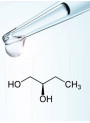
Butylene Glycol
Sodium Hydroxide
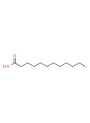
Lauric Acid (99%)
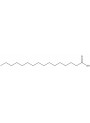
Palmitic Acid (98%, FEMA-2832)
Olive Oil Water (Olive Oil PEG-7 Esters)
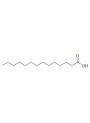
Myristic Acid (FEMA-2764)
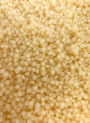
Glyceryl Distearate
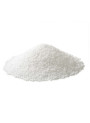
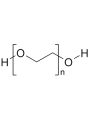
PEG-45M (e.q. WSR N-60K)
Sodium PCA 50%
Gluta-Clean™ (Disodium Cocoyl Glutamate)
DMDM Hydantoin

Sodium Lauroyl Oat Amino Acids