Benefits and Forms of Vitamin C for Skin
Question
What are the benefits of Vitamin C for skin, and what are the different forms available, considering their properties such as stability, solubility, and potency for use in cosmetic formulations? Specifically, how do L-Ascorbic Acid (including its stability challenges and solutions like Vitamin C E Ferulic), Ethyl Ascorbic Acid, Ascorbyl Glucoside (AA-2G), Sodium Ascorbyl Phosphate (SAP), and Vitamin C Ester (Ascorbyl Palmitate) differ in their application and characteristics?
Answer
Vitamin C is highly beneficial for the skin and is a popular ingredient in cosmetic formulations.
Here are some of the key benefits of using Vitamin C on the skin:
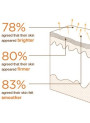
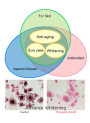
- Brightening and Reducing Dark Spots: Vitamin C helps to inhibit melanin production, which can reduce hyperpigmentation, dark spots, and uneven skin tone, leading to a brighter complexion.
- Anti-Aging: It plays a crucial role in collagen synthesis, helping to improve skin elasticity and firmness, thus reducing the appearance of fine lines and wrinkles.
- Antioxidant Protection: As a powerful antioxidant, Vitamin C helps to neutralize free radicals caused by environmental stressors like UV radiation and pollution. This protection helps prevent premature aging and skin damage.
- Anti-inflammatory: Some forms of Vitamin C can also help to reduce skin inflammation and redness.
There are various forms of Vitamin C used in skincare, each with different properties regarding stability, solubility, and potency.
- L-Ascorbic Acid: This is the purest and most biologically active form of Vitamin C. It is highly effective but can be unstable, especially when dissolved in water. Products like our Vitamin C (L-ascorbic acid) (Ultra-Fine), Vitamin C (L-ascorbic acid) (Fine), and Vitamin C (L-ascorbic acid) (Standard) are examples. To improve stability, it is often formulated at a low pH or combined with other antioxidants like in our Vitamin C E Ferulic.
- Stabilized Derivatives: More stable derivatives are often used to overcome the stability challenges of L-Ascorbic Acid. Examples include:
- Ethyl Ascorbic Acid: A highly stable, water-soluble derivative that effectively brightens and offers anti-aging benefits.
- Ascorbyl Glucoside (AA-2G): A stable, water-soluble form that is converted to L-Ascorbic Acid in the skin, providing benefits with potentially less irritation.
- Sodium Ascorbyl Phosphate (SAP): A very stable, water-soluble form often used for its brightening and anti-acne properties.
- Vitamin C Ester (Ascorbyl Palmitate): An oil-soluble form primarily used as an antioxidant in oil-based formulas.
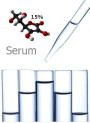
We also offer ready-to-use serums like our Stabilized Vitamin C (Natural-C Glycol™) Serum and 16% Vitamin C Brightening Serum (Compare To Vichy Liftactiv), which provide stable and effective forms of Vitamin C for easy incorporation into your routine or formulations.
You can find links to all mentioned products below this answer.
Related Products Mentioned
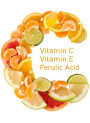
Vitamin C E Ferulic
Vitamin C (L-ascorbic acid) (Ultra-Fine)
Vitamin C (L-ascorbic acid) (Fine)