Brightening Serum Formula Review
Question
Could you please review my brightening serum formula below and let me know if I should add or remove any items. Thanks so much
| Ingredient / Phase | Amount |
|---|---|
| Distilled water | 54.55% |
| Propanediol | 5% |
| Butylene glycol | 4% |
| Glycerin or UltraMild Aquaporin™ Glyceryl Glucoside | 3% |
| Niacinamide | 4% |
| Tranexamic Acid | 3% |
| Acetyl-D Glucosamine / GlucoBright™ | 2% |
| Dipotassium Glycyrrhizate | 0.5% |
| Panthenol B5 | 2% |
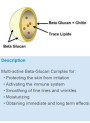
| Beta Glucan | 0.5% |
| Ectoine | 0.5% |
| Allantoin | 0.3% |
| Madecassoside | 0.1% |
| Asiaticoside | 0.1% |
| Alpha Arbutin 98% | 1.5% |
| Diglucosyl Gallic Acid / GalaWhite™ | 1% |
| Phytic Acid | 0.2% |
| Sodium Phytate or Sodium Gluconate | 0.1% |
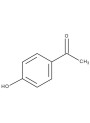
| 4-Hydroxyacetophenone | 0.3% |
Oil / Emollient Phase
| Ingredient | Amount |
|---|---|
| Squalane | 3% |
| Meadowfoam Seed Oil | 2% |
| Prickly Pear Seed Oil | 1% |
| Rosehip Oil | 1% |
| Vitamin F / Linoleic Acid | 0.5% |
| Bisabolol | 0.3% |
| Licochalcone A 20% | 0.5% |
| Tetrahexyldecyl Ascorbate or THD Ascorbate | 1% |
| Acetyl Zingerone | 0.2% |
| Gamma-Oryzanol | 0.2% |
Solubilizer / Emulsifier / Texture
| Ingredient | Amount |
|---|---|
| Symbio®Solv Clear Plus MB: Caprylyl/Capryl Glucoside; Aqua; Sodium Cocoyl Glutamate; Glyceryl Caprylate; Citric Acid; Polyglyceryl-6 Oleate; Sodium Surfactin | 3% |
| Polyglyceryl-10 Caprylate/Caprate | 1% |
| Aristoflex AVC | 0.7% |
| Sepimax Zen or Polyacrylate Crosspolymer-6 | 0.4% |
Preservative System
| Ingredient | Amount |
|---|---|
| Phenoxyethanol | 0.8% |
| Ethylhexylglycerin | 0.3% |
| Caprylyl Glycol | 0.5% |
pH Adjusters
| Ingredient | Amount |
|---|---|
| Citric acid solution | use as needed to lower pH |
Answer
Your formula is thoughtful, but it is too crowded for a first stability batch. The listed percentages add to 99.05% before citric acid q.s., so there is only about 0.95% left for pH adjustment and/or water adjustment.
Main recommendation: simplify before adding anything.
| Area | Keep / adjust | Why |
|---|---|---|
| Niacinamide | keep 4% | Within MySkinRecipes niacinamide use range and compatible with a pH target around 5-6. |
| Tranexamic Acid | keep 3% only if this is cosmetic-manufacturer use | MySkinRecipes Tranexamic Acid lists 3% as the cosmetic maximum/best level; do not exceed it, and avoid eye/lip area. |
| Acetyl Glucosamine / GlucoBright | keep 2%, or increase later to 3-4% only after stability is proven | Good partner for niacinamide; catalog range supports 1-8%, but the current formula already has many brighteners. |
| Alpha Arbutin | keep 1-1.5% | Keep final pH about 5.2-5.8 and add cool/final phase. Catalog guidance warns against high pH and heat. |
| GalaWhite / gallic-acid brightener | keep 0.5-1% | 1% is within catalog guidance, but together with arbutin + TXA + niacinamide it increases complexity. |
| Centella actives | simplify | If using separate madecassoside/asiaticoside powders, 0.1% each is reasonable. If using ActiveRelease Centella, the active content is diluted, so the formula math/function is different. Choose one Centella approach. |
| Allantoin | keep 0.3% | Within range and below the common room-temperature solubility concern level. |
| Humectants | choose glycerin or UltraMild Aquaporin at 3% | Both are fine, but using one keeps skin feel cleaner. UltraMild Aquaporin catalog guidance fits 3%. |
| Oil phase | reduce to about 3-5% for a brightening serum | Current oil phase is about 9.7%, making this more like a light emulsion. Rosehip/prickly pear/Vitamin F can also add oxidation risk. |
| Solubilizer/emulsifier | do a stability test; consider reducing surfactant-style solubilizers if the oil phase is reduced | SymbioSolv + Polyglyceryl-10 Caprylate/Caprate may feel foamy/tacky at this level. Polyglyceryl-10 Caprylate/Caprate catalog use range supports 1%, but the whole system must be tested. |
| Thickener | use one main polymer first | Aristoflex AVC 0.7% can support oil-in-water gel/emulsion texture. Sepimax Zen is more electrolyte/pH tolerant but its catalog range starts at 0.5%; 0.4% may be low. Using both may become heavy/stringy. |
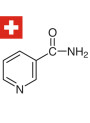
| Chelator | choose one main chelator system | Phytic Acid 0.2% already gives chelating support. Sodium Phytate 0.1% is also valid. Sodium Gluconate is more buffer/pH-support style. You probably do not need all three. |
| Preservative boosters | test, do not assume | Phenoxyethanol/Ethylhexylglycerin/Caprylyl Glycol plus 4-Hydroxyacetophenone is strong, but the high active + glycol + oil + botanical load still needs microbial challenge and stability testing. |
Suggested simpler version for pilot testing
- Water q.s. to 100%
- Propanediol 3-5%
- Butylene Glycol 2-4%
- Glycerin or UltraMild Aquaporin 2-3%
- Niacinamide 4%
- Tranexamic Acid 3%
- Acetyl Glucosamine 2-3%
- Alpha Arbutin 1-1.5%
- GalaWhite 0.5-1%
- Panthenol 1-2%
- Allantoin 0.2-0.3%
- One Centella active system
- Reduce oil phase to 3-5%, or make this a proper emulsion instead of a clear serum
- One primary polymer system, adjusted after viscosity/stability testing
- One chelator system
- Preservative system confirmed by challenge test
- Final pH target: about 5.2-5.8
Do not add more actives yet. First make a 100-200 g pilot batch, check pH immediately and after 24 hours, then run 4-8 week stability checks for color shift, odor, viscosity loss, separation, precipitation, and pH drift. Add heat-sensitive actives such as alpha arbutin, GalaWhite, Centella actives, and asiaticoside in the cool-down/final phase according to each raw material's handling limits.
Related Products Mentioned
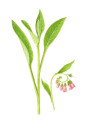
Allantoin
GlucoBright™ (Acetyl Glucosamine)

Tranexamic Acid (Trans-White™)
Phytic Acid (50% Liquid, Natural)
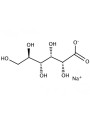
Sodium Gluconate
Aristoflex AVC
Sodium Phytate
Sepimax Zen
Asiaticoside (90%, Powder)
GalaWhite™ (Fermented Gallic Acid)
Polyglyceryl-10 Caprylate/Caprate
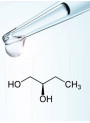
Butylene Glycol
Glycerin (USP/Food Grade)
Ectoine (Ectoin, from Bio-fermentation)
Squalane (Olive)
Meadowfoam Seed Oil (Cold-Pressed)
Rosehip Oil (Virgin, Fresh)

Vitamin F Forte (Linoleic acid 78%)
Phenoxyethanol (Extra Pure)
Ethylhexylglycerin
Caprylyl Glycol (1,2-Octanediol)