Clear Serum Formulation: Ingredient Compatibility, Stability, and Texture
Question
I am formulating a clear, lightweight serum with several active ingredients including Phenylethyl Resorcinol, Shea Butter Water, Niacinamide, Acetyl Glucosamine, 4D Hyaluronic Acid, etc. I would like to know about the compatibility and dissolution of Phenylethyl Resorcinol and Shea Butter Water in this formula, whether ActiveProtec UV is necessary when using a dark bottle, and suggestions for improving the formula's texture and overall quality.
Answer
Serum Formulation Feedback
Thank you for sharing your serum formulation! It includes a good combination of active ingredients targeting brightening and hydration. Let's go through your questions and the formula composition.
Ingredient Compatibility and Dissolution
You asked about the compatibility of the ingredients, specifically if Phenylethyl Resorcinol (1%) and Shea Butter Water (5%) will dissolve together in this formula.
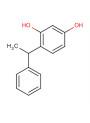
- Phenylethyl Resorcinol is primarily oil-soluble. Its product description recommends mixing it into formulas that contain an oil phase or adding it at the final step into a cream or lotion. For gel formulas, it explicitly states that the formula must include oil to help dissolve it.
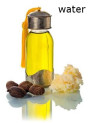
- Shea Butter Water is a water-soluble oil, meaning it can disperse in water, but it is derived from oil.
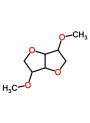
- Dimethyl Isosorbide (DMI), which you included at 3%, is a solvent that can help dissolve various ingredients, including those that are difficult to dissolve in water alone. The product description for DMI mentions that it can help dissolve Phenylethyl Resorcinol and enhance its penetration.
Given that your formula is a water-based gel (using Pro Polymer™) and includes Shea Butter Water and DMI, dissolving 1% Phenylethyl Resorcinol might be possible. However, achieving a perfectly clear and stable serum requires careful mixing and testing. It's not guaranteed to dissolve completely or remain stable in this specific base without an adequate oil phase or further formulation adjustments. You should perform a small test batch to check for clarity and stability over time.
Necessity of ActiveProtec™ UV in a Dark Bottle
You are using both ActiveProtec™ UV (1%) and ActiveProtec™ OX (1%) and asked if ActiveProtec™ UV is necessary when stored in a dark brown bottle.
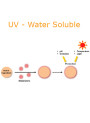
- ActiveProtec™ UV is a blend of UV filters and antioxidants. It protects formula ingredients from deterioration caused by UV light and oxidation.
- ActiveProtec™ OX is an antioxidant blend specifically recommended for protecting whitening ingredients (like those in the Resorcinol group, which includes Phenylethyl Resorcinol) from discoloration due to oxidation.
- A dark brown bottle provides significant protection against UV light, reducing the need for UV filters within the bottle to protect the formula from light exposure.
While the dark bottle lessens the need for the UV protection aspect of ActiveProtec™ UV, ActiveProtec™ UV also contains antioxidants. ActiveProtec™ OX is highly relevant to your formula as it specifically protects whitening agents from oxidation, which can occur regardless of light exposure. Keeping ActiveProtec™ OX is advisable for maintaining the stability and efficacy of your whitening ingredients.
ActiveProtec™ UV could potentially be omitted in a dark bottle if sufficient antioxidant protection is provided by ActiveProtec™ OX and other ingredients, but keeping it adds an extra layer of antioxidant benefit. It is not strictly necessary for UV protection of the formula itself when using an opaque bottle, but its antioxidant component can still be beneficial.
Suggestions for Improvement
Your formula is comprehensive, combining multiple actives for brightening and hydration. Here are a few points to consider for potential improvement:
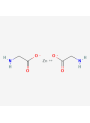
- Texture (Pro Polymer™): You are using Pro Polymer™ at 0.5%. The product description suggests 0.8% for a general gel texture and notes that the presence of electrolytes (like Disodium EDTA and Zinc Glycinate in your formula) might require increasing the concentration to 2-3% to achieve the desired viscosity. If you aim for a serum consistency, you might need to increase the Pro Polymer™ percentage and observe how it gels with your specific combination of ingredients.
- pH Level: The stability and efficacy of several key ingredients depend on the pH. Phenylethyl Resorcinol is most stable at pH 4-5. Safe-B3™ (Niacinamide) and GlucoBright™ (Acetyl Glucosamine) work best in the pH 4-7 range. ActiveProtec™ OX requires a pH above 4. You should check the final pH of your formula after mixing all ingredients and adjust it to be within the optimal range, ideally around pH 4-5, to ensure the best performance and stability of your active ingredients.
- Ingredient Synergy: The combination of Safe-B3™ and GlucoBright™ is known to be synergistic for whitening and improving skin hydration. Phenylethyl Resorcinol and Z-White™ target different aspects of the pigmentation process, which is a good approach for comprehensive brightening.
- Penetration and Feel: DMI at 3% should effectively enhance the penetration of the active ingredients. WaterSoft™ contributes to a pleasant, non-greasy feel in water-based formulas. 4D Hyaluronic Acid provides multi-depth hydration.
- Preservation: Mild Preserved Eco™ at 1% is a standard usage rate, but performing a challenge test is always recommended to confirm adequate preservation for your specific formula.
Overall, your formula has a strong foundation. Focusing on achieving the desired texture by potentially adjusting Pro Polymer™ and ensuring the pH is optimized for the stability and efficacy of your active ingredients will help you create a better product. Remember to perform stability testing on your final formulation.
I hope this detailed feedback is helpful for your serum formulation!
Related Products Mentioned
Safe-B3™ (Vitamin B3, Niacinamide)

Allantoin
GlucoBright™ (Acetyl Glucosamine)
Disodium EDTA
Pro Polymer™ (Gel Maker)
Shea Butter Water
Mild Preserved Eco™ (Preservative-Free)

WaterSoft™ (PEG/PPG-17/6 copolymer)
Odor-Kill™
Dimethyl Isosorbide (DMI)

4D Hyaluronic Acid
ActiveProtec™ UV
Z-White™