Cold-Process Massage Oil with Alcohol-Extracted Black Chicken Bone Extract

Asked by: visudhidham On: June 10, 2026 Product Type: Cosmetics Answered

Question

I want to make a massage oil from black chicken bone extract extracted with 95% alcohol. When mixed with coconut oil and heated gently, it did not dissolve into a uniform mixture. It still separated into layers, and the efficacy seemed reduced.

If I want to use a cold process to combine a massage oil base with the extract after evaporating the alcohol by leaving it open for several days, what substance should I use? And if I want to make the oil thicker, what substance should I use?

ðŸ”ŧFormula

Ingredient Amount
Black chicken bone extract in oil (extracted from 95% alcohol) 95 mL
White oil 125 mL
Borneol 7.5 g
Camphor 12.5 g
Menthol 16 g
Wintergreen oil 20 mL
Cajuput oil 12.5 mL
Eucalyptus oil 12.5 mL

After evaporating the alcohol, it has a watery texture and still has a slight alcohol smell.

For the final texture, either clear oil or cloudy oil is acceptable. I just do not want to use heat because after simmering the extract in coconut oil for hours, it still had an alcohol smell and I still did not get a complete herbal oil. The properties of the herb were also lost because of the heat, so I am trying to find another method that does not use heat.

Answer

The separation is not mainly because the oil base is wrong. The root cause is that your black chicken bone extract still behaves like a water / residual ethanol phase, so it will not truly dissolve into white oil (mineral oil) and the essential oils.

Key point

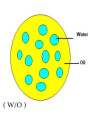
  • If the extract is still watery, the realistic target is dispersing it as very fine droplets in oil using a water-in-oil (W/O) emulsifier.
  • A clear true oil solution is difficult to achieve while using about 95 mL of extract that still contains water/alcohol.
  • Heating the extract in oil does not solve the incompatibility between water and oil, and it may still leave alcohol odor if residual ethanol remains.

Most suitable materials for your case

Materials not recommended as the main solution

  • PEG-40 Hydrogenated Castor Oil and Polysorbate 80 are higher-HLB solubilizer/surfactant types. They are more suitable for helping oils go into water, not for carrying a large water/alcohol phase into an oil massage base as the main system.

Cold process approach recommended

  1. Prepare the oil phase first: white oil + wintergreen oil + cajuput oil + eucalyptus oil.
  2. Dissolve menthol, camphor, and borneol into that oil phase as completely as possible before adding the extract.
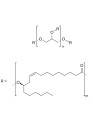
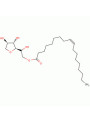
  3. Add the chosen W/O emulsifier into the oil phase.
  4. Then add the black chicken bone extract very slowly in a thin stream or in several small portions while mixing continuously.
  5. Continue mixing until the system looks uniform.
  6. Let it stand and check separation after 1 day, 7 days, and 14 days.

Recommended starting trials

If you want thicker oil

  • For a true no-heat process, do not use Oil Thickâ„Ē Transparent as the main thickener, because our product data states it must be dissolved into oil with heat until fully dissolved.
  • In a fully cold process, the better first step is to increase thickness by optimizing the W/O emulsion structure: reduce extract load if possible, add extract more slowly, and adjust emulsifier level within the product usage range.
  • If you can accept heating only the oil phase while keeping the extract unheated, Oil Thickâ„Ē Transparent can be tested at about 0.5–3% as a starting range, dissolved fully in the oil phase first, then cooled before incorporating the extract. However, the final product should still not be expected to become a fully clear oil if the extract remains aqueous.

Important practical notes

  • Do not pour the extract into the oil all at once.
  • If alcohol odor is still noticeable, the better fix is to reduce residual ethanol in the extract first before formulating.
  • Your formula contains relatively high levels of menthol, camphor, borneol, wintergreen oil, cajuput oil, and eucalyptus oil, so a small-batch safety and irritation check is strongly recommended before larger production.
  • Also check whether menthol, camphor, and borneol stay dissolved after storage, because they may recrystallize when the temperature drops.

If you want, we can help draft a 100 g pilot formula from your current composition using one of the W/O systems above.

Relevant References

Sources supporting the key technical claims in this answer

Emulsion Formation and Stability
Tadros, T. F. Wiley-VCH 2013

Supports the distinction between true dissolution and emulsion/dispersed systems, and the recommendation to use a W/O emulsifier for aqueous extract in oil.

Tadros, T. F. Emulsion Formation and Stability. Wiley-VCH, 2013. ISBN 978-3-527-32847-2.
Emulsions, Foams, and Suspensions: Fundamentals and Applications
Schramm, L. L. Wiley-VCH 2005

Supports practical emulsion-formation and stability guidance for oil-based systems containing dispersed aqueous phases.

Schramm, L. L. Emulsions, Foams, and Suspensions: Fundamentals and Applications. Wiley-VCH, 2005. ISBN 978-3-527-30743-2.

Surfactants Used in Food Industry: A Review
Kralova, I.; SjÃķblom, J. Journal of Dispersion Science and Technology 2009

Supports the surfactant/emulsifier selection principle and why different HLB systems behave differently in water-in-oil versus oil-in-water structures.

Kralova, I.; SjÃķblom, J. Surfactants Used in Food Industry: A Review. Journal of Dispersion Science and Technology. 2009;30(9):1363-1383. DOI: 10.1080/01932690902735561.

DOI: 10.1080/01932690902735561