Coloring Ethanol-Based Perfume: Solubility of CI Dyes and Alternatives
Question
I am developing an ethanol-based perfume and plan to use the following colorants:
CI 19140(Yellow)CI 17200(Red)CI 42090(Blue)
I have two main concerns regarding their suitability:
- Will these dyes achieve full dissolution in the high-proof ethanol base?
- Will they remain stable over time and not cause unpleasant odor development?
Furthermore, are these specific substances identical to those used in commercial perfumes that list the same CI codes? If these dyes are not suitable, what are the recommended alternatives for coloring ethanol-based perfumes?
Answer
Coloring Ethanol-Based Perfumes: Solubility and Alternatives
The suitability of colorants for ethanol-based perfumes hinges primarily on their solubility in high-proof alcohol and their stability over time.
1. Suitability of Water-Soluble Dyes (CI 19140, CI 17200, CI 42090)
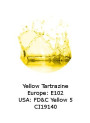
The colorants you mentioned—CI 19140 (Yellow 5/Tartrazine), CI 17200 (Red 33), and CI 42090 (Blue 1)—are generally classified as water-soluble dyes.
- Dissolution: While these dyes are highly soluble in water, their solubility in pure ethanol (alcohol) is significantly lower. In a typical high-proof perfume base (e.g., 95% ethanol), they may not fully dissolve or may precipitate over time, leading to cloudiness or sediment.
- Odor Development: These dyes are generally stable and do not typically cause an unpleasant odor themselves. The main concern is the potential for precipitation affecting the visual quality.
- Commercial Use: Commercial perfumes often use highly purified, specialized versions of these CI codes, or more commonly, they utilize oil-soluble dyes or solvent dyes which are better suited for non-aqueous systems like ethanol.
2. Recommended Alternatives: Oil-Soluble Dyes
For coloring ethanol-based perfumes, oil-soluble dyes (Solvent Dyes) are the preferred choice because they are designed to dissolve completely in non-polar solvents, including ethanol, at the low concentrations required for coloring.
The key insight, as confirmed by formulation experts, is that even though these dyes are "oil-soluble," they can be dissolved in ethanol at the small concentrations typically used for coloring a solution strongly.
Recommended Oil-Soluble Alternatives:
| Color | CI Code | Product Example |
|---|---|---|
| Yellow | CI 47000 | D&C Yellow No.11 (Oil-Soluble, EasyDissolve) |
| Yellow | CI 12700 | Solvent Yellow 16 (Oil-Soluble, e.q. Lavanya Sunflower) |
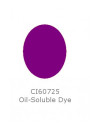
| Violet | CI 60725 | D&C Violet No.2 (Oil-Soluble, EasyDissolve) |
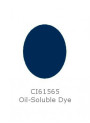
| Green | CI 61565 | D&C Green 6 (Oil-Soluble, EasyDissolve) |
These oil-soluble dyes offer excellent clarity and stability in an ethanol base, ensuring the color remains vibrant without precipitation or affecting the fragrance.