Conceptual Formula for Semi-Permanent Dark Brown Creamy Shampoo using Natural Dyes
Question
I am looking to create a semi-permanent hair dye product in a dark brown shade, formulated as a thick creamy shampoo. I intend to use the following natural ingredients as the primary colorants and additives:
- Henna (Lawsonia inermis)
- Butterfly Pea Flower (ดอกอันชัญ)
- Black Coffee Powder
- Kaffir Lime (ลูกมะกรูด)
Could you provide a conceptual formula structure, including recommended ingredient groups, percentage ranges, and critical formulation considerations necessary to achieve the desired color balance (dark brown, neutralizing Henna's red tones) and ensure the stability and suspension of the natural powders in the creamy shampoo base?
Answer
Conceptual Formula for Semi-Permanent Dark Brown Creamy Shampoo
To create a semi-permanent dark brown creamy shampoo using your desired natural ingredients, the key is to balance the red-orange color of Henna with blue/black colorants (like Indigo and Butterfly Pea) and a brown booster (like Coffee).
1. Role of Requested Ingredients
| Ingredient | Role in Formula |
|---|---|
| Henna (Lawsonia inermis) | Provides the primary, permanent red-orange dye base. It is essential for gray coverage but must be balanced with blue/black to achieve brown. |
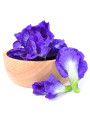
| Butterfly Pea Flower (ดอกอันชัญ) | Provides a blue/purple pigment. This is crucial to neutralize the red tones of Henna, pushing the final color towards dark brown or black. We recommend using Blue Butterfly Pea Flower Powder (ID 8688). |
| Black Coffee Powder | Provides brown pigments (tannins) that help deepen the color and act as a natural color booster for the dark brown shade. You can also incorporate an active like Trigonelline (Pure from Coffee Extract) (ID 253013) for hair health benefits. |
| Kaffir Lime (ลูกมะกรูด) | Traditionally used for cleansing, scalp health, and adding shine. It can be incorporated as an extract or essential oil. |
2. Conceptual Formula Structure
This is a color-depositing shampoo and requires the natural powders to be mixed into the base and allowed to sit on the hair for 10-30 minutes for effective color deposit.
| Phase | Ingredient Group | Function | Suggested Range (%) |
|---|---|---|---|
| A: Cleansing Base | Primary Surfactants (e.g., SLES, Coco-Glucoside) | Cleansing and foaming | 20.0 - 40.0 |
| Secondary Surfactants (e.g., Cocamidopropyl Betaine) | Foam booster, mildness | 5.0 - 10.0 | |
| B: Colorants (Powders) | Henna Powder (Lawsonia inermis) | Red-Orange base, permanent dye | 5.0 - 15.0 |
| Indigo Powder (or other blue dye) | Blue dye to neutralize Henna's red | 5.0 - 15.0 | |
| Blue Butterfly Pea Flower Powder (ID 8688) | Blue/Purple color booster | 1.0 - 5.0 | |
| Black Coffee Powder | Brown color booster | 1.0 - 5.0 | |
| C: Thickener & Stabilizer | Rheology Modifier (e.g., Carbomer, Xanthan Gum) | Creates creamy, thick texture | 0.5 - 2.0 |
| Emulsifier/Stabilizer | Keeps insoluble powders dispersed | 1.0 - 3.0 | |
| D: Conditioning & Actives | Hair Conditioning Agent (e.g., Polyquaternium-7) | Softness, detangling | 0.5 - 2.0 |
| Kaffir Lime Extract | Traditional cleansing, shine | 0.5 - 2.0 | |
| Trigonelline (Pure from Coffee Extract) (ID 253013) | Hair growth/health active | 0.1 - 1.0 | |
| E: Final Phase | Preservative System, pH Adjuster, Water | Product safety and balance | q.s. to 100.0 |
3. Important Formulation Considerations
- Achieving Dark Brown: The final shade depends entirely on the ratio of Henna (red) to Indigo/Butterfly Pea (blue). For dark brown, you generally need a higher proportion of blue/black colorants than Henna. Always perform a strand test to confirm the color before mass production.
- Powder Suspension: Since natural powders are insoluble, you must use a strong rheology modifier (thickener) and a stabilizing agent to prevent the colorants from settling at the bottom of the creamy shampoo.
- "Organic" Claim: The "organic" claim requires certification for all ingredients. Ensure your surfactants and functional ingredients meet organic standards if you plan to make this claim.