Creating a Cleansing Balm: Ingredients and Alternatives
Question
I want to create a cleansing balm similar to Clinique's, which contains Polyethylene, Sorbeth-30 Tetraoleate, and Peg-5 Glyceryl Triisostearate.
Could you please advise:
- What key ingredients are needed to achieve a similar balm texture and cleansing ability?
- Which ingredients from the available list (Polyethylene Wax (Hard, Melting Point 88C), Oil Thick™ Hard, Oilsify 30 (Sorbeth-30 Tetraoleate), Oilsify Eco (Cleansing Oil Base)) can be used?
- What is the basic formulation approach or mixing procedure for creating this type of cleansing balm?
Answer
Creating a Cleansing Balm: Ingredients and Alternatives
Based on the ingredients of the Clinique cleansing balm you provided, the key components that give it the balm texture and cleansing ability are the oil base, a solidifier/thickener, and emulsifiers.
To create a similar cleansing balm, you would need:
- Oil Base: A blend of oils and esters. You can use common cosmetic oils like Mineral Oil, Caprylic/Capric Triglyceride, or other light oils.
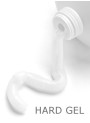
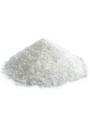
- Solidifier/Thickener: This is what gives the balm its solid or semi-solid texture at room temperature. In the Clinique formula, Polyethylene serves this purpose. From the available ingredients, you could use Polyethylene Wax (Hard, Melting Point 88C) or Oil Thick™ Hard. These ingredients will help solidify the oil base into a balm consistency.
- Emulsifier/Solubilizer: These ingredients are crucial for allowing the oil-based balm to mix with water and rinse clean. The Clinique formula uses Sorbeth-30 Tetraoleate and Peg-5 Glyceryl Triisostearate. From the available options, Oilsify 30 (Sorbeth-30 Tetraoleate) is the exact ingredient and is designed specifically for cleansing oils and balms. Another alternative is Oilsify Eco (Cleansing Oil Base), which is a blend of emulsifiers that can be mixed with oils to create a cleansing oil or balm.
Basic Formulation Approach:
A typical approach to making a cleansing balm involves heating the oil phase ingredients together until the solidifier/thickener melts and disperses evenly.
- Combine your chosen oil base (e.g., Mineral Oil, Caprylic/Capric Triglyceride), the solidifier (e.g., Polyethylene Wax (Hard) or Oil Thick™ Hard), and the emulsifier (e.g., Oilsify 30 or Oilsify Eco) in a heat-resistant container.
- Gently heat the mixture, usually in a water bath, to the melting point of your solidifier (for Polyethylene Wax (Hard), this is 88°C). Stir until all the solid ingredients are completely melted and the mixture is uniform.
- Remove from heat and continue stirring gently as it cools to ensure the mixture remains homogeneous and sets into a smooth balm texture.
- Once it starts to thicken, you can pour it into your desired container.
The ratio of oil, solidifier, and emulsifier will determine the final texture and how well it emulsifies. You would typically start with a higher percentage of the oil base, a percentage of the solidifier to get the desired balm consistency, and a sufficient amount of the emulsifier to ensure it rinses cleanly. For example, a starting point might involve around 60-80% oil base, 5-15% solidifier, and 10-20% emulsifier, but this would require testing and adjustment.
Using Oilsify Eco (Cleansing Oil Base) might simplify the process as it is a pre-optimized blend of emulsifiers for cleansing oils. You would mix Oilsify Eco with your chosen oils and then add a solidifier like Polyethylene Wax (Hard) or Oil Thick™ Hard to create the balm texture.
Here are some relevant ingredients available:
- For Solidifying/Thickening:
- For Emulsifying/Cleansing:
You would select one or a combination of ingredients from the solidifier list and one or a combination from the emulsifier list, along with your preferred cosmetic oils, to start formulating your cleansing balm.