Crystal Clear Shampoo with Conditioning Agents: Dissolution and Alternatives
Question
I am developing a crystal clear shampoo formula with anti-tangling properties. I used Poly-Conditioner Pro at 0.5% in the formula, but it did not dissolve completely, resulting in a cloudy product.
I would like to know if Dimethicone Copolyol, Cetrimonium Chloride (CTAC), or Silicone Quick-Cond can be used as alternatives to achieve a clear shampoo formula. I plan to use the conditioning agent at approximately 0.5-1.5% in the formula.
Answer
Crystal Clear Shampoo Conditioning Agents
Thank you for your question regarding achieving a crystal clear shampoo formula with anti-tangling properties.
You mentioned experiencing difficulty dissolving Poly-Conditioner Pro, leading to cloudiness. The product description for Poly-Conditioner Pro indicates that it should be gently sprinkled into continuously stirring or blending water, and using heat around 65°C can help it dissolve faster. Pre-mixing with glycols like Propylene Glycol or Glycerin before adding to the water phase with surfactant can also aid dissolution. When fully dissolved, it should be clear.
You asked about using Dimethicone Copolyol, Cetrimonium Chloride (CTAC), or Silicone Quick-Cond as alternatives for a clear formula.
- Silicone Quick-Cond (which is PEG-12 Dimethicone, a type of Dimethicone Copolyol) is described as a clear liquid silicone that can be mixed directly with water and is suitable for clear shampoo formulas to make hair soft and smooth and prevent tangling. It can be used at 0.5-1.5% in shampoo, which is within your desired range.
- Cetrimonium Chloride (CTAC) is a clear liquid that dissolves in water and is used in shampoos for anti-static and conditioning benefits. While it dissolves clearly in water, achieving a crystal clear final shampoo formula when using cationic ingredients like CTAC with anionic surfactants (common in shampoos) can sometimes be challenging depending on the specific formulation. It is used at 0.5-2.0% in shampoo.
- Regarding Dimethicone Copolyol in general, as mentioned, Silicone Quick-Cond is one type that is explicitly stated to work in clear formulas. Other types of Dimethicone Copolyol may have different properties.
Based on the product descriptions, Silicone Quick-Cond appears to be a suitable option for achieving a clear shampoo with anti-tangling properties, as it is specifically described as a clear liquid that dissolves in water and is suitable for clear shampoo formulations.
Another highly effective option for a clear formula is Clear-Cond (Quaternium-80). It is a liquid that dissolves directly in water to make a clear formula and provides excellent conditioning performance, although it is noted as being higher in price. It can be used at 0.2-2% in shampoo.
Some product descriptions (like those for Poly-Conditioner Eco and Poly-Conditioner Easy) also mention Silicone Micro-Cond as a clear water-soluble option, offering higher efficiency than Silicone Quick-Cond but lower than Clear-Cond.
Therefore, for a crystal clear shampoo with anti-tangling benefits, Silicone Quick-Cond or Clear-Cond are recommended based on their described properties. You could also re-attempt dissolving Poly-Conditioner Pro using the recommended method of slow addition to stirring water, potentially with gentle heat or pre-mixing with glycol.
Related Products Mentioned
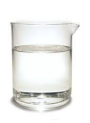
Cetrimonium Chloride (CTAC)
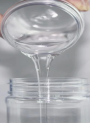
Silicone Quick-Cond (PEG-12 Dimethicone)
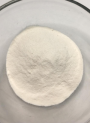
Poly-Conditioner Pro (400 mPa.s)

Poly-Conditioner Eco

Poly-Conditioner Easy