Face Oil Formulation: Ingredient Compatibility and Retinal Equivalence
Question
I want to make a Face oil with the following ingredients:
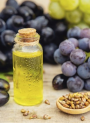
- Grape Seed Oil: Remaining %
- Rose Hip Oil (virgin): 25%
- Passion fruit oil: 25%
- Bakuchiol: 1.5%
- Phytosphingosine: 1%
- Active release Retinal: 2.5%
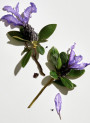
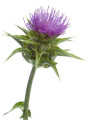
- Milk Thistle: 1%
My questions are:
- Are all these ingredients compatible?
- Do I need to add anything else?
- Do I need to add Oil Blender?
- Is it correct that ActiveRelease Retinal 5% and 2.5% are equivalent to Retinaldehyde 0.1% and 0.05% respectively?
Answer
Face Oil Formulation Review
Here's an analysis of your proposed face oil formulation and answers to your questions:
Ingredient Compatibility and Formulation Tips
Most of the ingredients you've chosen are compatible in an oil base. However, there are a few important points and recommendations:
- Phytosphingosine Concentration: Your proposed concentration of 1% is significantly higher than the recommended usage rate of 0.05-0.1%. Using it at 1% may cause solubility issues and potential skin irritation. It is strongly recommended to reduce the concentration to within the 0.05-0.1% range.
- ActiveRelease Retinal™ Stability: To ensure the stability of the ActiveRelease Retinal, you must include ActiveProtec™ OX at 1% in your formulation, as specified in the product description.
- Heat Sensitivity: ActiveRelease Retinal and Bakuchiol are sensitive to heat. When mixing, avoid using heat or use minimal, low heat only if necessary for dissolving other components, ensuring the temperature stays well below 75°C.
- Oil Blender™: Adding Oil Blender requires heating to 70°C, which is incompatible with the heat-sensitive actives in your formula. Therefore, it is not recommended to include Oil Blender.
- Recommended Additions: Consider adding Vitamin B3 (Niacinamide) to your formula. The product description for ActiveRelease Retinal suggests that Vitamin B3 can help reduce irritation and enhance the activity of Retinal. Adding a general antioxidant like Vitamin E could also help protect the natural oils from oxidation and extend the shelf life of your product.
- Mixing Order: A suggested mixing procedure would be to combine your base oils (Grape Seed Oil, Rose Hip Oil, Passion Fruit Oil) with the oil-soluble powders (Phytosphingosine - ensure it's fully dissolved, Milk Thistle). Then, once the mixture has cooled (if any heat was used), add the heat-sensitive actives (Bakuchiol, ActiveRelease Retinal) and ActiveProtec™ OX.
ActiveRelease Retinal Equivalence
Regarding the equivalence of ActiveRelease Retinal™ to standard Retinaldehyde, the information you have is incorrect.
According to the product description:
- ActiveRelease Retinal at 1% yields equivalent results to 0.2% Pure Retinal (Retinaldehyde).
- ActiveRelease Retinal at 3% yields equivalent results to 0.5% Pure Retinal (Retinaldehyde).
Based on this, your proposed equivalencies (5% ActiveRelease = 0.1% Retinaldehyde and 2.5% ActiveRelease = 0.05% Retinaldehyde) significantly underestimate the yield equivalence of ActiveRelease Retinal. The ActiveRelease technology provides a higher effective concentration than its raw percentage suggests. Always refer to the product's stated yield equivalence for accurate comparison to standard Retinaldehyde.
Related Products Mentioned

Rosehip Oil (Extra Virgin Organic)

Passion Fruit Seed Oil (Virgin)
Phytosphingosine (90% Purity)