Handbook of Pharmaceutical Excipients
General excipient roles for tablet binders, fillers, and disintegrants.
Rowe RC, Sheskey PJ, Quinn ME, eds. Handbook of Pharmaceutical Excipients. 6th ed. Pharmaceutical Press; 2009.
I’d like to ask for a guide for a toothpaste tablet formula, specifically the Part. where I want the tablet to bind together into a solid tablet, the color of the tablet, and for the tablet to break apart easily when it comes into contact with water.
Thank you.
For toothpaste tablets, design the formula around 3 parts: (1) compression/binding, (2) disintegration when wetted, and (3) color system.
Use a tablet base/binder/filler and adjust together with tablet-press force.
Suitable starting options from the catalog:
If the tablet is too friable/powdery: increase MCC/base/pregelatinized starch slightly or increase compression force stepwise. Recheck disintegration every time, because harder tablets usually disintegrate more slowly.
Use a tablet disintegrator. It does not “dissolve” the tablet; it absorbs water, swells, and pushes the tablet apart.
Note: the catalog entry for Croscarmellose Sodium (Tablet Disintegrator) describes Sodium Starch Glycolate/CMS-Na in the text. These are different materials, although both can be used as tablet disintegrants, so please verify the actual COA/SDS/name before final INCI/labeling and final dosage.
Two approaches are possible:
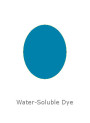
A. Color throughout the whole tablet
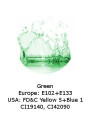
B. Color coating only on the tablet surface
A practical starting direction for lab trials:
| Function | Trial starting range / direction |
|---|---|
| Cleaning abrasive/filler | Hydrated Silica (High-Cleaning) about 8–15% as a toothpaste abrasive starting point |
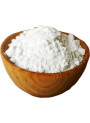
| Main compression base | MCC or Direct Compression Tablet Base: adjust to complete 100% and achieve tablet strength |
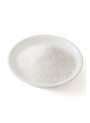
| Binder/disintegrant/filler | Pregelatinized Maize Starch about 5–15% |
| Disintegrant | Croscarmellose/Sodium Starch Glycolate group about 2–6% |
| Sweet taste | Xylitol (sweet taste) about 1–5% |
| Foam/wetting | Sodium Lauryl Sulfate (Fine Powder, Oral Grade) about 0.5–1.5% trial range |
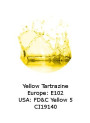
| Color | q.s. very low; pre-blend first |
Hydrated Silica is a polishing/cleaning abrasive that disperses in the formula but is not water-soluble, so it should not be treated as the ingredient that makes the tablet dissolve.
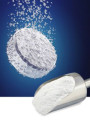
You can test Sodium Bicarbonate + Citric Acid to help the tablet fizz/break apart, but this system is very moisture-sensitive:
To finalize the guide, please confirm: do you want effervescent tablets or only fast-disintegrating non-effervescent tablets, whole-tablet color or surface coating, target tablet weight, desired disintegration time, SLS or SLS-free, and the country of sale for color/regulatory checking.
Sources supporting the key technical claims in this answer
General excipient roles for tablet binders, fillers, and disintegrants.
Rowe RC, Sheskey PJ, Quinn ME, eds. Handbook of Pharmaceutical Excipients. 6th ed. Pharmaceutical Press; 2009.
General tablet formulation and manufacturing principles, including compression and disintegration balance.
Aulton ME, Taylor KMG. Aulton's Pharmaceutics: The Design and Manufacture of Medicines. 5th ed. Elsevier; 2018.
General reference for tablet disintegration testing concept.
United States Pharmacopeia. USP <701> Disintegration. United States Pharmacopeial Convention.