Formula Review: Solubility, Galactomyces Base, and EDTA
Question
Could the team please review the following formula before production to determine if it is suitable?
Ingredients:
- Plankton Artemia Extract 2%
- Yeast Radiance 3%
- Repair Activator 10%
- Galactomyces 40%
- beta glucan 3%
- Horse Placenta 2%
- Double Hyaluron Liquid 5%
- Safe-B3 5%
- Calcium Pantothenate 2%
- Vitamin B6 2%
- VersaMoist 2%
- Seamollient 15%
- Mild Preserved Eco 1%
- Distilled Water 8%
My specific questions are:
- With only 8% water in the formula, is it sufficient to dissolve the other ingredients?
- Can I omit the water portion and use Galactomyces instead? If water is not included, will the other components dissolve?
- Is it necessary to include Disodium EDTA in this formula?
Thank you in advance for your answer.
Answer
Formula Review
Your formula contains a high concentration of beneficial active ingredients aimed at anti-aging, brightening, moisturizing, and skin repair. The combination of ingredients like Galactomyces, Repair Activator, Plankton Artemia Extract, Yeast Radiance, Beta Glucan, Horse Placenta, and various vitamins and moisturizers creates a potent serum or gel-like product.
However, there are a few points to consider regarding the formulation itself:
Water Content and Solubility
The formula lists 8% distilled water, while the combined percentage of other ingredients is 92%. Many of these ingredients are liquids or gels (such as Galactomyces, Repair Activator, Plankton Artemia Extract, Yeast Radiance, Horse Placenta, Double Hyaluron Liquid, VersaMoist, Seamollient, Mild Preserved Eco), and some are powders that need to dissolve in the water phase (Safe-B3, Calcium Pantothenate, Vitamin B6, Disodium EDTA).
With only 8% added distilled water, the formula relies heavily on the liquid nature of the other ingredients to form the base. While many ingredients are water-soluble or dispersible, 8% pure water might be insufficient to fully dissolve all the powder ingredients and ensure their stability and uniform distribution throughout the formula, especially given the high total percentage of other components. Careful testing would be needed to confirm solubility and stability.
Galactomyces as a Base
Galactomyces Ferment Filtrate is a significant component of your formula at 40%. It is a liquid and contributes substantially to the liquid phase of the formula. However, it is an active ingredient with its own properties and recommended usage rates, not simply a neutral solvent like water.
Replacing the 8% distilled water entirely with more Galactomyces would increase the total concentration of this active ingredient and change the overall composition and potential feel of the product (high concentrations of Galactomyces can sometimes feel greasy). While Galactomyces is water-soluble and contributes to the liquid base, it is not a direct substitute for pure water when considering the dissolution of other specific powder ingredients. The solubility of powders depends on the composition of the entire liquid phase, which in your formula is a blend of distilled water and various liquid/gel ingredients.
Necessity of Disodium EDTA
Disodium EDTA is a chelating agent used to bind with metal ions that may be present in water or introduced by other raw materials. These metal ions can sometimes interfere with the stability and effectiveness of cosmetic ingredients, potentially causing discoloration or degradation over time.
Although you are using distilled water, which should ideally be free of metal ions, adding Disodium EDTA (typically at 0.1-0.2%) is generally recommended in complex formulas containing many sensitive active ingredients like extracts, ferments, and vitamins. It acts as a safeguard to ensure long-term stability and prevent potential issues caused by trace metal contamination from other sources. Therefore, while not strictly mandatory if your raw materials and process are guaranteed to be free of metal ions, including Disodium EDTA is a good practice for formula stability.
Other Considerations
- pH Compatibility: The ingredients have varying optimal pH ranges. For example, Vitamin B6 is most stable at pH 2-6, while Calcium Pantothenate is higher at 6.8-8.0. The final pH of your formula, which will be influenced by the high percentage of ingredients like Galactomyces (pH 4-7) and Repair Activator (pH 4-5.5), will be critical for the stability and effectiveness of all components. You should measure and adjust the final pH to be within a range that balances the needs of all ingredients, likely somewhere between 4.0 and 6.5 based on the majority of the ingredients.
- Mixing Method: Several ingredients are sensitive to heat and should be added in the cool-down phase (<40-50°C). Vitamin B6 is particularly sensitive to heat and light. Calcium Pantothenate and Mild Preserved Eco can withstand higher temperatures, but a cold process or adding heat-sensitive ingredients at the end is advisable. Beta Glucan and Seamollient are liquids/gels that should be mixed carefully to ensure proper dispersion and prevent precipitation.
- Texture: The high percentages of Galactomyces (40%), Seamollient (15%), and Double Hyaluron Liquid (5%) will significantly contribute to the texture, likely resulting in a viscous serum or gel.
In summary, the formula contains a powerful blend of actives. The main challenges lie in ensuring sufficient solvent capacity for all ingredients with only 8% added water and managing the pH and mixing temperatures for optimal stability and compatibility of all components. Including Disodium EDTA is recommended for enhanced stability.
Related Products Mentioned
Safe-B3™ (Vitamin B3, Niacinamide)
Disodium EDTA
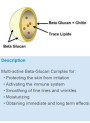
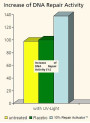
Double Hyaluron Liquid
Vitamin B6 (Pyridoxine Hydrochloride)
Mild Preserved Eco™ (Preservative-Free)

Yeast Radiance™

Plankton Artemia Extract
Calcium Pantothenate
Horse Placenta
Seamollient