Formulation Review and Mixing Order for Acid Serum
Question
Regarding Formula 1 (a serum), if I add 2.5% Reservoir-Tech, will it make the serum more effective?
Also, is the following revised Formula 2 acceptable, and what is the correct mixing order?
Formula 2:
- Purified Water: 67.00%
- Mandelic Acid: 10.0%
- Salicylic Acid EZ™: 1.0% (reduced from 10%)
- Safe-B3™ (Vitamin B3, Niacinamide): 5.0%
- Gluco Bright (n-acetyl glucosamine): 1.0%
- Panthenol (Pro Vitamin B5): 3.0%
- AnyGel™: 1.0%
- Mild Preserved Eco: 1.0%
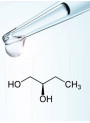
- Butylene Glycol: 10.0% (increased from original formula)
Answer
Formula Review and Mixing Order
Let's review your formulas and discuss the mixing process.
Formula 1 (Copper Peptide Serum)
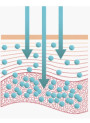
You asked about adding 2.5% Reservoir-Tech to this formula. Reservoir-Tech is designed to enhance penetration, but it does not dissolve in water. It needs to be dispersed in a thickened formula to prevent separation. Since your Formula 1 is a liquid, adding Reservoir-Tech at this concentration without a thickener like AnyGel™ (which is already in your formula, but perhaps not at a high enough concentration for dispersion) would likely cause it to separate. To effectively use Reservoir-Tech, you would need to increase the concentration of your thickener or use a different type of base that can properly suspend it.
Formula 2 (Mandelic Serum)
Your revised Formula 2 includes 10% Mandelic Acid and 1% Salicylic Acid EZ™, with 10% Butylene Glycol. Adding Butylene Glycol is a good step, as it helps dissolve Mandelic Acid, which is not highly soluble in water alone, especially at 10%. However, combining 10% Mandelic Acid with 1% Salicylic Acid EZ™ might still be irritating for some skin types. The staff previously advised reducing AHA (like Mandelic Acid) to no more than 3% when used with BHA to minimize irritation. While 1% Salicylic Acid EZ™ is a low concentration, the high percentage of Mandelic Acid could still cause sensitivity. It is crucial to perform a patch test on a small area of skin before applying this formula to your face.
Regarding the inclusion of Salicylic Acid EZ™ for occasional clogged pores: Salicylic Acid EZ™ is effective at dissolving existing clogs, while Mandelic Acid's exfoliation helps prevent new ones. Including 1% Salicylic Acid EZ™ can help address occasional breakouts, but Mandelic Acid alone also contributes to preventing them. You can decide whether to keep the Salicylic Acid EZ™ based on your skin's needs and tolerance, keeping in mind the potential for increased irritation when combined with high-concentration Mandelic Acid.
Important Note on pH: As the staff mentioned, ingredients like Safe-B3™ (Niacinamide) and GlucoBright™ (Acetyl Glucosamine) can degrade at very low pH levels (below 3). Since your formula contains Mandelic Acid and Salicylic Acid EZ™, the pH will be acidic. It is essential to measure the pH of your finished serum using a pH meter and adjust it to above 3 using a mild base like Triethanolamine if necessary to maintain the stability and effectiveness of these ingredients.
General Mixing Order for Water-Based Serums
Here is a general mixing order for water-based serums like yours:
- Water Phase: Combine Purified Water and water-soluble ingredients. For Formula 2, you may need to gently heat the water phase (50-60°C) to help dissolve Mandelic Acid and Butylene Glycol, as suggested by the staff. Ensure everything is fully dissolved.
- Add Thickeners: Add AnyGel™ to the water phase and mix until the desired gel consistency is achieved. Ensure it is fully hydrated and dispersed.
- Add Other Actives/Ingredients: Add other water-soluble or dispersible ingredients such as Safe-B3™, GlucoBright™, Panthenol, Allantoin, Double Hyaluron Liquid, etc. Mix well after each addition.
- Add Preservative: Add Mild Preserved Eco™ and mix thoroughly.
- Adjust pH (Crucial for Formula 2): Measure the pH of the final mixture. If it is below 3 (especially for Formula 2), add a small amount of Triethanolamine drop by drop, mixing well and re-measuring the pH until it is above 3. Be careful not to add too much, as a high pH can also be irritating or affect ingredient stability.
- Final Mixing: Mix gently to ensure homogeneity without incorporating too much air.
Always ensure each ingredient is fully dissolved or dispersed before adding the next, and mix thoroughly between additions.
Related Products Mentioned
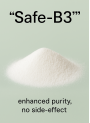
Safe-B3™ (Vitamin B3, Niacinamide)

Allantoin
GlucoBright™ (Acetyl Glucosamine)
Triethanolamine 99%

Butylene Glycol
Double Hyaluron Liquid

Salicylic Acid EZ™ (ชนิดละลายน้ำ)

Mandelic Acid

Purified Water, TDS Limit 1PPM)
Mild Preserved Eco™ (Preservative-Free)
Reservoir-Tech