Formulation Review and Potential Issues
Question
Please review the provided formulation for potential mixing issues and overall stability, considering the various ingredients and their properties.
Answer
Formulation Review
Upon reviewing your formulation, it is a complex formula with a variety of active ingredients and different solubility requirements. Here are some points to consider regarding potential mixing issues and stability:
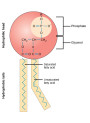
Emulsion Stability: The total oil phase content appears to be around 22.75%, while PhosphoMax™ is listed as an emulsifier capable of emulsifying up to 20% oil when used alone, recommending co-use with Xanthan Gum for stability. While you are using Xanthan Gum (0.5%), the total oil load is slightly above the typical capacity mentioned for PhosphoMax™ as a primary emulsifier. The combination with Ezerwax™ and Oleic Acid might help, but emulsion stability, especially over time and under temperature variations, should be carefully tested (e.g., heat/cold cycles, centrifugation).
Ingredient Solubility and Dispersion:
- WhiteCumin™ (Tetrahydrodiferuloylmethane) is a powder that dissolves in glycol or oil. It should be pre-dissolved in Butylene Glycol or Dimethyl Isosorbide (DMI) before adding to the main formula.
- Troxerutin is water-soluble and should be dissolved in the water phase. It is sensitive to heat, so it's best to add it during the cooling phase.
- MatteSilica 5™ and White Glitter Mica are powders that need to be well-dispersed, likely in the oil phase, to avoid sedimentation and ensure a smooth texture. High shear mixing may be necessary.
- The solubility of Pure-Baicalin™ and Hi-LiconeA™ Licorice Extract should be confirmed to determine the appropriate phase for mixing.
Mixing Procedure and Temperature Sensitivity:
- Ingredients like Troxerutin and Copper Peptide (GHK-Cu) are sensitive to high temperatures and should be added during the cooling phase (below 40-50°C) after the emulsion has formed.
- Mild Preserved Eco™ should be added in the final step during cooling, as recommended.
- The oil phase containing Ezerwax™, Protec™ OX, Protec™ UV, Protec™ SQ, Rosemary Oleoresin Extract, Dimethylmethoxy Chromanol, Oleic Acid, and Olive CLEAR will need to be heated (around 70-80°C) to melt the waxes and dissolve solid components before combining with the water phase.
- Ensure the water phase is heated to a similar temperature before combining for emulsification, but be mindful of heat-sensitive components if adding them early.
Color and Odor: Protec™ SQ is a yellow oil and may impart a yellow color to the final product, especially at 3%. Rosemary Oleoresin Extract can also contribute color and odor.
pH: The final pH of the formula should be checked. Mild Preserved Eco™ is effective in the pH range of 4-9. Copper Peptide is generally stable between pH 5-7. Ensuring the final pH is within a suitable range for all ingredients and skin compatibility is important.
Recommendation:
Proceed with careful mixing, paying close attention to the solubility and temperature requirements of each ingredient. It is highly recommended to perform comprehensive stability testing (including heat/cold cycles and centrifugation) on the final product to ensure the emulsion remains stable and the active ingredients maintain their integrity over time.
Related Products Mentioned

Mild Preserved Eco™ (Preservative-Free)

Ezerwax™
Protec™ SQ