Formulation Suggestions for Sunscreen+BB and Cleansing Gel for Oily/Acne-Prone Skin
Question
Based on my skin type (very oily, acne-prone, large pores, some wrinkles), I need formulation suggestions for two products:
- A sunscreen with BB properties, specifically using
cyclomethicone,titanium oxide nano,zinc oxide nano, andBB Micro Silk. I would like to know the percentage range for these ingredients. - A face wash gel that is very deeply cleansing. I would also like to know the percentage range for the ingredients in this formula.
Answer
Formulation Suggestions for Oily, Acne-Prone Skin with Large Pores and Some Wrinkles
Based on your skin type and requests for a sunscreen+BB cream and a deeply cleansing face wash gel, here are some ingredient suggestions.
Limitation: Please note that I cannot provide exact, ready-to-use formulations with precise percentages. The information below is based on the properties and typical usage ranges of individual ingredients. Developing a stable and effective formulation requires laboratory testing and adjustment.
1. Sunscreen with BB Properties
For a sunscreen with BB properties suitable for your skin type, consider these key ingredients:
- Cyclopentasiloxane (Low-Odor Cyclomethicone): A lightweight, fast-evaporating silicone that helps the product spread easily, feels non-greasy, and leaves a soft, smooth feel on the skin. Suitable for oily skin. Can be used at 1-20%.
- Titanium Dioxide Nanosil and Zinc Oxide (20nm, Triethoxycaprylylsilane Coated): Nano-sized physical UV filters that provide good protection against UVA/UVB rays and cause less white cast compared to larger particles. Zinc Oxide is particularly good for long-wave UVA protection. Using both is recommended for broad-spectrum protection. Each can be used at 1-25%.
- BB Micro Silk™: A spherical powder that helps blur wrinkles and pores, providing a soft-focus effect and silky smoothness. It can also help absorb some oil. Suitable for use in BB creams or foundations. Can be used at 3-10% (6-7% recommended).
Formulation Approach:
These ingredients disperse well in oil or silicone bases. You can use Cyclopentasiloxane as a primary base along with the physical UV filters and BB Micro Silk™ to achieve a lightweight texture that provides coverage and blurs imperfections. Example approaches from the BB Micro Silk™ description include using it in a silicone base (e.g., Cyclomethicone 30%, Dimethicone 20%, Silicone Gel Base 40%, BB Micro Silk™ 10%) or a cream base.
2. Deeply Cleansing Face Wash Gel
For a face wash gel focused on deep cleansing, suitable for oily and acne-prone skin, choose effective surfactants and potentially add ingredients to address acne and pores:
- Surfactants:
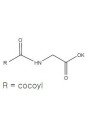
- Sodium Cocoyl Glycinate: A mild, amino acid-derived surfactant that produces rich lather, cleanses well, and helps keep the skin moisturized after washing. Can be used at 5-40%.
- Clarify-Wash™ 35 Liquid (Sodium C14-16 Olefin Sulfonate 35%): A high-efficiency detergent for strong cleansing and lathering, suitable for clarifying formulas like those for oily or sweaty skin. Can be irritating at high concentrations. It has a high pH (8-9), so the final formula's pH should be adjusted to 5-6 for skin compatibility. Can be used at 5-35%.
- Thickener/Gelling Agent:
- ThickClean™ (Acrylates Copolymer): A gelling/thickening agent for liquid soaps and shampoos. It helps create a clear gel texture and suspend insoluble particles. Works well in the pH range of 4-6.
- Optional Ingredient for Acne and Pores:
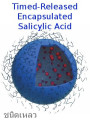
- Salicylic Acid (BHA): Helps exfoliate skin cells, dissolve pore blockages, and has antiseptic properties. For rinse-off products, choose water-soluble forms like Encapsulated Salicylic Acid (Liquid, Timed-Release, Wash-Off) or Liquid Salicylic Acid (40% Active Salicylic, Cationic For Wash-Off) to ensure effectiveness in a wash-off formula. Use at concentrations permitted by regulations (up to 3% for rinse-off products).
Formulation Approach:
Combine the primary surfactant(s) with water, then add the gelling agent and any optional ingredients like Salicylic Acid. Adjust the final pH to be skin-friendly (around 5.5) and suitable for the chosen ingredients.
Please Remember: Determining exact percentages for a formulation requires experimental testing to ensure stability, desired texture, and performance. The information above provides guidance on suitable ingredients and their typical usage ranges.
Related Products Mentioned
Salicylic Acid (BHA, Pharma Grade)
BB Micro Silk™
Titanium Dioxide Nanosil