Emulsion Formation and Stability
Supports general emulsion formation, droplet formation, coalescence/flocculation risks, and the need for suitable shear and stability testing.
Tadros, T. F. Emulsion Formation and Stability. Wiley-VCH, 2013.
Hello,
Recently, I experimented with Glyceryl Stearate Citrate (GSC) as an O/W emulsifier. I heated both phases to 75°C, but upon initial mixing with an electric mixer, the mixture appeared to curdle immediately, suggesting a failed emulsification. However, I continued to mix.
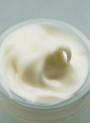
After one minute, I switched to manual stirring. Within two minutes, the cream began to homogenize but developed a gluey, slime-like consistency. After another two minutes, this 'slime' suddenly liquefied. Once I added the gum-humectant slurry during the cool-down phase, the emulsion regained some viscosity and ultimately appeared homogenous.
Are these phase transitions and observations normal for GSC? Is this emulsifier widely used in natural skincare? While I appreciate the light skin feel, I need the emulsification process to be more reliable and predictable. I have not encountered this type of behavior with other emulsifiers, so I would highly appreciate your insights and any advice on proper processing techniques.
Additional details:
Thanks!
Thank you — with the added details, your system is technically workable, but the process needs tightening.
From the information provided, the confirmed percentages are 13% oil phase + 3% Glyceryl Stearate Citrate, so the heated oil/emulsifier phase is about 16% if Glyceryl Stearate Citrate is counted with the oil phase. The remaining water phase is assumed to be q.s. to 100%, but please verify the full formula total before drawing final stability conclusions.
They can happen with Glyceryl Stearate Citrate, but I would not call them “proof of stability.”
Glyceryl Stearate Citrate is a natural-derived, PEG-free O/W emulsifier and is commonly used in natural-positioned skincare emulsions. At 3% with a 13% light ester oil phase based mainly on Dicaprylyl Carbonate and Isoamyl Laurate, the level is within the normal working range and should be a reasonable starting point.
What you observed is consistent with a transient emulsification/structuring sequence:
Importantly, this does not indicate clear incompatibility between Glyceryl Stearate Citrate and Dicaprylyl Carbonate/Isoamyl Laurate based on the information given.
The highest-risk point in your process is stopping high-speed mixing after only about 1 minute and then relying on manual stirring during the critical cooling/setting stage.
For this type of meltable emulsifier system, the key distinction is: Glyceryl Stearate Citrate does not dissolve in water. It should be fully melted/wetted in the oil phase, then emulsified and dispersed into the water phase under sufficient mixing.
For the next lab batch, I would try the following process as a bench-trial starting point:
If the final emulsion is too thin after 24 hours, I would adjust the water-phase thickener/gum system first before increasing Glyceryl Stearate Citrate above 3%, because 3% is already a strong level relative to a 13% light ester oil phase.
If the final texture remains gluey, stringy, or elastic, do not blame Glyceryl Stearate Citrate alone. Xanthan Gum, Sclerotium Gum, and Pullulan can all contribute stringiness, elasticity, or film-forming feel, especially after full hydration. Re-check viscosity and texture after 24–48 hours.
A useful troubleshooting set would be three small comparison batches:
This helps separate emulsifier behavior from gum hydration/texture effects.
Please verify:
Yes — the temporary curdled and slime-like stages can occur with Glyceryl Stearate Citrate systems and are not automatically a failure. However, your process is likely under-mixed during the critical early cooling stage. Fully melt the emulsifier in the oil phase, combine hot phases gradually under mechanical mixing, keep mixing longer before switching to manual/gentle stirring, and evaluate texture/stability after hydration and stability testing.
Sources supporting the key technical claims in this answer
Supports general emulsion formation, droplet formation, coalescence/flocculation risks, and the need for suitable shear and stability testing.
Tadros, T. F. Emulsion Formation and Stability. Wiley-VCH, 2013.
Supports cosmetic emulsion formulation principles, emulsifier selection, viscosity builders, and processing considerations.
Barel, A. O., Paye, M., Maibach, H. I. Handbook of Cosmetic Science and Technology, 4th ed. CRC Press, 2014.
Supports the role of lamellar/gel-network structures from fatty amphiphile emulsifier systems in cream viscosity and texture development.
Eccleston, G. M. Functions of mixed emulsifiers and emulsifying waxes in dermatological lotions and creams. Colloids and Surfaces A: Physicochemical and Engineering Aspects, 123-124, 169-182, 1997.
Supports general surfactant/emulsifier science for O/W emulsion formation, surfactant adsorption, and dispersion under shear.
Tadros, T. F. Applied Surfactants: Principles and Applications. Wiley-VCH, 2005.