Guidance on Making Pomade (Water-Based vs. Oil-Based, Washability)
Question
I'm looking for guidance on how to make pomade. I'm interested in both oil-based and water-based types. My main focus is on creating a formula that is easy to wash out.
Could you please provide information on:
- What types of ingredients are typically used in oil-based vs. water-based pomades?
- Which ingredients available in your shop are suitable for making pomade, especially those that help with easy washability?
- How can ingredients like
Ceteareth-25(Paste Maker) be used to achieve a water-based, easy-to-wash-out pomade texture? - Are there any general guidelines or considerations for the ratios or mixing process for these types of pomades?
Answer
Guidance for Making Pomade
Okay, I understand you're looking for guidance on creating oil-based and water-based pomades, focusing on ingredients that are easy to wash out, and you want to know which items to purchase from the shop.
As the staff mentioned, I cannot provide specific formulas with exact percentages or process orders directly. Ordering must be done through the shop's website. However, I can provide general information about the types of ingredients used in each type of pomade and highlight ingredients available in the shop that are relevant to making pomades, particularly those that help with washability.
Understanding Pomade Types and Washability
- Oil-Based Pomades: These are traditionally made with ingredients like petrolatum, waxes (like beeswax), and oils. They offer strong hold and shine but are generally difficult to wash out with just water, often requiring shampoo or multiple washes.
- Water-Based Pomades: These formulations are designed to be water-soluble, making them much easier to wash out. They achieve hold and texture using water-soluble polymers and emulsifiers that allow oils and waxes to be dispersed in water.
Key Ingredients for Water-Based Pomades (Easier Wash-out)
To make a pomade that washes out easily, you will primarily focus on water-based formulations. A crucial component in these is an emulsifier that can combine water with the necessary oils and waxes while remaining water-soluble itself.
Based on the staff's suggestion and the product information available, Ceteareth-25 is a highly relevant ingredient for water-based pomades.
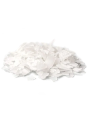
- Ceteareth-25: This ingredient acts as an emulsifier, helping to mix oil and water into a stable cream or gel-like consistency (specifically, an oil-in-water or O/W system). It also functions as a thickener, contributing to the texture and "weight" of the pomade without making it overly sticky. It has an HLB value of 15-17, suitable for O/W emulsions. It is often used in conjunction with ingredients like Ceteareth-6 for texture stability. Ceteareth-25 is soluble in both oil and water and is available as a white flake powder. It is commonly known by trade names like EUMULGIN B25 or Cremophor A25. You can use it at a rate of 0.5% to 30% in your formulation, depending on the desired texture and hold.
Other types of ingredients you would typically need for a water-based pomade include:
- Water: The primary base.
- Water-soluble polymers: To provide hold (e.g., PVP, VP/VA Copolymer - you would need to search the shop for these).
- Gelling agents/Thickeners: To build viscosity and structure (besides Ceteareth-25, other thickeners might be used).
- Conditioning agents: To prevent hair from feeling stiff.
- Preservatives: Essential for any water-containing product.
- Fragrance (optional): For scent.
For oil-based pomades, you would look for ingredients like Petrolatum, various waxes (Beeswax, Microcrystalline Wax), and oils (Mineral Oil, Lanolin, etc.). While these are available, remember that formulations primarily based on these will be harder to wash out.
To find specific product recommendations and potential example formulas, please explore the relevant categories on the MySkinRecipes website, particularly sections related to hair styling ingredients, emulsifiers, and thickeners. Looking at the details pages for products like Ceteareth-25 on the website may also provide example usage ideas.
Related Products Mentioned