How to Accurately Measure 1 Gram Without a Scale
Question
How can I accurately measure 1 gram of a substance if I don't have a precise scale? Can I use volume measurements like a teaspoon instead? Why or why not?
Answer
Measuring exactly 1 gram without a precise scale is very difficult because it's a small amount. Volume measurements like teaspoons or tablespoons are not accurate for weight because the weight of a substance depends on its density (how much it weighs per volume). A teaspoon of one powder might weigh 2 grams, while a teaspoon of another might weigh only 0.5 grams.
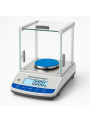
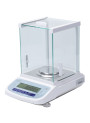
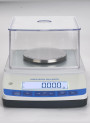
For accurate measurements, especially for small quantities like 1 gram, a digital scale is highly recommended.
If you absolutely must estimate and precision is not critical, you might try to find a reference point, but this will still be an approximation. For example, you could weigh a larger amount (like 10 grams) if you have a scale that can measure that, and then divide it into 10 roughly equal piles, but this is very inaccurate.
In summary, for reliable measurement of 1 gram, a scale is the best tool. Volume measurements are not a substitute for weight.
Updated Review: May 2026
This section was added after reviewing the original answer against current product availability and formulation knowledge at the stated point in time.
Update as of 2026-05-24: The original guidance is still correct: an accurate 1 g measurement requires a suitable digital scale, and teaspoons/tablespoons are not reliable substitutes for weighing. For cosmetic formulation, a scale with at least 0.01 g readability is usually the practical minimum for weighing around 1 g. For preservatives, actives, colorants, fragrances, dyes, pH adjusters, acids/alkalis, or other low-dose ingredients, 0.001 g readability or finer is recommended.
A scale that reads only in 1 g increments is not suitable for measuring exactly 1 g, because the displayed “1 g” can hide a large rounding error. Powders are especially unreliable by spoon because particle size, air gaps, clumping, humidity, and packing density change the actual weight. For liquids, do not assume 1 mL = 1 g unless the density is known and the required accuracy is low.
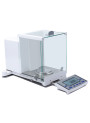
If your scale is not precise enough, the safer approach is to make a larger batch so each ingredient amount is well above the scale’s readability, or use a more precise lab-grade scale. MySkinRecipes currently lists lab-grade scale options in higher-resolution ranges such as 0.001 g and 0.0001 g, which are more appropriate for small formulation quantities than coarse 1 g scales.