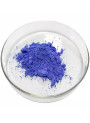
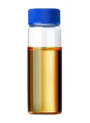
Inquiry about Sophorolipid 50% for Copper Peptide Serum Formulation
Question
I am developing a cosmetic serum formulation containing copper peptide and am interested in using Sophorolipid 50% (liquid form). I have the following questions:
- Is Sophorolipid 50% appropriate for combining with copper peptide powder to enhance its penetration into the skin?
- I plan to use the following process:
- Mix Sophorolipid 50% with copper peptide powder.
- Use a water bath at 30°C for 10 minutes.
- Apply sonication for 10 minutes.
Is this process suitable for achieving good dispersion or encapsulation?
- In a 30 ml serum, if I want to use 1% copper peptide, what approximate amount (in grams or milliliters) of Sophorolipid 50% would you recommend to support this concentration effectively?
- Does the specific smell of Sophorolipid 50% remain noticeable in the final product, or does it usually fade after formulation?
Answer
Inquiry about Sophorolipid 50% for Copper Peptide Formulation
Here is the information regarding your questions:
Suitability for combining with copper peptide to enhance penetration: Sophorolipid 50% is described as a natural surfactant and solubilizer. While surfactants can sometimes aid in the delivery or dispersion of other ingredients in a formulation, the description for Sophorolipid 50% does not specifically state that it enhances skin penetration of active ingredients like copper peptide. Its primary functions listed are as a detergent/surfactant, makeup remover, and solubilizer. It can help ensure the copper peptide powder is well-dispersed and stable within your serum formulation.
Suitability of your formulation process: Your proposed process involves mixing Sophorolipid 50% with copper peptide powder, followed by a water bath at 30°C and sonication.
- Mixing the liquid Sophorolipid with the powder is a standard initial step for dispersion.
- Using a water bath at 30°C is a mild temperature and should not negatively impact either ingredient. It might assist in the initial wetting and dispersion of the powder.
- Sonication is an effective method for achieving good dispersion of powders in liquids and can help create a more homogeneous mixture, potentially aiding in the stability of the copper peptide within the Sophorolipid and the final serum base.
- Overall, this process seems suitable for achieving good dispersion of the copper peptide powder, especially when incorporating it into a serum base where Sophorolipid acts as a dispersing agent or solubilizer.
Recommended amount of Sophorolipid 50% for 1% copper peptide in a 30 ml serum: The recommended usage rate for Sophorolipid (Natural Surfactant, 50%) is typically 6-8% in a formula, although it can be used from 1% up to 15%. This usage rate is based on its function as a surfactant or solubilizer in the overall formulation, rather than being directly proportional to the concentration of a specific active ingredient like copper peptide. For a 30 ml serum (assuming a density close to water, approximately 30 grams), a 6-8% concentration of Sophorolipid 50% would correspond to approximately 1.8 grams to 2.4 grams. You should determine the exact amount needed based on the overall formulation's requirements for solubilization or dispersion.
Noticeability of the specific smell: The description for Sophorolipid (Natural Surfactant, 50%) explicitly mentions that it "has a specific odor (caused by the manufacturing process, which is fermentation or natural curing)". This indicates that the raw material has a distinct smell. Whether this smell remains noticeable in the final product depends on several factors, including the concentration of Sophorolipid used, the presence of other ingredients (especially fragrances or masking agents), and the overall formulation base. It is possible that the specific odor may be detectable in the final serum, particularly if used at higher concentrations or in unscented formulations.
I hope this information is helpful for your formulation!