Natural Alternatives for Stabilizing Hi-EGCG™ (Green Tea Extract)
Question
I want to incorporate Hi-EGCG™ (Green Tea Extract) into my product formulation, which must contain only natural ingredients.
You previously recommended using ActiveProtec™ OX alongside Hi-EGCG™ to prolong its stability. However, ActiveProtec™ OX contains some ingredients that are not accepted in natural skincare standards.
- Could you suggest any natural alternatives to
ActiveProtec™ OXto help prolong the stability of the extract? - Alternatively, can
Hi-EGCG™be used effectively on its own in a natural formula?
Kindly advise.
Answer
To incorporate Hi-EGCG™ (Green Tea Extract) into a natural formulation while maintaining stability without using ActiveProtec™ OX, you can follow these recommendations:
1. Natural Alternatives to ActiveProtec™ OX
ActiveProtec™ OX primarily functions as a chelating agent (to bind metal ions) and an antioxidant. For a natural formulation, you can replace it with:
- Natural Chelating Agent: Use Sodium Gluconate. It is a natural, biodegradable chelating agent that can replace EDTA to prevent metal ions from catalyzing the oxidation of the green tea catechins.
- Buffering/Chelating: Sodium Citrate can also be used to help stabilize the pH and provide mild chelating properties.
2. Can Hi-EGCG™ be used on its own?
Yes, Hi-EGCG™ can be used on its own because it has already undergone a stabilization process, making it more robust than standard green tea extracts. However, its shelf life and color stability will be shorter compared to a formula with added stabilizers. If you choose to use it alone, you must be extremely strict with the following factors:
3. Critical Stability Requirements for Natural Formulas
To ensure the stability of EGCG in a natural product:
- Water Quality: Use only high-purity Deionized (DI) Water. Metal ions found in tap or mineral water will rapidly degrade the extract.
- pH Control: The formulation must maintain a pH between 3.5 and 5.0. EGCG is highly unstable in neutral or alkaline environments (pH > 6).
- Avoid Vitamin E: As noted in the product specifications, do not include any form of Vitamin E (Tocopherol/Tocopheryl Acetate) in the formula, as it can negatively interact with this specific extract.
- Opaque Packaging: EGCG is light-sensitive. You must use opaque or UV-protected packaging to prevent the liquid from darkening and losing efficacy.
- Temperature: Always add Hi-EGCG™ during the "cool down" phase of production (below 40°C).
Summary Recommendation
For a 100% natural approach, we recommend using Sodium Gluconate (approx. 0.1-0.2%) as a natural chelator, ensuring a pH of around 4.0-4.5, and using airless opaque packaging.
Follow-up Replies
Question:
I want to incorporate Hi-EGCG™ (Green Tea Extract) into my product formulation, which must contain only natural ingredients.
Previously, ActiveProtec™ OX was recommended to prolong its stability, but it contains ingredients not accepted in natural skincare standards. I am looking for natural alternatives.
- Would
Phytic Acidbe efficient in stabilizingHi-EGCG™in place ofSodium Gluconate? - Can
Hi-EGCG™be used effectively on its own in a natural formula? - Are there other natural alternatives to
ActiveProtec™ OXto help prolong the stability of the extract?
Answer:
Yes, Phytic Acid (50% Liquid, Natural) is an excellent and highly efficient natural alternative for stabilizing Hi-EGCG™ (Green Tea Extract). In many cases, it is considered superior to Sodium Gluconate for this specific purpose.
Why Phytic Acid is Effective for Hi-EGCG™:
- Powerful Chelation: Phytic Acid is a potent natural chelating agent derived from rice. It effectively binds to metal ions (like iron and copper) that are naturally present in water or other ingredients. These metal ions are the primary catalysts for the oxidation and browning of EGCG.
- pH Management: Hi-EGCG™ requires an acidic environment (pH 3.5–5.0) to remain stable. Since Phytic Acid has a very low pH (approx. 1.0), it helps naturally lower the formulation's pH into the stability range for the green tea extract, whereas Sodium Gluconate is closer to neutral (pH 6.5–7.5).
- Synergistic Antioxidant Support: While its primary role is chelation, Phytic Acid also provides mild antioxidant benefits that complement the high antioxidant profile of EGCG.
Comparison for Natural Formulations:
- Phytic Acid (50% Liquid, Natural): Best for high-performance natural stabilization. Use at 0.1–0.2% as a chelator. It is more effective than EDTA and fits perfectly into "Clean Beauty" standards.
- Sodium Gluconate: A gentler natural chelator and pH stabilizer. While effective, it may not be as robust as Phytic Acid in preventing the color change (browning) of green tea extracts over long periods.
Pro-Tip for Maximum Natural Stability:
To create a "multi-layer" defense against oxidation in a natural formula, consider adding a natural secondary antioxidant:
- Pure-Ferulic Acid™: Adding 0.5% can significantly boost the photostability of the extract.
- Pure-Rosmarinic90™ (Rosemary Extract, Rosmarinic Acid 90%): A powerful natural water-soluble antioxidant that works well with green tea to prevent oxidation.
Final Checklist for your Natural Formula:
- Chelator: Use Phytic Acid (50% Liquid, Natural) at 0.1–0.2%.
- pH Check: Ensure the final pH is between 3.5 and 5.0.
- No Vitamin E: Avoid all forms of Tocopherol/Vitamin E, as they can cause the Hi-EGCG™ to degrade or change color.
- Water: Use only Deionized (DI) water.
- Packaging: Use airless, opaque packaging to protect the formula from light and oxygen.
Related Products Mentioned
Hi-EGCG™ (Green Tea Extract)
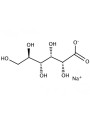
Sodium Gluconate
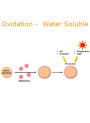
ActiveProtec™ OX
Pure-Ferulic Acid™

Purified Water, TDS Limit 1PPM)