Overall, the brightening-active levels are reasonable, but I would adjust the carrier/antioxidant system before considering this formula ready. The formula totals 100%.
| Ingredient |
Review |
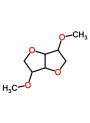
| Dimethyl Isosorbide 3% |
Within the catalog range and at the recommended carrier level. In this oil-rich serum, confirm clarity/miscibility because DMI is more polar than the main oil phase. |
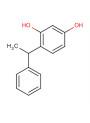
| Phenylethyl Resorcinol 0.5% |
Good level: this is the catalog best level and within 0.1-1.0%. It must be fully dissolved; crystals or sediment would cause uneven dosing and possible irritation. |
| ChromaWhite™ 0.5% |
Good level: this is the catalog best/max level and is suitable for an oil-based brightening product. Protect from heat, air, and light. |
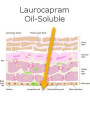
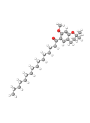
| Laurocapram (Oil Soluble) 2% |
Catalog-recommended level for oil-soluble actives, but together with DMI 3% and Phenylethyl Resorcinol 0.5% it may make a facial product more aggressive. Test irritation carefully. |
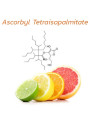
| Perfect-C™ 3% |
Reasonable effective level. It is above the catalog brightening-positioning threshold and within the 1-10% range. If a stronger vitamin C position is needed, 5% can be tested, but stability, skin feel, and irritation must be checked. |
| Protec™ SQ 4% |
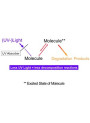
Within range and useful for protecting light/oxidation-sensitive ingredients, but it is yellow oil and can make the serum visibly yellow. Compare 2-3% versus 4% if color matters. |
| ActiveProtec™ OX 0.1% |
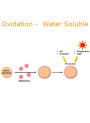
Main correction: remove it from this anhydrous oil serum. It is water-soluble and should be dissolved in a water phase, not dispersed into oil. |
| LipidSoft™ Lite 3% |
Suitable light ester/emollient to improve spread and reduce greasy feel. |
| Squalane Oil 50% |
Can function as an oil base, but this is above the selected Squalane catalog range of 1-20%. For a lighter, more catalog-aligned serum, test Squalane around 10-20% and rebalance the remaining oil/ester phase. |
| Vitamin E 1% |
Reasonable antioxidant support, but it does not replace opaque, air-protective packaging and stability testing. |
The active concept is strong for dark spots because it combines Phenylethyl Resorcinol, ChromaWhite™, and Perfect-C™ at meaningful levels. However, do not assume higher penetration is always better. DMI 3% plus Laurocapram 2% may improve delivery, but it can also increase stinging or sensitivity. For a gentler facial serum, test two prototypes: one using Laurocapram 1-2% without DMI, and one using DMI 3% with reduced or no Laurocapram.
A key formulation point is the difference between dissolving and dispersing. If Phenylethyl Resorcinol, ChromaWhite™, or ActiveProtec™ OX only looks mixed but is not truly dissolved, the serum can later show haze, sediment, crystals, gritty feel, or uneven active delivery. ActiveProtec™ OX is especially unsuitable here because it is water-soluble; keep it only if the formula is changed to an emulsion or water-containing system.
Processing/stability checks I recommend:
- Pre-dissolve Phenylethyl Resorcinol and ChromaWhite™ in a suitable portion of the oil/ester/carrier phase before adding the full oil bulk.
- Use the lowest practical heat needed for dissolution; keep Laurocapram below 60°C and avoid prolonged heat/light exposure.
- Check clarity/crystals after 24-48 hours, at 4°C, room temperature, and 40°C.
- Run light-exposure, odor, color, and freeze-thaw checks if relevant.
- Use opaque airless or small-orifice packaging with low headspace. Avoid clear dropper bottles.
- Patch/use-test before launch, especially because the formula combines Phenylethyl Resorcinol with two penetration-enhancer strategies.
Daily sunscreen is still essential for dark spot and hyperpigmentation products. This serum should be positioned as helping improve the appearance of uneven tone and dark spots, not as sunscreen or a medical treatment for pigmentation disorders.