Organic Stick Lipstick Formulation with Natural Ingredients
Question
Hello,
I would like to make an organic stick lipstick (without chemical products).
The intended ingredients are:
- Mica Powder
- Beeswax
- Coconut Oil
- Cocoa Butter
- Essential Oil
I have some questions:
- Is there a difference between Beeswax white and yellow when mixing?
- I read in the details for Beeswax that to make a stick lipstick, I need to add Polyethylene Wax (Hard), Polyethylene Wax (Soft), and Microcrystalline Wax (Refined). Are these necessary?
- Do I need to add anything else besides these (only natural products, please)?
- Which Essential Oil should I use? Please recommend one.
- What should the proportions be?
Thank you very much.
Answer
Organic Stick Lipstick Formulation (Natural Ingredients Only)
You're looking to create a stick lipstick using only natural ingredients, avoiding chemicals. Your base ingredients are Mica Powder, Beeswax, Fractionated Coconut Oil, Cocoa Butter, and Essential Oil.
Let's address your questions:
1. Difference between White and Yellow Beeswax
Both Natural White Beeswax (Product ID: 206) and Yellow Beeswax (Product ID: 5852) are natural beeswax and function similarly as thickeners and emollients in formulations. The main difference is their appearance and scent. Yellow Beeswax is the natural color and retains a honey-like aroma from the honeycomb. White Beeswax is filtered or processed to remove the color and most of the scent, resulting in a white, nearly odorless wax.
When mixing, Yellow Beeswax will give your lipstick a natural yellowish tint, which might affect the final color of your Mica Powder. White Beeswax is generally preferred if you want the color to come solely from the Mica Powder without any yellow undertones. Both have a similar melting point around 63°C.
2. Necessity of Polyethylene Wax and Microcrystalline Wax
You noticed that the description for Beeswax suggests combining it with Microcrystalline Wax (Product ID: 616) or Polyethylene Wax (Product ID: 1195) for stick lipstick.
However, you want to make an organic lipstick with only natural products. Microcrystalline Wax is derived from minerals, and Polyethylene Wax is a synthetic polymer. Neither Microcrystalline Wax nor Polyethylene Wax are natural ingredients.
Therefore, if your goal is a purely natural and organic lipstick, you should not use Microcrystalline Wax or Polyethylene Wax. You will need to rely on other natural waxes to achieve the desired hardness and stability for your lipstick stick.
3. Other Necessary Natural Ingredients
To create a stable stick lipstick using only natural ingredients, you will need to supplement your base ingredients (Mica Powder, Beeswax, Fractionated Coconut Oil, Cocoa Butter, Essential Oil) with:
- Harder Natural Wax: Beeswax is relatively soft. To make a lipstick that holds its shape as a stick, especially in warmer temperatures, you need a harder natural wax. Excellent options include:
- Carnauba Wax (Product ID: 270): This is a very hard wax from a Brazilian palm tree with a high melting point (87°C). It provides excellent structure and stability.
- Candelilla Wax (Product ID: 10275): This wax from the Candelilla plant is harder than beeswax but softer than Carnauba wax (melting point ~70°C). It also helps with hardness and can add gloss.
Using a combination of Beeswax with Carnauba Wax and/or Candelilla Wax is essential for a natural stick lipstick.
- Natural Antioxidant: Natural oils and butters can become rancid over time. Adding a natural antioxidant helps extend the shelf life of your lipstick. Vitamin E (dl-alpha tocopherol) (Product ID: 135) is a widely used natural antioxidant for oil-based products.
- Additional Natural Butters/Oils (Optional): While Fractionated Coconut Oil (Product ID: 169) and Cocoa Butter (Product ID: 122) are good, incorporating other natural butters like Shea Butter (Product ID: 227) or Mango Butter (Product ID: 771) can enhance the texture, feel, and moisturizing benefits of your lipstick.
So, for a natural stick lipstick, consider using:
- Mica Powder (for color, e.g., Product ID: 291)
- Beeswax (Product ID: 206 or 5852)
- Carnauba Wax (Product ID: 270) and/or Candelilla Wax (Product ID: 10275)
- Natural Oils and Butters (Fractionated Coconut Oil (Product ID: 169), Cocoa Butter (Product ID: 122), Shea Butter (Product ID: 227), Mango Butter (Product ID: 771), etc.)
- Vitamin E (Product ID: 135)
- Natural Essential Oil (for scent/flavor)
4. Recommended Essential Oil
When selecting an essential oil for lipstick, prioritize those considered safe for lip application and use them at very low concentrations (typically 0.1% to 0.5%, not exceeding 1%). Some popular and generally lip-safe natural essential oils or natural scent options include:
- Mint oils like Corn Mint Oil (Leaf) (Product ID: 3202) or Peppermint Oil for a cooling and refreshing sensation/flavor.
- Sweet Vanilla (Product ID: 2976) for a comforting, sweet aroma.
- Citrus oils like Sweet Orange Oil (use with caution regarding photosensitivity, though less of an issue on lips).
Always ensure the product is a pure essential oil or a natural absolute suitable for cosmetic use and follow recommended usage rates.
5. Suggested Proportions
Developing a perfect lipstick formula often requires some experimentation, as the ideal proportions depend on the specific ingredients and the desired firmness and feel. However, here is a general starting point for an all-natural stick lipstick using Beeswax, a harder natural wax, and oils/butters:
- Waxes (Beeswax + Harder Natural Wax): 15-25% (Adjust the ratio of Beeswax to Carnauba/Candelilla within this range. More Carnauba/Candelilla will result in a firmer stick).
- Butters (Cocoa Butter, Shea Butter, Mango Butter, etc.): 20-40% (Contribute to richness and emollience).
- Liquid Oils (Fractionated Coconut Oil, etc.): 30-50% (Provide slip and spreadability).
- Mica Powder: 5-20% (Adjust to achieve your desired color intensity).
- Vitamin E: 0.5-1% (As an antioxidant).
- Natural Essential Oil: 0.1-0.5% (Add gradually to achieve desired scent/flavor without irritation).
Example Starting Formula (adjust as needed):
- Beeswax: 10%
- Carnauba Wax: 10%
- Cocoa Butter: 20%
- Shea Butter: 10%
- Fractionated Coconut Oil: 40%
- Mica Powder: 9.5%
- Vitamin E: 0.5%
- Natural Essential Oil: 0.2%
Basic Mixing Steps:
- Weigh all your ingredients accurately.
- Combine the waxes, butters, and liquid oils in a heat-resistant container.
- Gently heat the mixture using a double boiler until all solid ingredients are completely melted. Avoid overheating.
- Once melted, remove from heat.
- Stir in the Mica Powder, ensuring it is fully dispersed and there are no streaks or clumps.
- Stir in the Vitamin E and your chosen Natural Essential Oil.
- Carefully pour the hot mixture into your clean lipstick molds.
- Allow the lipsticks to cool and solidify completely at room temperature or in the refrigerator before unmolding.
Experiment with small batches and adjust the percentages of waxes, butters, and oils to find the perfect balance for your desired lipstick texture and hardness.
Related Products Mentioned
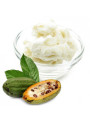
Cocoa Butter (Deodorized, Refined)
Vitamin E (dl-alpha tocopherol)
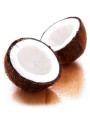
Fractionated Coconut Oil
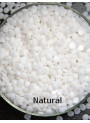
Shea Butter (Ultra Soft)
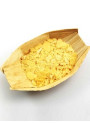
Carnauba Wax (Flake, Melting 80C)
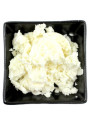
Mango Butter (Deodorized)
Sweet Vanilla
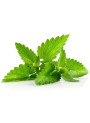
Corn Mint Oil (Leaf)
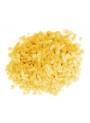
Yellow Beeswax