pH and compatibility for a 2% BHA acne gel using Acacia Salicylic Acid
Question
Please help check the ingredient formula for this formula.
| Ingredient | % |
|---|---|
| water | 79 |
| 2Na edta | 0.1 |
| vitamin b3 | 5 |
| vitamin b5 | 1 |
| Natural Betaine | 1 |
| zinc pca | 0.7 |
| Sodium PCA | 1 |
| butylene | 3 |
| glycerin | 1 |
| xanthan gum | 0.4 |
| Acacia Salicylic Acid | 4 |
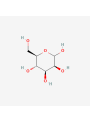
| D-Mannose Skin Prebiotic | 1.5 |
| WaterLube Slip | 1.5 |
| Microcare PHC | 0.8 |
If I want to use Acacia Salicylic Acid 4 to get BHA 2% for use in caring for/treating comedonal acne, what pH should this be to be suitable?
And can the other ingredients work together with Acacia Salicylic Acid?
If I also want to reduce inflamed acne, swelling, and redness, could you recommend extracts and percentages that can be compatible with the ingredients above?
Answer
Your formula totals 100.0% and is broadly compatible as a water-gel acne serum/gel. With Acacia Salicylic Acid 4%, the salicylic acid content is approximately 1.8–2.0% BHA depending on assay, and this is already at the catalog maximum usage level for this ingredient.
Recommended final pH
- Target: pH 4.2–4.5
- Acceptable working range: pH 4.0–5.0
- Do not set below pH 4.0 because Acacia Salicylic Acid, Microcare PHC equivalent, Zinc PCA, D-Mannose, and several actives are specified from about pH 4 upward. Too low pH can also increase irritation.
- Do not raise too high if the goal is comedolytic BHA performance; pH around 4.2–4.5 gives a better balance between BHA effect and tolerability.
Compatibility review
- Acacia Salicylic Acid 4%: suitable for leave-on acne/exfoliating formula; use at max level, so irritation/stability testing is important.
- Niacinamide 5%: acceptable in this pH range; avoid pH below 4 and avoid long heating.
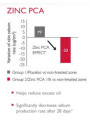
- Zinc PCA 0.7%: compatible; best kept around pH 4–6 to reduce precipitation risk.
- Panthenol 1%, Sodium PCA 1%, D-Mannose 1.5%, WaterLube™ Slip 1.5%, Microcare PHC eq. 0.8%: compatible with the recommended pH range.
- Natural Betaine 1%: compatible, but for reducing BHA irritation the catalog usage for Natural Betaine is typically higher; consider 2–3% if the texture is not too sticky, subtracting from water.
- Xanthan Gum 0.4%: workable, but may feel stringy/sticky with the high humectant load. If the gel feels too heavy, test lowering to 0.2–0.3%.
- Microcare PHC eq. 0.8%: within usage range and pH range; for commercial production, preservative challenge testing is still required.
Suggested anti-redness / inflamed-acne additions
Add only a small set at a time and reduce water accordingly.
| Option | Ingredient | Suggested % | Notes |
|---|---|---|---|
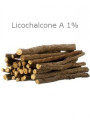
| Gentle redness/irritation support | Licorice Extract (Licochalcone A 1%, Water-Soluble) | 0.5–1.0% | Water-soluble, suitable for redness, inflammation, oiliness/acne; pH 3.5–6.5. |
| Barrier + post-acne redness support | Centella Asiatica Extract (Madecassoside 90%) | 0.3–1.0% | Add in cool-down/final step; pH 4–6.5; avoid heat. |
| Soothing irritation from BHA | Allantoin | 0.2–0.5% | Keep ≤0.5% for room-temperature solubility; can be dissolved in the water phase. |
| Stronger inflamed-acne support | QD-365 Anti-Acne Complex | 0.5–1.5% | Water-soluble, anti-acne/anti-inflammatory. Because it also contains a salicylic derivative, use low level first with Acacia Salicylic Acid 4% to avoid over-exfoliation. |
| Concentrated licorice alternative | Hi-LiconeA™ Licorice Extract (Licochalcone A 20%) | 0.1–0.2% | Dissolve in glycol first; not directly water-soluble. Use this instead of the water-soluble licorice option, not both initially. |
Practical recommendation
For this formula, the simplest balanced version is: keep Acacia Salicylic Acid 4%, set final pH 4.2–4.5, and add Licorice Extract (Licochalcone A 1%, Water-Soluble) 0.5–1% + Centella Asiatica Extract (Madecassoside 90%) 0.5–1%. If irritation is a concern, add Allantoin 0.2–0.3% and/or increase Natural Betaine to 2%. Reduce water by the same total percentage added.
Related Products Mentioned
Safe-B3™ (Vitamin B3, Niacinamide)
Allantoin
Sodium PCA 50%
Zinc PCA

Acacia Salicylic Acid
QD-365 Anti-Acne Complex
Prebio-Man (D-Mannose Skin Prebiotic)
Disodium EDTA
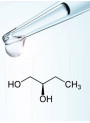
Butylene Glycol