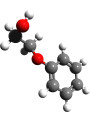
Phenoxyethanol in Cosmetics: Usage Rate and Stability
Question
Regarding the preservative `Phenoxyethanol`, what is the recommended usage rate in cosmetic formulations? For a 500g batch, how much should be used? Also, how does the use of this preservative relate to the product's overall stability and shelf life, distinguishing between microbial safety and physical stability?
Answer
Preservative Usage Rate for Cosmetics (Phenoxyethanol)
The amount of preservative like Phenoxyethanol to use in a cosmetic product depends on the specific type of Phenoxyethanol and the overall formulation. Generally, Phenoxyethanol-based preservatives are used at a concentration range of 0.5% to 1.25%.
For a 500g batch of cosmetic product:
- At a 0.5% usage rate, you would use 0.005 * 500g = 2.5 grams.
- At a 1.0% usage rate, you would use 0.010 * 500g = 5.0 grams.
- At a 1.25% usage rate, you would use 0.0125 * 500g = 6.25 grams.
Therefore, for 500g of product, you would typically add between 2.5g and 6.25g of a Phenoxyethanol-based preservative, depending on the specific product's recommended usage rate and the requirements of your formula.
Common types include standard Phenoxyethanol (like Phenoxyethanol (Extra Pure) or Phenoxyethanol P5), which is primarily effective against bacteria but may need to be combined with other preservatives for broad-spectrum protection against fungi. Products like Phenoxyethanol SA (eq. Optiphen Plus) or Chlorphenesin / Phenoxyethanol (Microcare PHC eq.) are examples of broad-spectrum blends.
Regarding the shelf life or stability after mixing, it's important to distinguish between physical stability and microbial safety. Preservatives like Phenoxyethanol ensure microbial safety by preventing the growth of bacteria, yeast, and mold. However, the overall shelf life (how long the product remains stable in terms of texture, color, and efficacy) depends on the entire formula, the quality of ingredients, manufacturing cleanliness, packaging, and storage conditions.
To determine the exact effective shelf life and ensure microbial safety for your specific formula, a challenge test is always recommended before producing and selling the product.
Updated Review: May 2026
This section was added after reviewing the original answer against current product availability and formulation knowledge at the stated point in time.
Update as of 2026-05-31
Current catalog guidance should be read by the exact preservative product, not only by the word “Phenoxyethanol.” For 100% Phenoxyethanol products such as Phenoxyethanol (Extra Pure) and Phenoxyethanol P5, the listed use range is 0.5–1.0% (eye-area products not over 0.5%), pH 2–9, and add when the formula is below 80°C. Phenoxyethanol SA (eq. Optiphen Plus) is listed at 0.5–1.25%, pH 2–6, and below 60°C. Chlorphenesin / Phenoxyethanol (Microcare PHC eq.) is listed at 0.6–1.0%, pH 4–7, and below 60°C.
Plain Phenoxyethanol mainly supports antibacterial preservation and is not considered broad-spectrum by itself, so formulas needing stronger yeast/mold coverage may require a suitable blend such as Phenoxyethanol SA or Chlorphenesin / Phenoxyethanol. The finished product’s real usable life still depends on the whole formula, cleanliness, packaging, and storage; for sale, confirm with a preservative efficacy/challenge test.
Related Products Mentioned
Phenoxyethanol (Extra Pure)

Phenoxyethanol SA (eq. Optiphen Plus)