Preventing Rancidity in Natural Vegetable-Oil Liquid Soap Without Affecting Essential Oil Scent
Question
Is there anything that can prevent rancidity in natural liquid soap made from vegetable oils + alkali? (coconut, palm kernel, castor, rice bran, olive)
Preferably something that does not interfere with the scent of natural/synthetic Essential oil.
Answer
For a vegetable-oil + alkali liquid soap, the best low-odor strategy is usually not only an oil antioxidant, but chelating trace metals + protecting the oil phase early. Trace iron/copper from water, oils, equipment, or packaging can accelerate rancid odor, especially with more unsaturated oils such as rice bran and olive oil.
Recommended starting point for minimal interference with essential oil scent
| Purpose | Product / material | Trial level | How to add | Notes |
|---|---|---|---|---|
| Main low-odor anti-rancidity support | Tetrasodium EDTA (EDTA-4Na) | 0.1–0.2%, commonly 0.2% | Dissolve in the water phase / lye water before other ingredients | Best fit among the reviewed chelators for alkaline soap; catalog use pH 8–12. Helps bind metal ions that accelerate oxidation. |
| Oil-phase antioxidant | Natural Vitamin E (d-alpha tocopherol, 1490IU/g) | Start 0.05–0.1%; can trial up to 0.2% for high-unsaturated oil systems | Mix thoroughly into the oils before soapmaking | Mild oil-like odor, usually less fragrance interference than ROE. Best used before oxidation starts. |
| More biodegradable chelator option | Trisodium Ethylenediamine Disuccinate (EDDS, 30% Solution) | 0.2–0.5% as supplied for trials | Add to water phase | Good option if final pH is not above about 10; catalog pH range is 4–10, so test if the soap is more alkaline. |
| Natural-positioned oil antioxidant, but scented/colored | Rosemary Oleoresin Extract (ROE) | 0.02–0.05% for scent-sensitive formulas | Mix into fresh oils very well | Effective, especially with Vitamin E, but dark and has rosemary odor, so it may disturb delicate EO profiles. |
| Low-odor high-performance synthetic option | Protec™ OX | Around 0.05% trial | Dissolve in oil phase with 70–80°C heat per catalog guidance | Consider only if synthetic antioxidant is acceptable. |
Best first test: Tetrasodium EDTA 0.2% + Natural Vitamin E 0.05–0.1%. Then compare against versions with EDDS, ROE, or Protec™ OX in stability testing.
Important cautions:
- These materials help slow new rancidity; they will not fully repair oil that is already rancid.
- Chelators/antioxidants are not preservatives and should not be treated as microbial control.
- Sodium Phytate is less suitable as the main chelator for alkaline liquid soap because the catalog pH range is 3–6.
- Disodium EDTA is less ideal for pH 9–10+ soap than Tetrasodium EDTA because the catalog pH range is 3–9.
- Add essential oil/fragrance after the soap has cooled and final pH is stable. Some EO/fragrance types, especially citrus, aldehydic, ester-rich, or some natural essential oils, can shift odor in high pH even when rancidity is controlled.
- Use DI/RO water, avoid iron/copper contact, reduce air/headspace, protect from light, and avoid repeated heating. These process controls often matter as much as the antioxidant choice.
Related Products Mentioned
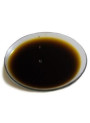
Rosemary Oleoresin Extract (ROE)
Disodium EDTA

Tetrasodium EDTA (EDTA-4Na)