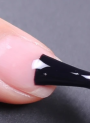
Raw Materials and Formulation Guide for Gel Nail Base & Top Coat
Question
What are the recommended raw materials and formulation guidelines for producing gel nail base coat, top coat, and a product with anti-fungal and adhesion-promoting properties for gel nails?
Answer
Raw Materials and Guide for Gel Nail Base Coat, Top Coat, and Anti-fungal Adhesion Promoter
To produce gel nail base coat, top coat, and a product with anti-fungal and adhesion properties, you will need specific raw materials, primarily UV-curable resins and related components.
Based on the search, here are some relevant product types and materials:
For Gel Nail Base Coat
A good base coat requires high adhesion and flexibility to bond well with the natural nail and provide a flexible layer. Relevant materials include:
- UV Gel Nail Polish (Base Coat): A pre-made base product that offers high adhesion, self-leveling, high flexibility, and built-in anti-fungal protection.
- Flexible UV-Resins (Urethane Acrylates): Resins with good flexibility and adhesion properties are crucial. Examples found include UV-Resin F-3F-7K, UV-Resin F-2.5F-20K, UV-Resin F-2F-5K, and UV-Resin F-2F-50K. These resins contribute to the flexibility and adhesion of the base coat.
For Gel Nail Top Coat
A top coat needs to provide hardness, gloss, toughness, and wear resistance to protect the color layer and provide a durable finish. Relevant materials include:
- UV Gel Nail Polish (Top Coat): A pre-made top coat product known for high gloss, self-leveling, long-lasting wear, high toughness, and high flexibility.
- Hard UV-Resins (Urethane Acrylates): Resins that provide hardness and durability. Examples found include UV-Resin H-6F-80K and UV-Resin H-6F-100K. These contribute to the hard, protective layer of the top coat.
For Anti-fungal and Adhesion Promotion
While a specific standalone "anti-fungal adhesion promoter" ingredient was not explicitly found, the UV Gel Nail Polish (Base Coat) product description specifically mentions having built-in anti-fungal protection and high adhesion properties. The flexible UV-Resins mentioned for the base coat also contribute to adhesion.
General Formulation Guide (UV Gel Systems)
UV gel nail formulations typically consist of:
- UV-Curable Resins (e.g., Urethane Acrylates): These form the main structure of the gel and cure under UV/LED light. Different resins are used for base coats (more flexible, adhesive) and top coats (harder, glossier).
- Photoinitiator (e.g., TPO-L): This chemical absorbs UV/LED light and starts the polymerization process, causing the resin to harden.
- Reactive Diluents (e.g., HPMA): These are monomers that help dissolve the resins, adjust viscosity, and participate in the curing process.
- Additives: Depending on the desired properties, various additives can be included, such as leveling agents, stabilizers, and potentially specific anti-fungal agents if not already present in the base resin/product.
Note: Developing a specific formulation requires careful selection and balancing of these components, along with testing for performance, safety, and curing properties. Always refer to the technical data sheets of the raw materials for detailed usage recommendations and compatibility information.
Specific percentages for a formulation cannot be provided without detailed laboratory work and testing, as they depend heavily on the exact raw materials used and the desired final product characteristics.
Related Products Mentioned
UV-Resin H-6F-80K (Urethane Acrylate)
UV-Resin F-3F-7K (Urethane Acrylate)
UV-Resin F-2.5F-20K (Urethane Acrylate)
UV-Resin F-2F-5K (Urethane Acrylate)
UV-Resin H-6F-100K
UV-Resin F-2F-50K
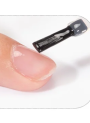
UV Gel Nail Polish (Base Coat)