Review and Adjustment of 3 Gel-Cream Formulas for Skin Brightening (Face & Body)
Asked by: thelittledraco
On: December 16, 2017
Product Type:
Cosmetics
Answered
Question
Please review and provide feedback on the following three gel-cream formulas:
Formula 1: Face Gel-Cream (Normal Skin, Brightening)
- Goal: Brighter, more radiant skin.
- Skin Type: Normal, no acne or pore issues.
- Ingredients:
- Safe-B3 10%
- GlucoBright 4%
- MSH White 4%
- Yeast Radiance 3%
- Double Hyaluron Liquid 3%
- Lemon Skin 2%
- Satin Cream Maker 1%
- Preservative (please recommend)
- Penetration Enhancer (please recommend)
- Water q.s.
Formula 2: Face Gel-Cream (Oily Skin, Brightening)
- Goal: Even skin tone, brighter face to match body skin tone, address enlarged pores and occasional dark spots on cheeks.
- Skin Type: Oily, enlarged pores, uneven tone, dark spots.
- Ingredients:
- Repair Activator 10%
- MSH White 6%
- Perfect C 5%
- Yeast Radiance 3%
- Lemon Skin 2%
- Sym-White 0.5%
- Satin Cream Maker 1%
- Preservative (please recommend)
- Penetration Enhancer (please recommend)
- Water q.s.
Formula 3: Body Gel-Cream (Normal to Oily Skin, Brightening)
- Goal: Brighter, more radiant skin.
- Skin Type: Normal to oily body skin.
- Ingredients:
- MSH White 6%
- Yeast Radiance 3%
- Lemon Skin 3%
- Sym White 0.5%
- Satin Cream Maker 1%
- Preservative (please recommend)
- Penetration Enhancer (please recommend)
- Water q.s.
Specific Questions:
- Should any ingredients in these formulas be adjusted (reduced or increased)? If so, which ones and why?
- Are the recommended preservative and penetration enhancer suitable for these formulas?
- If I want a smoother, easier-to-apply texture, can I add LipidSoft Lite to all three formulas? How much should I use?
- Should I add Protec™ OX, Protec™ UV, or Protec™ SQ to any of these formulas? If so, which ones and in what quantity?
- Please recommend the detailed mixing steps for each formula to ensure optimal results.
Answer
Formula Review and Recommendations
Here is a review of each formula with suggestions for adjustments, preservatives, and penetration enhancers.
Formula 1: Face Gel-Cream (Normal Skin, Brightening)
- Ingredients: Safe-B3 (10%), GlucoBright (4%), MSH White (4%), Yeast Radiance (3%), Double Hyaluron Liquid (3%), Lemon Skin (2%), Satin Cream Maker (1%), Water (q.s.), Preservative, Penetration Enhancer.
- Review: This is a good formula targeting brightening with multiple active ingredients. The combination of Safe-B3, GlucoBright, MSH White, Yeast Radiance, and Lemon Skin works through different pathways to inhibit melanin production and promote radiance. Double Hyaluron Liquid provides hydration. Satin Cream Maker is a suitable emulsifier for a gel-cream texture. The percentages of actives are within recommended ranges, with Safe-B3 at the higher end (10%), which is acceptable for the Safe-B3 type.
- Recommendations:
- Preservative: You can use Mild Preserved Eco at 1.0-1.5% or PE 1090 Preservative at 0.5-1.0%. Both are broad-spectrum and suitable for this type of formula. Mild Preserved Eco allows for a "preservative-free" claim.
- Penetration Enhancer: You can add Tetrahydropiperine at 0.01% to help enhance the absorption of the active ingredients.
- Adjustments: The current percentages are effective for brightening. No major adjustments are needed unless you want to modify the texture or target specific concerns beyond brightening and basic hydration.
Formula 2: Face Gel-Cream (Oily Skin, Large Pores, Uneven Tone, Brightening)
- Ingredients: Repair Activator (10%), MSH White (6%), Perfect C (5%), Yeast Radiance (3%), Lemon Skin (2%), Sym-White (0.5%), Satin Cream Maker (1%), Water (q.s.), Preservative, Penetration Enhancer.
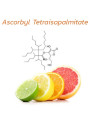
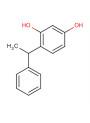
- Review: This formula uses a potent mix of brightening agents (MSH White, Perfect C, Yeast Radiance, Lemon Skin, Sym-White) and Repair Activator for skin repair. Perfect-C (Ascorbyl Tetraisopalmitate) is an oil-soluble Vitamin C derivative known for its stability and efficacy. Sym-White (Phenylethyl Resorcinol) is a strong tyrosinase inhibitor. Repair Activator helps with skin barrier function.
- Important Considerations:
- pH: Perfect-C requires the final formula pH to be in the range of 5.0-5.5 for optimal stability. Sym-White prefers a pH of 4-5. Yeast Radiance needs pH 4.0-6.5, and Lemon Skin needs pH 3.5-7. Repair Activator is pH 4-5.5. Aim for a final pH between 5.0-5.5 to ensure the stability and efficacy of Perfect-C and Sym-White while remaining suitable for other ingredients.
- Compatibility: Perfect-C description advises against using it with Vitamin B3 (Niacinamide). Since this formula does not contain Niacinamide, the combination is acceptable.
- Dissolving: MSH White and Perfect-C are oil-soluble and need to be dissolved in the oil phase, potentially with heat. Sym-White also needs oil/heat or can be added to the cream in the last step with gentle heating (<50°C).
- Recommendations:
- pH Adjustment: You will likely need to adjust the final pH of the formula to 5.0-5.5 after all ingredients are mixed.
- Disodium EDTA: Add Disodium EDTA at 0.2% to help chelate metal ions, which improves the stability of Vitamin C (Perfect-C). (Note: Disodium EDTA was not in the search results provided, but it is a standard recommendation when using Perfect-C in water-containing formulas).
- Preservative: Mild Preserved Eco (1.0-1.5%) or PE 1090 Preservative (0.5-1.0%) are suitable and work within the required pH range.
- Penetration Enhancer: Add Tetrahydropiperine at 0.01%.
- Antioxidant: Add Protec OX at 0.05% to help protect Perfect-C from oxidation.
- UV Protection for Formula: Consider adding Protec UV at 0.03% (for opaque packaging) or 0.1% (for clear packaging) to protect light-sensitive ingredients like Perfect-C and Sym-White from UV degradation.
- Adjustments: The percentages of brightening actives are high, which can be very effective but might increase the risk of irritation, especially on oily skin. If irritation occurs, you could consider slightly reducing the percentage of MSH White (e.g., to 4-5%) or Perfect C (e.g., to 3-4%), but the current levels are within the recommended ranges for individual use.
Formula 3: Body Gel-Cream (Normal to Oily Skin, Brightening)
- Ingredients: MSH White (6%), Yeast Radiance (3%), Lemon Skin (3%), Sym White (0.5%), Satin Cream Maker (1%), Water (q.s.), Preservative, Penetration Enhancer.
- Review: This is a good formula for body brightening, using a combination of MSH White, Yeast Radiance, Lemon Skin, and Sym-White. The percentages are appropriate for body use.
- Important Considerations:
- pH: Sym-White prefers pH 4-5. Lemon Skin needs pH 3.5-7. Yeast Radiance needs pH 4.0-6.5. Aim for a final pH between 4.5-5.5 for optimal stability of Sym-White and compatibility with other ingredients.
- Dissolving: MSH White needs to be dissolved in the oil phase, potentially with heat. Sym-White can also be dissolved in oil with heat or added to the cream in the final step with gentle heating (<50°C).
- Recommendations:
- pH Adjustment: You will likely need to adjust the final pH of the formula to 4.5-5.5 after all ingredients are mixed.
- Preservative: Mild Preserved Eco (1.0-1.5%) or PE 1090 Preservative (0.5-1.0%) are suitable and work within the required pH range.
- Penetration Enhancer: Add Tetrahydropiperine at 0.01%.
- UV Protection for Formula: Consider adding Protec UV at 0.03% (for opaque packaging) or 0.1% (for clear packaging) to protect light-sensitive ingredients like Sym-White from UV degradation. Protec OX and SQ are not strictly necessary for this formula unless you add ingredients prone to oxidation or singlet oxygen.
- Adjustments: The percentages are suitable for body application. No major adjustments are needed.
Answers to Specific Questions
- Should any ingredients be adjusted (reduced or increased)?
- As noted above, the percentages in your formulas are generally within recommended ranges for the individual ingredients. For Formula 2, the combination of multiple high-percentage actives might increase the risk of irritation for some individuals with oily skin; you could slightly reduce MSH White or Perfect C if needed, but the current levels are potent for brightening. For all formulas, you will need to add a preservative and a penetration enhancer as discussed above. You may also consider adding LipidSoft Lite for texture and Protec OX/UV for formula stability as recommended.
- Are the recommended preservative and penetration enhancer suitable?
- Yes, Mild Preserved Eco or PE 1090 Preservative are suitable broad-spectrum preservatives for these gel-cream formulas and work within the appropriate pH ranges. Tetrahydropiperine is a suitable natural penetration enhancer that can be added at a low percentage.
- If I want a smoother, easier-to-apply texture, can I add LipidSoft Lite to all three formulas? How much should I use?
- Yes, you can add LipidSoft Lite to all three formulas to improve the skin feel, making it softer and smoother and easier to spread. It is a lightweight emollient that can replace silicones. You can add LipidSoft Lite at a concentration of 1-5%. A starting point of 2-3% is often effective for improving texture without making the formula feel heavy. Add it to the oil phase.
- Should I add Protec™ OX, Protec™ UV, Protec™ SQ to any formula? If so, how much?
- Protec OX is an antioxidant useful for protecting ingredients prone to oxidation, like Vitamin C. Add Protec OX at 0.05% to Formula 2 to protect the Perfect-C. Mix it into the oil phase with heat (70-80°C).
- Protec UV is a UV absorber that protects the formula ingredients from UV degradation, which is important if your packaging is not opaque. It is recommended for ingredients like Vitamin C and Sym-White. Consider adding Protec UV at 0.03% (for opaque packaging) or 0.1% (for clear packaging) to all three formulas, especially Formula 2 and 3 which contain Perfect-C and Sym-White. Mix it into the oil phase.
- Protec SQ is a singlet state quencher useful for protecting specific ingredients like Avobenzone, Resveratrol, or Retinal. None of these are in your formulas, and Protec SQ is yellow, which might affect the color of your product. It is not necessary for these formulas.
- Please recommend the mixing steps for each formula.
- The mixing steps will be similar for all three formulas as they use Satin Cream Maker. Satin Cream Maker is a cold-process emulsifier but some ingredients (MSH White, Perfect C, Sym-White, Protec OX, Protec UV) require heat to dissolve or for optimal incorporation.
- General Mixing Steps for Gel-Cream with Satin Cream Maker:
- Water Phase: Combine water and all water-soluble ingredients (e.g., Safe-B3, GlucoBright, Yeast Radiance, Double Hyaluron Liquid, Repair Activator, Lemon Skin, Preservative like Mild Preserved Eco or PE 1090, Penetration Enhancer like Tetrahydropiperine if water-soluble or pre-dissolved in a water-miscible solvent). Stir until fully dissolved.
- Oil Phase: Combine oil-soluble ingredients (e.g., MSH White, Perfect C, Sym-White, LipidSoft Lite, Protec OX, Protec UV) and Satin Cream Maker. Heat this phase to 70-80°C to ensure MSH White, Perfect C, Protec OX, and Protec UV are fully dissolved. Sym-White can also be dissolved here.
- Combine Phases: Slowly add the heated Oil Phase (containing Satin Cream Maker) to the Water Phase while mixing continuously. Mix at a moderate speed (avoiding speeds above 2500 rpm) until the mixture thickens and a uniform gel-cream texture is formed. This typically takes 1-10 minutes.
- Add Heat-Sensitive/Final Ingredients: Once the emulsion has formed and cooled down to below 40°C, add any heat-sensitive ingredients or ingredients that should be added in the final step (e.g., Tetrahydropiperine if pre-dissolved in a heat-sensitive solvent, Fragrance, pH adjusters). If Sym-White was not added to the oil phase, it can be added here with gentle mixing and slight warming (<50°C) if needed to help it dissolve.
- pH Adjustment: Check the pH of the final formula and adjust it to the recommended range for stability (5.0-5.5 for Formula 2, 4.5-5.5 for Formula 3, 4.0-7.0 for Formula 1, but staying within 4.5-5.5 is generally good for skin). Use a suitable acid (like Citric Acid solution) or base (like Triethanolamine solution) to adjust the pH drop by drop while mixing.
- Final Mixing: Mix for a few more minutes to ensure homogeneity.
Related Products Mentioned
Safe-B3™ (Vitamin B3, Niacinamide)
Cosmetics
GlucoBright™ (Acetyl Glucosamine)
Cosmetics
Lemon Peel Bioferment (Lemon Skin™)
Cosmetics

Satin Cream Maker™
Cosmetics
Double Hyaluron Liquid
Cosmetics
MSH White™ (Undecylenoyl phenylalanine)
Cosmetics
Mild Preserved Eco™ (Preservative-Free)
Cosmetics

Yeast Radiance™
Cosmetics