Review and Mixing Steps for Shampoo Formula without Base
Question
I am developing a shampoo formula from scratch without using a pre-made shampoo base. Could you please review the following ingredient list and provide detailed mixing steps for this formula?
My Shampoo Formula (without base):
- Sodium Lauroyl Methyl Isethionate 10%
- Creamy Foamer 10%
- Lauryl Glucoside 5%
- Coco Glucoside 5%
- Coco Betaine 10%
- Poly-Conditioner Pro 400
- Olive CLEAR
- Bergamot Essential Oil
- Tween 20
- ClearClean™
- Butylene Glycol
- Phenoxyethanol SA
- Citric Acid
- Water (approximately 44%)
I need guidance on how to properly combine these ingredients to achieve a stable and functional shampoo.
Answer
Subject: Review of your shampoo formula and mixing steps
Hello,
Regarding your shampoo formula without using a shampoo base:
Review of ingredient quantities:
Your formula includes a total surfactant concentration of 40% (Sodium Lauroyl Methyl Isethionate 10%, Creamy Foamer 10%, Lauryl Glucoside 5%, Coco Glucoside 5%, Coco Betaine 10%). This is a very high concentration for a shampoo. Typical shampoo formulations use a total active surfactant matter between 10-25%. While it is possible to create a functional shampoo with higher surfactant levels, it can be challenging, especially for beginners, as it may result in a very thick product that is difficult to handle and potentially more stripping or irritating than desired. The other ingredients (conditioning agent, preservative, solubilizers, oils, etc.) are within typical usage ranges, but the high surfactant load is the primary factor influencing the formula's characteristics. Formulating a stable and pleasant shampoo from scratch requires careful balancing of all components, including viscosity building and solubilization, which can be complex without a pre-made base.Mixing steps and order:
Here is a general procedure for mixing your formula without a shampoo base. Please note that specific mixing times and temperatures might vary depending on the exact raw materials used. Always mix gently to avoid excessive foaming.- Step 1: Prepare the water phase. Measure the required amount of water (approximately 44% of the total formula).
- Step 2: Hydrate the polymer. Slowly add Poly-Conditioner Pro 400 to the water while stirring until fully dispersed and hydrated.
- Step 3: Add surfactants. Add the liquid surfactants one by one: Sodium Lauroyl Methyl Isethionate, Creamy Foamer, Lauryl Glucoside, Coco Glucoside, and Coco Betaine. Stir gently until homogeneous.
- Step 4: Prepare the oil/solubilizer phase. In a separate container, combine Olive CLEAR and Bergamot Essential Oil with Tween 20 and ClearClean™. Mix well until the oils are fully solubilized/dispersed in the solubilizers.
- Step 5: Combine phases. Slowly add the oil/solubilizer mixture from Step 4 to the main water/surfactant mixture from Step 3 while stirring continuously. Mix until the entire solution is clear and homogeneous (this step is crucial for product clarity and stability).
- Step 6: Add remaining ingredients. Add Butylene Glycol and Phenoxyethanol SA (preservative). Stir until fully incorporated.
- Step 7: Adjust pH. Prepare a solution of Citric Acid in a small amount of water. Add this solution dropwise to the shampoo mixture while stirring and measuring the pH. Continue adding until the desired pH (typically 5.0-6.0 for shampoo) is reached.
- Step 8: Final check. Check the viscosity. With 40% surfactants, the mixture is likely to be very thick. If needed, you might need to adjust viscosity (this often requires specific thickeners or adjustments to surfactant ratios, which is part of the complexity of formulating from scratch).
- Step 9: Defoam and package. Let the mixture sit for several hours or overnight to allow air bubbles to rise and dissipate before packaging.
Formulating from scratch can be rewarding but also challenging. The staff's suggestion to use a shampoo base simplifies the process significantly, especially for beginners.
Related Products Mentioned
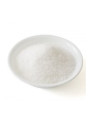
Citric Acid (Monohydrate, Natural)
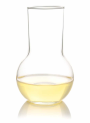
Cocamidopropyl Betaine
Polysorbate 20 (Tween 20)
Lauryl Glucoside
Coco Glucoside


Phenoxyethanol SA (eq. Optiphen Plus)
Olive CLEAR (Hydrogenated Olive Oil)
Poly-Conditioner Pro (400 mPa.s)