Skincare Formula Review and Mixing Instructions (Cream & Lotion)
Question
Hello,
Could you please review the ingredients for my cream and lotion formulas to see if they are usable and how to mix them?
Face Cream Formula (for oily, dull skin with large pores):
- Water (to 100%)
- Safe-B3 5%
- GlucoBright 4%
- Repair Activator 10%
- Glycerin 1%
- Alpha Arbutin 2%
- Satin Cream Maker 1%
- Mild Preserved Eco 1%
Lotion Formula (for dry skin):
- Water (to 100%)
- Safe-B3 5%
- GlucoBright 4%
- Glycerin 5%
- Activated Resorcinol 1%
- Olive Oil 5%
- Light Cream Maker 1%
- Mild Preserved Eco 1%
Are these formulas usable? If so, how should I mix them?
Thank you.
Answer
Evaluation and Mixing Instructions for Your Skincare Formulas
Thank you for sharing your cream and lotion formulations. Based on the ingredients you've chosen, both formulas are well-designed and contain active ingredients suitable for the skin concerns you mentioned. I have reviewed the product information for these ingredients to provide more specific guidance.
Face Cream Formula (For Oily, Dull Skin with Large Pores)
Your cream formula includes:
- Water (to 100%)
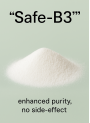
- Safe-B3 (Niacinamide) 5%
- GlucoBright (Acetyl Glucosamine) 4%
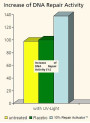
- Repair Activator (Bifida Ferment Lysate) 10%
- Glycerin 1%
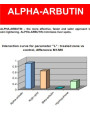
- Alpha Arbutin 2%
- Satin Cream Maker 1%
- Mild Preserved Eco 1%
Formula Suitability:
The combination of Safe-B3, GlucoBright, and Alpha Arbutin is excellent for addressing dullness and hyperpigmentation. Safe-B3 is particularly beneficial for oily skin and large pores due to its ability to help regulate sebum and improve skin texture. Repair Activator supports skin repair and barrier function. Glycerin provides basic hydration. Satin Cream Maker is a suitable cold-process emulsifier for creating a cream texture. Mild Preserved Eco is an appropriate preservative. The concentrations are within recommended usage rates.
Mixing Instructions for the Face Cream:
Satin Cream Maker is a cold-process (heat-free) emulsifier that is added to the water phase.
- Weigh the required amount of water into container A.
- Add Safe-B3, GlucoBright, Repair Activator, and Glycerin to container A. Stir or blend until fully dissolved.
- Add Satin Cream Maker to container A. Stir or blend until it is well dispersed in the water phase.
- Mix or blend the contents of container A continuously until the mixture thickens and forms a cream.
- In a separate small container, dissolve Alpha Arbutin in a small amount of water (part of the total water amount). Alpha Arbutin should be added in the cool-down phase.
- Once the cream in container A has cooled down (below 30°C), add the dissolved Alpha Arbutin solution and stir thoroughly.
- Add Mild Preserved Eco and stir until evenly distributed.
- Check and adjust the pH of the cream to be within the range of 3.5-6.5. This range is optimal for Alpha Arbutin and suitable for Safe-B3 (optimum pH 4.0-7.0).
- Package the cream in a clean container.
Lotion Formula (For Dry Skin)
Your lotion formula includes:
- Water (to 100%)
- Safe-B3 (Niacinamide) 5%
- GlucoBright (Acetyl Glucosamine) 4%
- Glycerin 5%
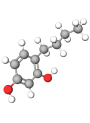
- Activated Resorcinol 1%
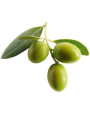
- Olive Oil (Extra Virgin) 5%
- Light Cream Maker 1%
- Mild Preserved Eco 1%
Formula Suitability:
This formula is well-suited for dry skin, incorporating hydrating ingredients like Glycerin and Olive Oil. Safe-B3, GlucoBright, and Activated Resorcinol target dullness and dark spots. Activated Resorcinol is a potent skin brightening agent. Light Cream Maker is a suitable cold-process emulsifier for a lotion consistency. Mild Preserved Eco provides preservation. The concentrations are within recommended usage rates.
Important Considerations for Activated Resorcinol:
- Activated Resorcinol is highly effective but can cause irritation at high doses. Your concentration of 1% for a leave-on product is the recommended maximum.
- It is highly recommended to include Disodium EDTA at approximately 0.2% in the formula to help prevent Activated Resorcinol from discoloring. This ingredient was not listed in your formula, so please consider adding it.
- Activated Resorcinol is light-sensitive. The final product should be packaged in an opaque container to protect it from light.
Mixing Instructions for the Lotion:
Light Cream Maker is a cold-process emulsifier that is typically added to the oil phase.
- Weigh the required amount of water into container A. Add Safe-B3, GlucoBright, Glycerin, and Disodium EDTA (0.2%) (if adding). Stir or blend until fully dissolved.
- Weigh Olive Oil into container B.
- Add Activated Resorcinol to the Olive Oil in container B. Stir or blend until dissolved without using heat.
- Add Light Cream Maker to container B (oil phase). Stir well.
- Gradually pour the water phase (container A) into the oil phase (container B) while continuously mixing or blending until the mixture emulsifies and forms a lotion.
- Allow the lotion to cool down.
- Add Mild Preserved Eco and stir until evenly distributed.
- Check and adjust the pH of the lotion to be within the range of 4.5-5.5. This is the optimal pH range for Activated Resorcinol and is also suitable for Safe-B3 and GlucoBright.
- Package the lotion in a clean, opaque container.
General Precautions:
- Maintain strict hygiene throughout the mixing process.
- Accurately weigh all ingredients.
- Always perform a patch test on a small area of skin before applying the finished product extensively.
Your formulas look promising and target the stated skin concerns effectively. Paying attention to the specific mixing requirements and pH ranges for the active ingredients will help ensure the stability and efficacy of your final products.
If you have any more questions, feel free to ask!
Related Products Mentioned
Alpha Arbutin (Switzerland)
Safe-B3™ (Vitamin B3, Niacinamide)
Olive Oil (Extra Virgin)
GlucoBright™ (Acetyl Glucosamine)
Light Cream Maker™
Glycerin (USP/Food Grade)

Satin Cream Maker™