SLS-Free Shampoo/Liquid Soap Formulation: Preservatives and Color
Question
I have questions regarding the example formulas provided for Sulfate Free Shampoo Base (pH 7, Clear, Foaming):
- Does the example formula for Sulfate Free Shampoo Base contain parabens?
- I am interested in PaeoniaPreserve. Does it contain parabens? The example formula suggests 1% preservative, but the product details for PaeoniaPreserve recommend 2%. Which percentage should I use?
- According to the formula, can I omit the preservative? If so, how long can the product be stored?
- Could you recommend colors suitable for use in clear shampoo/liquid soap?
Answer
SLS-Free Shampoo Formulation and Ingredients
Here is information regarding SLS-free shampoo formulations, natural extracts, preservatives, and colors.
SLS-Free Shampoo Base and Example Formula
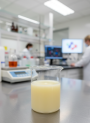
You can create an SLS-free shampoo using a base like Sulfate Free Shampoo Base (pH 7, Clear, Foaming). This base is designed to be gentle and sulfate-free.
An example formula for adult conditioning shampoo using this base is:
- Sulfate Free Shampoo Base (pH 7, Clear, Foaming): 30%
- Poly-Conditioner Eco: 3%
- Distilled Water: 66%
- Preservative: 1% (adjust according to the specific preservative used)
This base can be mixed with water. Avoid intense stirring to prevent excessive bubbles. If you need to adjust viscosity, you can use salt (test at 0.2% and stir gently).
Recommended Natural Extracts for Shampoo
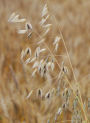
Natural extracts can add beneficial properties to your shampoo. Avena sativa (Oat) Extract (Water Soluble) is a good option, known for its ability to help reduce skin irritation. It can be added to the water phase at a usage rate of 1-5%.
Paraben-Free Preservatives
For paraben-free preservation suitable for body wash and shampoo for both children and adults, consider these options:
- Mild Preserved Eco™ (Preservative-Free): This is a gentle, non-irritating option that is not classified as a preservative by the FDA, allowing for "preservative-free" claims. It also acts as a humectant. Use at 1.0-1.5% for general cosmetics, or up to 2.0% for formulas difficult to control infection. It can be mixed in the last step below 80°C and works in pH 4-9.
- Phenoxyethanol SA (eq. Optiphen Plus): A broad-spectrum preservative free from parabens and formaldehyde. It is a blend of Phenoxyethanol, Caprylyl Glycol, and Sorbic Acid. Use at 0.5-1.25% in the final step below 60°C and in pH 2.0-6.0.
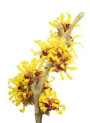
Regarding PaeoniaPreserve™ (Natural Preservative), it is a natural preservative and is paraben-free. The recommended usage rate is 2% when used as a single preservative in a formulation, or 0.5-1.0% when used alongside other preservatives. The 1% mentioned in the example formula is a general placeholder, and you should use the specific recommended rate for PaeoniaPreserve™ (2% if used alone). Avoid heat above 60°C when mixing.
Importance of Preservatives
It is highly recommended to include a preservative in your formulation. Without a preservative, it is impossible to predict how long the product will last before microbial contamination occurs, which poses a risk to the user. If you choose not to use a preservative, you must constantly monitor the product for any signs of spoilage before each use.
Recommended Colors for Clear Shampoo/Liquid Soap
For coloring clear shampoo or liquid soap, use water-soluble cosmetic colors. Examples include Caramel Color EasyWash™ (brown) and FD&C Yellow No.6 (CI15985) EasyWash™ (yellow). These are special types that are easy to wash off and resistant to fading. Add them directly to the water phase in very small amounts until the desired color is achieved.
Related Products Mentioned
Phenoxyethanol SA (eq. Optiphen Plus)
Mild Preserved Eco™ (Preservative-Free)
PaeoniaPreserve™ (Natural Preservative)
FD&C Yellow No.6 (CI15985) EasyWash™