Targeted Wrinkle Serum Formulation with Peptides
Question
Is it possible to formulate a targeted serum for wrinkles around the eyes and forehead using a specific list of ingredients including Cone Snail Peptide, Acetyl Octapeptide-3, Pep®-Leupha, Wrinkle-Lax™, Pro Polymer, Poly-Conditioner Pro, Mild Preserved Eco, and Dimethyl Isosorbide at specified percentages (20%, 0.5%, 0.5%, 1%, 10%, 0.3%, 10%, 3%)?
Answer
Targeted Wrinkle Serum Formulation
Based on the ingredients and percentages you've provided, it is possible to create a serum targeting wrinkles around the eyes and forehead. The combination of ingredients you've chosen includes several peptides known for their anti-aging properties and a penetration enhancer to help deliver them into the skin.
Here's an evaluation of your proposed formula:
- Snail Venom (Mu-Conotoxin) 20%: This is within the recommended usage rate (10-20%) and is known to help reduce sudden wrinkles by inhibiting muscle constriction. The description mentions that a water-based formula with a cationic polymer like Poly-Conditioner Pro is recommended for optimal results, which aligns with your formula.
- Pro Polymer™ (Gel Maker) 0.5%: This acts as a thickener. The usage rate is within the recommended range (0.5-5%), but the general recommendation for a gel texture is 0.8%. Using 0.5% might result in a thinner serum consistency.
- Poly-Conditioner Pro (400 mPa.s) 0.5%: This functions as a cationic polymer and skin conditioning agent. The usage rate is within the recommended range (0.2-0.5%). It is also specifically mentioned as compatible with Snail Venom in a tested formula example.
- Mild Preserved Eco™ (Preservative-Free) 1%: This is a gentle preservative alternative and humectant. The usage rate is within the recommended range (0.5-2.0%) and is suitable for general cosmetic formulas.
- Acetyl Octapeptide-3 (eq. SNAP-8) 10%: This peptide helps reduce wrinkles by reducing muscle contraction. Your proposed percentage is within the recommended usage rate (3-10%).
- Wrinkle-Lax™ คลายริ้วรอย 0.3%: This ingredient has a muscle relaxant effect to help reduce wrinkles caused by muscle contraction. Your proposed percentage is within the recommended usage rate (0.3-0.5%).
- Pep®-Leupha (Pentapeptide-18) 10%: This peptide is also known for its wrinkle reduction properties. Your proposed percentage is within the recommended usage rate (3-10%).
- Dimethyl Isosorbide (DMI) 3%: This acts as a solvent and penetration enhancer, helping the active ingredients absorb better into the skin. Your proposed percentage is within the recommended range (1-10%) and is the recommended rate for transporting ingredients.
The combination of Snail Venom, Pro Polymer, Poly-Conditioner Pro, and Mild Preserved Eco at the percentages you listed is very similar to an example formula provided in the Snail Venom description that showed good effectiveness.
Mixing Guidance:
When mixing, pay attention to the heat sensitivity of the ingredients. Peptides like Snail Venom, Acetyl Octapeptide-3, Pep®-Leupha, and Wrinkle-Lax should be added in the final step when the mixture has cooled to below 40°C. Mild Preserved Eco should also be added in the final step. Pro Polymer can be mixed in the water phase, and while it can tolerate some heat (up to 65°C), considering the heat sensitivity of other ingredients, it's best to prepare the base and cool it before adding the sensitive actives. DMI can be added to the water phase and can withstand heat up to 80°C.
Overall, your proposed formula uses suitable ingredients at appropriate concentrations for a targeted wrinkle serum.
Updated Review: May 2026
This section was added after reviewing the original answer against current product availability and formulation knowledge at the stated point in time.
Update 2026-05-24: The original guidance remains broadly correct: this targeted water-based serum concept is possible for forehead lines and the outer eye-area wrinkle zone. However, because the formula combines several expression-line peptide concepts at high levels together with Dimethyl Isosorbide (DMI), it should be treated as an R&D formula, not as an automatically low-risk routine eye serum.
Important current checks:
- The listed non-water ingredients total 65.3%, so water should be added q.s. to 100% — approximately 34.7% water. Do not add 100% water on top of the listed ingredients.
- Snail Venom 20%, Acetyl Octapeptide-3 solution 10%, and Pep®-Leupha 10% are within the supplier solution ranges, but Acetyl Octapeptide-3 and Pep®-Leupha are at the upper end of their ranges. For sensitive users or use close to the eye area, consider reducing one or more peptide solution levels and perform patch/tolerance testing first.
- DMI 3% is within the supplier range and matches the typical transport-use level, but it is a penetration enhancer. For use near the eyes, validate stinging, watering, redness, and irritation; do not apply into the eye, eyelid margin, mucous membrane, or broken/irritated skin.
- Mild Preserved Eco 1% is within its catalog range, but preservation of a high-water serum cannot be confirmed by calculation alone. A preservative efficacy/microbial challenge test is recommended, especially for products used near the eye area or for sale.
- Keep peptide solutions and Mild Preserved Eco in the cool-down/final phase below 40°C. A practical pH target is about 5.2–6.2, then check pH again after 24 hours and during stability testing.
- Pro Polymer 0.5% may give only a light serum gel; adjust texture only after full hydration and compatibility checks. Poly-Conditioner Pro 400 mPa.s remains suitable as the cationic polymer; the Extra Clear grade is only an optional current catalog choice when clarity is important.
- Current catalog options include both ready-to-use solution forms and concentrated powder forms for Mu-Conotoxin, Acetyl Octapeptide-3, and Pentapeptide-18. Powder forms must not be substituted at the same percentage as the solution forms; they require recalculation and accurate pre-dilution.
Before routine use or commercial use, check appearance, clarity, precipitation, viscosity, odor/color, pH drift, microbial protection, and stability at different temperatures.
Related Products Mentioned
Pro Polymer™ (Gel Maker)
Mild Preserved Eco™ (Preservative-Free)
Poly-Conditioner Pro (400 mPa.s)

Wrinkle-Lax™ คลายริ้วรอย
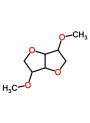
Dimethyl Isosorbide (DMI)
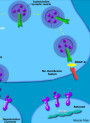
Acetyl Octapeptide-3 (eq. SNAP-8)
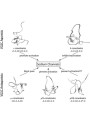
Snail Venom (Mu-Conotoxin)
Pep®-Leupha (Pentapeptide-18)
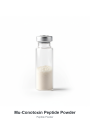
Mu-Conotoxin Peptide Powder
Acetyl Octapeptide-3