Harry’s Cosmeticology, 9th edition
General cosmetic formulation reference for toners, solubilization, humectants, preservation, and sensory considerations.
Harry’s Cosmeticology, 9th ed., 2015.
May I ask for advice on a toner formula to remove residue after washing the face?
Ingredients
Questions:
Summary: The formula is more suitable as a wipe-off / leave-on hydrating antioxidant toner, not a true cleansing water. It can help remove some post-cleansing residue mainly through the mechanical wiping action of the cotton pad, with some help from Polysorbate 20, but it should not be positioned as a main makeup/sunscreen remover or as a formula that removes all residue completely.
| Ingredient | Comment |
|---|---|
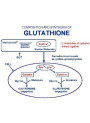
| N-Acetyl Cysteine (Glutathione Precursor) 5% | Within the catalog maximum, but this is the high end. It may affect odor, acidity, skin feel and irritation risk. For a daily AM/PM toner, start testing at 2–3% first unless 5% is specifically needed and passes stability/sensory testing. Avoid heat, air and light. |
| Tomato Natural Water Soluble Color / Tomato Extract 5% | Not recommended at 5% if using this catalog material. Catalog range is 0.1–1%; reduce to 0.1–0.5%, or not over 1%. 5% may give strong color, heavier feel, instability and higher preservation burden. |
| Creatine 100 1% | Suitable; within catalog range and compatible with the suggested pH. |
| MOIST24 3% | Usable, but for combination/acne-prone skin and a light toner feel, reduce to 1–2% if stickiness is a concern. |
| Mild Preserved Eco™ 1% | Within range. For a high-water formula with natural extract, perform a preservative efficacy/challenge test before selling; if needed, adjust within the catalog range. |
| Polysorbate 20 2% + fragrance 0.5% | Technically can help solubilize fragrance, but may add afterfeel/foam. For acne-prone skin, fragrance 0–0.1% or fragrance-free is preferred. Polysorbate 20 trial range: about 0.3–1.0% if fragrance-free/for slight residue-lifting support, or 1–2% only as needed to solubilize fragrance, then check clarity and separation. |
| Disodium EDTA 0.2% | Suitable; add into water first. |
| Allantoin 0.3% | Suitable, but must be fully dissolved; keep within room-temperature solubility limits. |
Target final pH: 4.8–5.0
Acceptable practical window: about 4.5–5.2. This fits the overlap of N-Acetyl Cysteine, Creatine 100, Mild Preserved Eco™, Allantoin, Disodium EDTA and MOIST24 better than a higher-pH toner.
Use this as a starting trial, not a proven final commercial formula:
For commercial production, perform:
Sources supporting the key technical claims in this answer
General cosmetic formulation reference for toners, solubilization, humectants, preservation, and sensory considerations.
Harry’s Cosmeticology, 9th ed., 2015.
General reference for leave-on skin-care formulation, pH, irritation risk, and preservation/stability testing.
Barel, Paye & Maibach, Handbook of Cosmetic Science and Technology, 4th ed., CRC Press, 2014.
General grounding for preservative efficacy/challenge testing principles.
Sutton SVW, Antimicrobial Preservative Efficacy and Microbial Content Testing, PDA Journal of Pharmaceutical Science and Technology, 2002.