Understanding Hyaluronic Acid: Differences, Molecular Weights, and Types
Question
Could you please explain the difference between Hyaluronic Acid, Sodium Hyaluronate, and terms like "Bio Sodium Hyaluronate"? Also, what are the different types of Hyaluronic Acid products you offer, and what are their key differences and benefits?
Answer
Understanding Hyaluronic Acid and Sodium Hyaluronate
Regarding your question about the type of Hyaluronic Acid we sell and the difference between "Hyaluronic Acid" and "Bio Sodium Hyaluronate," the information provided by cosmeceutical7 is very helpful and accurate.
Essentially, Hyaluronic Acid is the naturally occurring substance, while Sodium Hyaluronate is the salt form of Hyaluronic Acid. Sodium Hyaluronate is more stable and commonly used in cosmetic formulations. Most Hyaluronic Acid products available are in the form of Sodium Hyaluronate.
The term "Bio Sodium Hyaluronate" often refers to Sodium Hyaluronate produced through biotechnology, which is a common method of production for cosmetic-grade Hyaluronic Acid today. The "Bio" part might be used as a trade name by specific manufacturers, as mentioned in the forum reply.
Therefore, the Hyaluronic Acid products we offer are indeed Sodium Hyaluronate or its modified forms, produced using biotechnology.
Key Differences in Hyaluronic Acid Products
The primary differences between various Hyaluronic Acid products lie not in the "Bio" naming, but in their molecular weight and any chemical modifications.
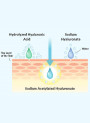
Molecular Weight: Hyaluronic Acid comes in different molecular sizes (e.g., high, medium, low, super low, and nano molecular weights). Different sizes penetrate the skin to varying degrees:
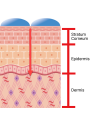
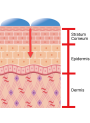
- High Molecular Weight: Stays on the skin surface, forming a hydrating film and reducing transepidermal water loss.
- Low and Nano Molecular Weight: Can penetrate deeper into the epidermis, providing hydration in lower layers and potentially offering anti-aging benefits.
Chemical Modifications: Some Hyaluronic Acid derivatives are modified to enhance specific properties:
- Sodium Acetylated Hyaluronate (Super-HYA™): Modified for better affinity with the skin's surface, leading to enhanced and longer-lasting hydration.
- Cationic Hyaluronic Acid (HyaCoat™): Modified to have a positive charge, allowing it to adhere better to the negatively charged skin or hair surface, making it suitable for rinse-off products.
- Cross-polymer Hyaluronic Acid: Forms a gel-like network that provides sustained hydration and a smooth feel.
We offer a variety of Hyaluronic Acid products with different molecular weights and modifications to suit various formulation needs, including:
- Hyaluronic Acid (Standard Molecule)
- Hyaluronic Acid (Small Molecule)
- Hyaluronic Acid (Large Molecule)
- Hyaluronic Acid (Super Low Molecule, 7000daltons)
- Hyaluronic Acid (Nano Molecule, 800daltons and 2000daltons)
- Super-HYA™ (Sodium Acetylated Hyaluronate)
- HyaCoat™ (Cationic Hyaluronic Acid)
- Blends like 4D Hyaluronic Acid and 8D Hyaluronic Acid which combine multiple molecular weights and modified forms for comprehensive hydration.
In summary, while "Bio Sodium Hyaluronate" might be a specific brand's name, the Hyaluronic Acid products we sell are generally Sodium Hyaluronate or its beneficial derivatives, with the key distinctions being their molecular size and any special modifications for targeted benefits.
Related Products Mentioned

HyaCoat™ (Cationic Hyaluronic Acid)


4D Hyaluronic Acid