Water Essence Formulation Review and Mixing Procedure
Question
Regarding the formulation for a water essence intended as a pre-serum/cream step to provide soft, moisturized, and bright skin. The desired texture is similar to Hada Labo's, not as liquid as water but not as thick as a serum, light, fast-absorbing, and non-sticky.
The proposed formula is:
- Water 59.8%
- EDTA 0.2%
- Active Protec 2%
- Mild Preserved Eco 1%
- Safe-B3 5%
- GlucoBright 4%
- Z-White 1%
- Cosmo White 1.5%
- VersaMoist 2% (สารนำพา)
- 4D Hyaluronic Acid 5%
- Snail Secretion 3%
- PiteraEx 1%
- Repair Activator 15%
- propolymer 0.5%
The proposed mixing procedure is: Combine 1 and 2. Then warm the water to 50-60°C to help dissolve 3. Add 4, 5, 6, 7, 8, 9, 10. Add 11, 12, 13. Add 14 and stir until homogeneous.
My questions are:
- Are the ingredients in this formula compatible?
- Is the proposed mixing procedure correct?
My skin type is combination skin.
Answer
Formulation Review
Your formula includes a good selection of ingredients aimed at providing hydration, brightening, and skin barrier support, suitable for combination skin.
- Hydration: Water, 4D Hyaluronic Acid, VersaMoist, GlucoBright, and Snail Secretion contribute to moisturizing the skin at various levels.
- Brightening: Safe-B3 (Niacinamide), GlucoBright (Acetyl Glucosamine), Z-White (Zinc Glycinate), and Cosmo White work through different mechanisms to help reduce hyperpigmentation and improve skin tone. Safe-B3 and GlucoBright are known to work synergistically.
- Skin Health/Repair: Safe-B3 strengthens the skin barrier. Snail Secretion helps with skin regeneration and soothing. PiteraEx (Saccharomyces Lysate Extract) and Repair Activator (Bifida Ferment Lysate) support skin repair and anti-aging benefits.
- Stability/Preservation: EDTA helps chelate metal ions for stability. Mild Preserved Eco provides preservation. Active Protec UV helps protect the formula from UV light and oxidation.
- Texture: 4D Hyaluronic Acid and Propolymer are the primary ingredients for creating the desired texture, aiming for something between water and a serum.
Overall, the combination of ingredients is compatible and well-suited for your goals of achieving soft, moisturized, and brighter skin with a light texture.
Mixing Procedure Analysis
Your proposed mixing procedure is a good starting point, but based on the properties of the ingredients, some adjustments are recommended for optimal results and stability:
- EDTA: Adding EDTA to the water phase first is correct to chelate any metal ions present.
- Active Protec UV: Heating the water slightly (50-60°C) to help dissolve Active Protec UV is acceptable, as indicated in its description. However, ensure the mixture cools down before adding heat-sensitive ingredients.
- Mild Preserved Eco: The description for Mild Preserved Eco states it should be mixed in the last step when the formula has a gel or cream texture. Adding it early (step 4) is incorrect and could potentially affect its efficacy or the formula's stability over time.
- Heat-Sensitive Ingredients: Snail Secretion, PiteraEx (Dermal Respiratory Factor), and Repair Activator (Bifida Ferment Lysate) are sensitive to heat and should be added in the final step after the mixture has cooled down, ideally below 40°C. Your current steps add them before the thickener but still relatively early in the process, which might expose them to higher temperatures if the water phase was heated.
- Propolymer and Electrolytes: Propolymer (Acrylate Crosspolymer) is added last to create the gel texture, which is the correct step for a thickener. However, the description mentions that electrolytes (substances containing Sodium, Magnesium, Calcium, Potassium, Zinc, etc.) can reduce its viscosity and should ideally be added after the gel has formed, potentially requiring a higher amount of Propolymer. Your formula includes Z-White (Zinc Glycinate), which is an electrolyte. Adding Z-White before the Propolymer (step 7) might hinder the Propolymer's thickening ability or require you to use more Propolymer than expected to achieve the desired texture.
- Propolymer Neutralization: The description for Propolymer does not explicitly mention a neutralization step, but many acrylate crosspolymer thickeners require neutralization with a base (like Sodium Hydroxide solution) after dispersion in water to fully swell and thicken. If this specific grade requires neutralization, that step is missing from your procedure. Without neutralization (if needed), you may not achieve the desired viscosity.
Recommended Mixing Procedure
Here is a suggested mixing procedure incorporating the product information:
- In your main beaker, combine Water and Disodium EDTA. Stir until EDTA is fully dissolved.
- If using Active Protec UV, you can gently warm the water phase up to 50-60°C to aid dissolution, then add Active Protec UV and stir. Allow the mixture to cool down to below 40°C before proceeding.
- Add Safe-B3, GlucoBright, Cosmo White, and VersaMoist to the cooled water phase. Stir until all powders are fully dissolved and liquids are incorporated.
- Slowly sprinkle Propolymer onto the surface of the mixture while stirring gently. Avoid high-speed blending initially. Follow the specific hydration instructions for your Propolymer (e.g., let it sit for a period, then stir gently) until a uniform dispersion is achieved.
- If your Propolymer requires neutralization, slowly add a pre-calculated amount of a neutralizing solution (like 10% Sodium Hydroxide solution) while stirring gently until the gel thickens to your desired viscosity. Check the specific instructions for your Propolymer product to confirm if neutralization is needed and how to perform it.
- Once the gel texture is formed, add Z-White, Snail Secretion, PiteraEx (Dermal Respiratory Factor), and Repair Activator (Bifida Ferment Lysate). Stir gently until fully incorporated.
- Finally, add Mild Preserved Eco and stir until evenly distributed.
- Check the final pH of the product and adjust if necessary to be within the optimal range for your ingredients (ideally between pH 4.0-7.0, and skin-compatible, typically 5-6).
Following this revised procedure should help ensure better ingredient compatibility, proper thickening, and stability of your water essence.
Related Products Mentioned
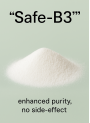
Safe-B3™ (Vitamin B3, Niacinamide)
GlucoBright™ (Acetyl Glucosamine)
Disodium EDTA
Pro Polymer™ (Gel Maker)
Snail Secretion
Mild Preserved Eco™ (Preservative-Free)
Dermal Respiratory Factor
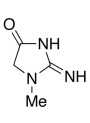
CosmoWhite™ (1-Methylhydantoin-2-Imide)
4D Hyaluronic Acid
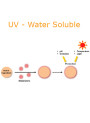
ActiveProtec™ UV
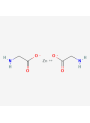
Z-White™