How to Make Color Changing Lip Balm
Question
I would like to learn how to make a color-changing lip balm. Could you please provide details on the type of product and the formulation process? Specifically, what are the key ingredients and how should they be used to achieve the color-changing effect based on the skin's pH?
Answer
Color Changing Lip Balm Formulation
To create a color-changing lip balm, the key ingredient is a color-changing pigment that reacts to the pH of the skin.
Key Ingredients:
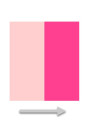
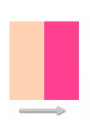
Color Changing Pigment: Pigments like D&C Red 27 and D&C Red 21 are commonly used. These pigments change color (typically from clear or light orange/pink to a deeper pink/red) when they come into contact with the slightly acidic pH of the lips.
- They are oil-soluble and work best in anhydrous (water-free) formulations like lip balms.
- Recommended usage rate is typically 0.1-3% depending on the desired color intensity.
Lip Balm Base: You will need a base for the lip balm. This can be a simple blend of oils (like castor oil, jojoba oil) and waxes (like beeswax, candelilla wax) to provide structure and emollience.
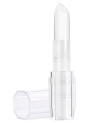
- Alternatively, a ready-made base like the Color Changing Lipstick (Clear to Pink Red) base can be used. This base already contains the necessary color-changing component and other lip-friendly ingredients. You would typically just need to melt it and add flavor if desired.
Formulation Tips:
- Ensure your base is anhydrous (contains no water) for the best performance of the pH-reactive pigments.
- Dissolve the color-changing pigment in the oil phase of your lip balm base.
- If using the ready-made base, simply melt it, add oil-soluble flavor (if any, typically 0.5-1%), mix, and pour into containers.
By combining a suitable color-changing pigment with a lip balm base, you can create a product that adapts to the user's unique lip chemistry, resulting in a personalized shade of pink or red.
Updated Review: May 2026
This section was added after reviewing the original answer against current product availability and formulation knowledge at the stated point in time.
Update 2026-05-24
The earlier guidance remains generally valid for anhydrous color-changing lip balm/lipstick systems. Current catalog options still include D&C Red 27 Color Changing Pigment (CI45410), D&C Red 21 Color Changing Pigment (CI45380), and the ready-made Color Changing Lipstick (Clear to Pink Red) base.
For custom oil/wax formulas, treat the 0.1–3% pigment level as a lab-trial range only. Start low, dissolve the selected color-changing pigment completely in the oil phase, then adjust after checking shade, stability, rub-off, sweating/blooming, odor, packaging compatibility, and overall safety. The visible color normally develops more strongly after application due to contact with moisture and the lip/skin surface condition.
Before commercial production, confirm the current product page, COA, cosmetic grade, and colorant rules for the country where the lip product will be sold. The permitted use and maximum level for lip products can differ by market, so do not assume the catalog range is automatically legal everywhere. Do not substitute water-soluble colors, direct dyes, lakes, or non-lip pigments unless that exact material is documented as permitted for lip use in the intended market.
If using Color Changing Lipstick (Clear to Pink Red), use it as a ready-made melt-and-pour base. Only add compatible oil-soluble lip flavor if needed; do not add water, extracts, actives, or other unsupported ingredients.