Browse Questions and Answers
Avg response: 24 HrsFilter Questions
20 of 14228 results
I am formulating a lotion and need advice on selecting a viscosity enhancer/thickener. 1. What are the key differences between `Cetearyl Alcohol` and `Pentaerythrityl Distearate` in terms of function, texture, and usage? 2. If the primary requirement is to create a lotion that is thickened but **does not leave a white cast** (white residue) on the skin after application, can `Pentaerythrityl Distearate` be used as a direct substitute for `Cetearyl Alcohol`?
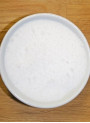
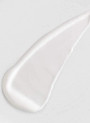
I am using powdered rosemary extract. Does this type of extract typically have a strong scent? I would like to know the difference in odor between high-purity functional extracts (such as those standardized for `Rosmarinic Acid` or `Carnosic Acid`) and products specifically designed as Rosemary Flavor powders.
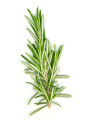
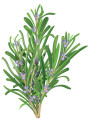
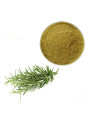
Which type of Rosemary Extract is most suitable for use in **Khao Kriap** (crispy chips) products, specifically to act as a natural antioxidant and prevent lipid oxidation (rancidity) in the oil content, thereby extending the product's shelf life?
I would like a detailed comparison of the efficacy and differences between two forms of Vitamin A derivatives: * `Retinal-EZ™ (Encapsulated Water Dispersible Retinal)` * `Retinal (Retinaldehyde)` Which product is considered superior, and what are the key differences in terms of stability, ease of formulation, and overall performance?
I am attempting to formulate a solution containing **2% Minoxidil**. I initially tried using **2% Butylene Glycol** as a solvent but found that the Minoxidil did not dissolve and precipitation occurred. Could you recommend effective methods and alternative solvents for dissolving **2% Minoxidil** under the following constraints: * I want to avoid using Ethanol. * I am concerned that using Propylene Glycol (PG) will cause skin irritation. What specific solvents and concentrations (e.g., Ethoxydiglycol, Dipropylene Glycol) are recommended to achieve stability and solubility for 2% Minoxidil?
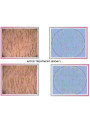
I am developing a herbal cream base and previously switched emulsifier systems (to Sucro Plus) to resolve a "krap khao mak" (fermented rice residue) issue, aiming for better coating. The current base formulation is: * Mineral Oil: 10% * Stearyl alcohol: 5% * Pentaeryl distearate: 5% * Sucro plus: 2% * Propylene glycol: 5% * Water: QS I am now facing two new problems with this base: 1. The absorption is still too slow and the texture feels heavy. 2. When I attempted to reduce Stearyl alcohol and Pentaerythritol distearate to improve absorption, the resulting cream became liquid and lost its set/structure. I request advice on how to adjust this formulation to improve absorption while maintaining the necessary viscosity and structure.
What are the instructions and key technical considerations for formulating an effective GHK-Cu (Copper Peptide) serum? Specifically, please provide guidance on: 1. Recommended product forms (e.g., solution vs. powder) for ease of formulation. 2. A simple formulation guide, including recommended usage percentages for `GHK-Cu 10000ppm Solution` to achieve an effective concentration (0.05% to 0.1% pure peptide). 3. Critical formulation tips regarding processing temperature, final product pH requirements (optimal pH range of 5.0 to 7.0), and known ingredient incompatibilities, particularly concerning strong acids like **L-Ascorbic Acid (pure Vitamin C)**.
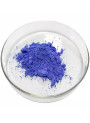
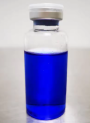
How should Choline Chloride be stored? What is the recommended storage temperature, and what specific precautions should be taken during its storage?
Regarding the use of `Chili Hot` in a lotion formulation: * What is the recommended concentration to achieve a warming sensation upon application? * Is it necessary to use `Chili Hot` in combination with `Menthol` for this effect?
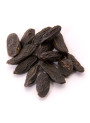
Does `Tonka Bean Absolute (10% in DPG)` require cold shipping? If it is not shipped cold, will it spoil?
What ingredients are recommended for protecting and restoring hair that has been damaged by **chemical processes** such as: * Dyeing * Perming * Bleaching
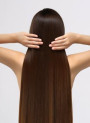
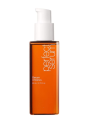
Can PHMB (Polyhexamethylene Biguanide) be used in combination with chelating agents in a formulation?

I would like to inquire about a suitable colorant for making lipstick. The colorant needs to be oil-soluble and derived from natural sources.
Can `HairPLEX™` (Bis-Aminopropyl Diglycol Dimaleate) be directly mixed with hair conditioner? If so, what are the recommended mixing ratios and application instructions for optimal effectiveness?
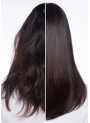
Could you please recommend fragrances that are suitable for use in **cream** and **lotion** formulations, specifically those with a **cool and refreshing scent** profile?

The recommended usage rate for `BabyFace protein` is 82%. Will it still be effective at a usage rate of 50-60% when incorporated into a serum or cream formulation?

I have questions regarding the usage rates of two specific ingredients: * **GLDA (Tetrasodium Glutamate Diacetate, 47% Solution)**: * The recommended usage rate is stated as 0.1%-0.2%. * The SDS indicates 100%, but the product is a 47% solution. * Does the usage rate of 0.1%-0.2% refer to the solution `as is`, or do I need to adjust (e.g., double) the percentage to account for the 47% active ingredient concentration? * **TransMoist™ (PPG-24-Glycereth-24)**: * What is the recommended usage rate for this product?
I am requesting a formulation for a mosquito repellent product specifically designed for children. The primary active ingredients for mosquito prevention should be Citronella oil and Lemon Eucalyptus oil.
I am formulating a lotion with the following characteristics: * **Texture:** Lightweight, milky, non-greasy * **Foaming:** Minimal soaping * **Target Skin:** Dry skin I am using `Olivem 1000` as the emulsifier. What is the recommended oil to `Olivem 1000` ratio for this type of lotion?
I would like to inquire about the use of `Neutral Protease Enzyme` for hydrolyzing proteins in ice cream products. My understanding is that this enzyme can reduce the viscosity of high-protein ice cream. Is this understanding correct?