Achieving Creamy Texture from Oil/Butter Blend
Question
How can I formulate a creamy texture product using a blend of oils (Sweet Almond, Grape Seed, Olive, Avocado, Castor), butters (Shea, Cocoa), essential oil (Grapefruit), and a colorant (D&C Red No.28)? Can these ingredients be mixed, and what additional ingredients are needed to achieve a creamy consistency from this base?
Answer
Formulation Advice for Your Oil Blend
Based on the ingredients and percentages you provided:
- Sweet Almond Oil (10%)
- Grape Seed Oil (10%)
- Olive Oil (20%)
- Avocado Oil (10%)
- Castor Oil (10%)
- Shea Butter (10%)
- Cocoa Butter (10%)
- Grapefruit Essential Oil (1%)
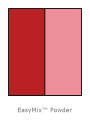
- D&C Red No.28 (19%)
The total percentage is 100%. This combination consists mainly of oils and butters.
Can these ingredients be mixed?
Yes, these ingredients can be mixed together to form an oily base. The essential oil will dissolve in the oils.
Regarding the D&C Red No.28 at 19%, this is a very high concentration for a colorant in a cosmetic product. Colorants are typically used at much lower percentages, often below 1%. Using such a high amount may lead to staining and could affect the texture. For an oil-based formula like this, an oil-dispersible colorant like D&C Red No.28 Lake would be more suitable than a water-soluble dye.
How to achieve a creamy texture?
Your current formula will result in a balm or a solid butter-like texture at room temperature due to the high percentage of oils and solid fats (butters). To achieve a creamy texture, you need to create an emulsion, which requires:
- An aqueous phase (Water): You need to add water to the formula.
- An Emulsifier: This ingredient is crucial for binding the oil phase (your current mixture) and the water phase together to form a stable cream. A suitable emulsifier for an oil-in-water emulsion would be needed. An example of a natural-derived emulsifier is Olivem 1000.
- A Thickener: To get a creamy consistency, you will likely need to add a thickener to increase the viscosity of the emulsion.
- A Preservative: Since you are adding water, a preservative is essential to prevent microbial growth and ensure the safety and shelf life of the product.
Example of how to modify the formula (percentages are illustrative and require testing):
- Oil Phase (Your current blend minus some oils/butters, plus emulsifier)
- Sweet Almond Oil
- Grape Seed Oil
- Olive Oil
- Avocado Oil
- Castor Oil (Note: Liquid Castor Oil is different from Hydrogenated Castor Oil wax)
- Shea Butter
- Cocoa Butter (or Cocoa Butter Replacer)
- Grapefruit Essential Oil
- D&C Red No.28 (at a much lower, appropriate usage rate, using an oil-dispersible form like D&C Red No.28 Lake)
- Emulsifier (e.g., Olivem 1000, typically 3-8%)
- Water Phase
- Purified Water (e.g., 50-70%)
- Thickener (as needed)
- Preservative (as needed, according to supplier recommendations)
Creating a stable emulsion requires careful formulation and processing (heating the oil and water phases separately, combining them, and mixing with high shear). It is recommended to start with tested cream base formulas and incorporate your desired oils and butters while adjusting the emulsifier and thickener as needed.
Related Products Mentioned
Olive Oil (Extra Virgin)
Avocado Oil (Refined)
Shea Butter (Refined , Deodorised)
Shea Butter (Ultra Soft)
Shea Butter Light Oil
D&C Red No.28 Al Lake EasyMix™


Golden Shea Butter (Virgin, Ghana)

Grape Seed Oil (Cold-Pressed, Green)
Avocado Butter
Sweet Almond Butter