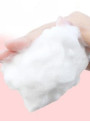
Achieving Dense, Fine Foam in Facial Cleansers
Question
How can I create a facial cleansing foam with a dense, fine foam texture similar to Shiseido Perfect Whip?
I understand that the traditional method involves fatty acids like Stearic Acid, Myristic Acid, and Lauric Acid reacting with Potassium Hydroxide to form soap, which creates a rich lather. However, the staff mentioned potential drawbacks like skin dryness and clogged pores with this method and suggested using gentler alternatives like Creamy Foamer™ and Coco-Betaine.
What is the technical approach or formulation strategy to achieve this specific dense and fine foam texture using milder ingredients, and how do ingredients like Creamy Foamer™ and Coco-Betaine contribute to this desired foam quality?
Answer
Achieving a Dense Foam in Cleansing Products
You're interested in how to create a dense, fine foam similar to Shiseido Perfect Whip cleansing foam. The original Perfect Whip formula uses a traditional method involving fatty acids like Stearic Acid, Myristic Acid, and Lauric Acid reacting with Potassium Hydroxide to form soap. This reaction is effective at generating a rich lather, which is then stabilized by other ingredients like Glycerin and Polyquaternium-7.
While this method produces a dense foam, as the staff reply mentioned, using Potassium Hydroxide (a strong alkali) and certain fatty acids can potentially lead to skin dryness or clogged pores for some individuals.
To achieve a similar dense and fine foam texture using gentler ingredients, you can utilize modern surfactant systems. The staff recommended using Creamy Foamer™ (Sodium Methyl Cocoyl Taurate) and Coco-Betaine.
- Creamy Foamer™ is an anionic surfactant known for creating a soft, smooth, and creamy foam. It is much milder than sulfates (like SLS) and is a good base for gentle cleansing formulas.
- Coco-Betaine is a mild, natural-derived zwitterionic surfactant that works well with other surfactants to boost foam quality and stability. It helps create abundant foam and leaves the skin feeling soft.
Combining these or other suitable mild surfactants can help build a good foam structure. To get the dense, fine texture you described, you often need to incorporate ingredients that help stabilize the foam and increase the viscosity of the product. Ingredients like certain polymers or thickeners can help trap air bubbles, making the foam denser and longer-lasting when you work the product between your hands.
The technique of rubbing the product between your hands with water helps to incorporate air and activate the surfactants, building the lather. The composition of the formula, particularly the choice of surfactants and the inclusion of foam boosters and stabilizers, is key to how fine and dense that foam will become.
Using a combination of gentle surfactants like Creamy Foamer™ and Coco-Betaine, along with appropriate thickeners or foam stabilizers, is a recommended approach to create a cleansing foam with a desirable texture that is also kind to the skin.