Achieving SPF 50 with Avobenzone, Octisalate, and Octocrylene
Question
How can I formulate a sunscreen to achieve SPF 50 using the following UV filters, and what are their typical usage percentages and regulatory limits?
- Avobenzone (Butyl Methoxydibenzoylmethane)
- Octisalate (Ethylhexyl Salicylate)
- Octocrylene
What factors are important to consider when combining these ingredients for SPF 50, particularly regarding stability and testing?
Answer
Achieving SPF 50 with Avobenzone, Octisalate, and Octocrylene
Achieving a specific SPF value like SPF 50 requires careful formulation and testing, as the interaction between different UV filters and the overall composition of the product significantly impact the final SPF. There isn't a simple percentage rule that guarantees SPF 50 just by mixing these three ingredients at certain levels.
However, here are the typical usage ranges and maximum allowed concentrations for each ingredient:
- Avobenzone (Butyl Methoxydibenzoylmethane): This is a UVA filter. It is often used at 1-5%. Regulatory limits vary by region (e.g., up to 5% in Thailand and Europe, up to 3% in the USA). Avobenzone needs to be stabilized in formulations, and Octocrylene is commonly used for this purpose.
- Octisalate (Ethylhexyl Salicylate): This is a UVB filter. It is typically used at 1-5%. The maximum allowed concentration in most countries, including Thailand, is 5%. Each 1% of Octisalate contributes approximately 1.0 to the SPF value, but this is not a linear relationship when combined with other filters.
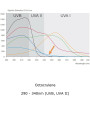
- Octocrylene: This filter protects against UVB and short UVA rays (UVA II) and is also used to help stabilize Avobenzone. It is typically used at 5-10%. The maximum allowed concentration in most countries, including Thailand, is 10%.
To achieve SPF 50, formulators usually use a combination of UVA and UVB filters at concentrations within their allowed limits. The exact percentages will depend on the specific formula and require testing (like in-vivo or in-vitro SPF testing) to confirm the final SPF value. Tools like the BASF Sunscreen Simulator can help estimate SPF values based on the combination and concentration of filters, but final product testing is essential.
Combining Avobenzone with Octocrylene is a common strategy to ensure the stability and effectiveness of Avobenzone against UVA rays.
Related Products Mentioned