Achieving White Color in Oil-Based Soap with Titanium Dioxide
Question
I am making an oil-based soap with glycerin and used Titanium Dioxide 250nm Pigment (Non-Treated) to make it white, but it did not achieve the desired whiteness. Why is this happening, and what type of Titanium Dioxide should I use for an oil-based soap formulation?
Answer
Achieving White Color in Oil-Based Soap with Glycerin
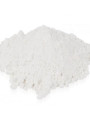
You've encountered an issue getting a bright white color in your oil-based soap with glycerin using the Titanium Dioxide 250nm Pigment (Non-Treated). This is likely because that specific type of Titanium Dioxide, and similar pigment grades like Titanium Dioxide 300nm Pigment (Non-Treated, Color-Controlled), are primarily designed for use as pigments in makeup and are intended to be dispersed in water-based formulas.
For oil-based soap formulations, you need a form of Titanium Dioxide that can disperse effectively in oil or the soap base itself to achieve good coverage and whiteness. Pigments that are not properly dispersed in the correct medium will not provide optimal coloring.
We recommend considering Titanium Dioxide products that are pre-dispersed in an oil base, as these are much easier to incorporate into oil-based systems and will provide better whitening results. Look for products like:
- ReadyMix™ White (Isononyl Isononanoate Base)
- ReadyMix™ White (Polyglyceryl-2 Triisostearate Base)
These types are formulated to blend smoothly into oil phases, ensuring the Titanium Dioxide particles are evenly distributed throughout your soap for a consistent and bright white color.
Glycerin is a valuable ingredient in soap for its moisturizing properties, but it does not contribute to the whiteness of the soap.
By switching to a Titanium Dioxide product designed for oil dispersion, you should be able to achieve the desired white color in your oil-based soap with glycerin.