Acne Treatment Formula: Viscosity Issues with Xanthan Gum and Alternative Gelling Agents
Question
I am developing a water-based acne treatment formula containing Niacinamide (B3) and Acetyl Glucosamine (NAG). I tried using Xanthan Gum as a gelling agent, increasing the concentration up to 4%, but the formula remains liquid and does not form a gel.
- Why is the formula still liquid despite using 4% Xanthan Gum?
- Can other gelling agents be used, such as Carboxylmethylcellulose, propyleneglycol alginate, or sodium alginate? Will using different gelling agents affect the efficacy of Niacinamide and Acetyl Glucosamine?
Answer
Understanding Your Acne Treatment Formula Viscosity Issue
It sounds like you're working on a great formula for acne using Niacinamide (B3) and Acetyl Glucosamine (NAG). It's frustrating when the texture isn't what you expect, even after adjusting the gelling agent concentration.
Here's a breakdown of your questions and some guidance:
1. Why is the formula still liquid?
The main reason your formula might still be too liquid, even at 4% Xanthan Gum, could be related to the specific type and quality of the Xanthan Gum you are using. As mentioned by the staff, different grades of Xanthan Gum can have significant variations in their thickening power. The Xanthan Gum from a university lab might not be a cosmetic or pharmaceutical grade optimized for creating high viscosity gels.
Additionally, Xanthan Gum typically provides a viscosity that is more "liquid-like" or pseudoplastic, meaning it thins under shear (like when you pump or spread it) but can feel less like a solid gel or jelly compared to other gelling agents. Even at higher concentrations, it might not achieve the thick, jelly-like consistency you desire.
2. Can other gelling agents be used, and will they affect efficacy?
Yes, you can definitely use other gelling agents instead of Xanthan Gum. The ones you mentioned, such as Carboxylmethylcellulose, propyleneglycol alginate, or sodium alginate, are all gelling agents that can thicken water-based formulas.
Regarding their effect on the efficacy of Niacinamide and Acetyl Glucosamine: Generally, gelling agents themselves do not negatively impact the efficacy of active ingredients like B3 and NAG. However, the interaction can sometimes go the other way, where certain active ingredients or other components in the formula might affect the gelling agent's ability to thicken or maintain stability. In the case of Niacinamide and Acetyl Glucosamine, they are generally compatible with a wide range of gelling agents, so it's unlikely these specific actives are causing an issue with the gelling agent itself, unless there's an interaction with other components in your specific base formula.
How to achieve a thicker gel consistency?
If you are looking for a thicker, more jelly-like gel texture than Xanthan Gum typically provides, you should consider using a different gelling agent known for creating that kind of texture. As suggested by the staff, Aristoflex AVC is an excellent option for creating clear, thick, jelly-like gels in water-based formulas. It is easy to use and can build significant viscosity even at low concentrations (typically 0.1-2.0%).
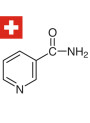
Niacinamide (Vitamin B3) is effective for reducing wrinkles, hyperpigmentation, increasing moisture by stimulating ceramide and collagen production, strengthening the skin barrier, reducing oiliness, and is suitable for acne-prone skin. Acetyl Glucosamine works well with Niacinamide to help with whitening, reducing dark spots, stimulating hyaluronic acid production for moisture, and can help reduce acne breakouts.
By switching to a gelling agent like Aristoflex AVC, you should be able to achieve the desired gel consistency for your formula containing Niacinamide and Acetyl Glucosamine without negatively impacting their benefits.
Remember to always test new ingredients and formulations to ensure stability and desired texture.
Related Products Mentioned
Safe-B3™ (Vitamin B3, Niacinamide)
GlucoBright™ (Acetyl Glucosamine)