Acne Water-Serum Formulation Review: Texture, Stability, and Penetration
Question
I need a water-based serum that is not sticky on the face, suitable for normal to oily skin. It should treat clogged pores without causing dryness, peeling, or redness. It is primarily for nighttime use but can also be used as a morning serum before foundation or makeup without peeling or dryness that affects makeup application. I would like a review of the following formula before proceeding with production testing:
Water 74.9%
Active ingredient
Oil base
1% Bakuchiol (liquid)
Water base
1% Zinc PCA (water-soluble powder, heat sensitive)
2% TreMoisture (water-soluble powder)
0.5% Acacia Salicylic Acid (water-soluble powder, heat sensitive)
3% Panthenol (Vitamin B5) ExtraLite (clear liquid, water-soluble)
5% Aloe Vera Extract (clear liquid, water-soluble)
5% Sodium PCA (clear liquid, water-soluble)
Others
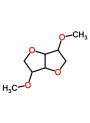
3% Dimethyl Isosorbide (DMI) (penetrance enhancer and solvent for salicylic/Bakuchiol)
1% ActiveProtec (clear liquid, water-soluble, UV protect)
1% emollient Ester (PPG-3 Myristyl Ether) (oil soluble, co-emulsifier with Satin Cream Maker)
1% Mild Preserved Eco
0.5% Satin Cream Maker (don't want a heavy serum texture, unsure if suitable for water formula)
1% Odor-Kill (to eliminate DMI odor)
0.1% Disodium EDTA
My specific questions are:
- I am unsure if the product will separate because it contains oil (Bakuchiol) mixed with other water-soluble parts and emulsifiers like 0.5% Satin Cream Maker and 1% emollient Ester (PPG-3 Myristyl Ether). Are these sufficient? Or should I choose another ingredient like Pro Polymer? I want the serum texture to be purely water-like. If it separates, can it be shaken before use to become homogeneous and water-like, or what alternative should I use? I want it lightweight like water.
- I want the serum to be water-like or very lightweight, spreading and absorbing quickly. Are there any conflicts with the ingredients listed above that would make the texture heavy or sticky? Which ingredients could be removed?
- Is 3% DMI sufficient as a penetrance enhancer for Bakuchiol and other active ingredients? Should I add anything else, such as Laurocapram? Would adding Laurocapram conflict with DMI, or can both be used together? I want it to be gentle on the skin but effectively enhance anti-irritation properties.
Thank you.
Answer
Formulation Review: Acne Water-Serum
Your goal is to create a lightweight, non-sticky water-serum for normal-oily skin targeting clogged pores, without causing dryness or irritation, suitable for day and night use under makeup.
Let's break down the formula and address your specific questions:
1. Emulsification and Separation
You are combining an oil-soluble ingredient (Bakuchiol) with a predominantly water-based formula using Satin Cream Maker and PPG-3 Myristyl Ether.
- Bakuchiol: This is an oil-soluble active ingredient.
- Satin Cream Maker: This is an emulsifier and thickener designed for creams, lotions, serums, or gels. It can handle up to 25% oil and is dispersed in the water phase. However, at 0.5%, it is a very low concentration, especially for emulsifying 1% Bakuchiol and 1% PPG-3 Myristyl Ether. More importantly, Satin Cream Maker is intended to create a cream or gel texture, not a purely water-like serum.
- PPG-3 Myristyl Ether: This is an emollient ester that helps dissolve oil and can act as a co-emulsifier, particularly for water-in-oil emulsions. While it helps incorporate the oil phase, it alone or in combination with 0.5% Satin Cream Maker may not be sufficient to create a stable oil-in-water emulsion with a water-like viscosity.
- Pro Polymer: Using Pro Polymer would result in a gel texture, which is not your desired water-like consistency.
Conclusion: Yes, your current formula is likely to separate or result in an unstable dispersion rather than a stable, homogeneous water-like serum. The emulsifier system (Satin Cream Maker + PPG-3 Myristyl Ether) at these concentrations is probably insufficient for stability and is also designed to create a thicker texture than a water-like serum. Shaking might temporarily mix the phases, but it will not create a stable product. To achieve a stable, water-like serum with an oil phase like Bakuchiol, you would typically need a different type of emulsifier or a solubilizer specifically designed for creating clear or near-clear solutions of small amounts of oil in water, or a microemulsion system (which is more complex).
2. Texture and Ingredient Conflicts
You want a lightweight, very thin serum texture that absorbs quickly.
- Most of your water-soluble ingredients (Zinc PCA, TreMoisture, Acacia Salicylic Acid, Panthenol, Aloe Vera Extract, Sodium PCA, ActiveProtec UV, Odor-Kill, Disodium EDTA) are generally lightweight and should not contribute significantly to a heavy or sticky feel at the proposed percentages, assuming they are fully dissolved and the overall formulation is stable.
- Panthenol (Vitamin B5) can feel slightly sticky at higher concentrations (above 5%), but 3% is usually acceptable and provides good moisturizing and soothing benefits.
- The primary ingredient conflicting with a purely water-like texture is Satin Cream Maker. Even at 0.5%, it is intended to build some viscosity and structure, moving the texture away from a simple liquid.
Conclusion: To achieve a truly water-like texture, you need to reconsider the emulsifier/thickener system. The current system using Satin Cream Maker is likely to result in a texture that is thicker than water. The other ingredients are generally compatible with a lightweight feel, provided the emulsification/solubilization is handled correctly.
3. Penetration Enhancement
You are using 3% Dimethyl Isosorbide (DMI) and asking if it's sufficient and if adding Laurocapram is advisable.
- Dimethyl Isosorbide (DMI): DMI is a well-known penetration enhancer. The product description for Pure-Bakuchiol™ specifically recommends using DMI at 2-3% to help bring Bakuchiol into the skin for maximum efficiency. Your proposed 3% is within this recommended range. DMI is also noted to reduce irritation from actives like Salicylic Acid.
- Laurocapram (Oil Soluble): While Laurocapram is also a penetration enhancer, the product information for Laurocapram (Oil Soluble) explicitly advises against using it together with other carriers (except 1,2-Hexanediol) as the overall effect may be reduced.
Conclusion: 3% DMI should be sufficient for enhancing the penetration of Bakuchiol and other actives in your formula. Adding Laurocapram alongside DMI is not recommended based on the product information and could potentially reduce efficacy or cause unwanted effects rather than enhancing penetration or anti-irritation properties.
Additional Considerations:
- pH: Ensure the final pH of your serum is optimized for the stability and efficacy of your active ingredients. Zinc PCA is most soluble and effective in the pH range of 4-6. Bakuchiol is more stable at pH below 6.5 (ideally 3.5-6.5). Aiming for a pH between 4.0 and 6.0 would be beneficial for both actives.
- Heat Sensitivity: Zinc PCA and Acacia Salicylic Acid are sensitive to heat. They should be added in the cool-down phase of your formulation process.
- Odor: DMI has a characteristic ether-like smell. Using Odor-Kill™ at 1% should help absorb this odor, as you've planned.
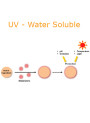
- Stability: Bakuchiol can be sensitive to metal ions and light. Including Disodium EDTA (0.1% is standard) helps chelate metal ions. Using an opaque container or adding UV protection like ActiveProtec™ UV (which you have included) is important for protecting Bakuchiol from light degradation, especially if using a clear bottle.
- Preservation: Mild Preserved Eco™ is a suitable preservative blend. Ensure you perform a challenge test on your final formula to confirm its effectiveness against microbial growth.
Summary of Recommendations:
- Emulsification/Texture: To achieve a stable, water-like serum texture with 1% oil-soluble Bakuchiol, you will likely need to change your emulsifier system. Satin Cream Maker is designed for thicker textures and 0.5% is likely insufficient for stability. Explore solubilizers or alternative emulsifiers specifically designed for very low oil content in water-based systems that yield low viscosity.
- Penetration Enhancement: 3% DMI is appropriate and sufficient for enhancing penetration. Do not add Laurocapram.
- Processing: Add heat-sensitive ingredients (Zinc PCA, Acacia Salicylic Acid) in the cool-down phase.
- Stability: Adjust pH to optimize for Zinc PCA (4-6) and Bakuchiol (3.5-6.5). Ensure pH is within 4-6 for best results for both. Use Disodium EDTA and ActiveProtec UV for stability.
- Preservation: Confirm the effectiveness of Mild Preserved Eco™ with a challenge test.
By adjusting the emulsification system to better suit a water-like texture, your formula has the potential to be an effective, lightweight serum for acne-prone skin.
Related Products Mentioned
Sodium PCA 50%
Disodium EDTA
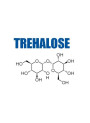
TreMoisture™ (Trehalose)
Pro Polymer™ (Gel Maker)

Satin Cream Maker™
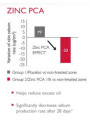
Zinc PCA
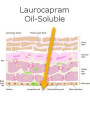
Laurocapram (Oil Soluble)
Mild Preserved Eco™ (Preservative-Free)
PPG-3 Myristyl Ether
Dimethyl Isosorbide (DMI)
ActiveProtec™ UV