Active Ingredient Concentration When Layering Serums and Formulation Percentage Calculation
Question
I have two questions regarding cosmetic formulation and application:
Effect of Layering Serums on Active Ingredient Concentration:
If I make two different serums and apply them simultaneously to the face, will this affect the concentration of active ingredients that were formulated correctly in each serum?
For example, I have separated active ingredients into two formulas (Antiaging and Whitening) in different bottles of gel because there were too many actives, and I wasn't sure if there was enough water to dissolve the powders. I'm concerned that when applying them together, the ingredients that were formulated to the correct percentage will become diluted.
Specifically, if both gels contain Vitamin B3 at 4%, will the combined concentration still be 4%? Or will the Argireline 10% added to the Antiaging gel have the same concentration or decrease when both serums are used together on the face? (Assume no pH incompatibility between the chosen actives).Percentage Calculation in Gel Formulation (Weight/Weight):
Active ingredient percentages are calculated based on the total weight. However, some powdered ingredients, when dissolved in water, result in a solution with the same weight as the water before dissolution (i.e., no weight increase from the powder itself).
If I am making a gel weighing 1kg:- Can I add other liquid active ingredients even if the total weight hasn't reached 1kg yet? If I add liquid actives (like Aloe Vera Extract), the total amount of actives might exceed 100% if calculated based on the initial 1kg target. Should the percentage still be calculated based on the 1kg weight, or can the remaining weight only be filled with water, or should I just stop adding ingredients once the target active percentages are met, even if the total weight is less than 1kg?
Thank you very much.
Answer
Understanding Active Ingredient Concentration When Layering Serums
When you apply two different serums to your face at the same time, the active ingredients from both serums will mix on the surface of your skin. This mixing will affect the final concentration of each active ingredient that your skin is exposed to.
Think of it like mixing two liquids in a cup. If you mix equal amounts of a liquid containing 10% of substance A with a liquid containing 0% of substance A, the resulting mixture will have substance A at approximately 5% concentration.
In your example:
- If both your Anti-aging serum and Whitening serum contain Vitamin B3 at 4%, and you apply equal amounts of each, the final concentration of Vitamin B3 on your skin will still be around 4%. This is because you are applying double the amount of Vitamin B3 but also double the total volume of product.
- However, if your Anti-aging serum contains Argireline at 10% and your Whitening serum contains 0% Argireline, applying equal amounts of both serums simultaneously will result in the Argireline being diluted to approximately 5% concentration on your skin. The final concentration depends on the ratio of the two serums applied.
Therefore, applying two serums together will generally dilute the concentration of active ingredients from each individual serum on your skin, unless the ingredient is present in both serums at the same concentration.
Calculating Percentages in Formulations (Weight/Weight)
Cosmetic formulations are typically calculated based on weight percentage (% w/w). This means the percentage of an ingredient is its weight divided by the total weight of the final formulation, multiplied by 100.
When you are making a gel formulation with a target total weight, such as 1kg (1000g), the total weight of all ingredients combined must equal 1kg.
- The weight of powdered ingredients, even after they dissolve in water, still contributes to the total weight of your formulation.
- If you have added all your active ingredients (powders and liquids) and other components (like gelling agents, preservatives, etc.) and the total weight is still less than your target (e.g., less than 1kg), you should add your main base ingredient, which is typically water or the primary solvent, to reach the final target weight (1kg in your example).
- You calculate the percentage of each active ingredient based on the final total weight of the batch (1kg or 1000g). For example, if you add 40g of Vitamin B3 to a final batch weighing 1000g, the concentration is (40g / 1000g) * 100% = 4%.
You cannot add additional liquid active ingredients if doing so would make the total weight exceed your target while still calculating percentages based on the original target weight. The percentage is always based on the actual final total weight of the batch.
Related Products Mentioned
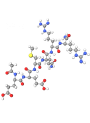
Acetyl Hexapeptide-8 (eq Argireline)
Safe-B3™ (Vitamin B3, Niacinamide)