Adapting Cleansing Formula for Eye & Lip Makeup Remover
Question
How can I adapt my cleansing formula, which uses MakeUp-Wash™ and Coco-Wash™, to be suitable for use as an eye and lip makeup remover?
What ingredients are recommended for this purpose, and what is the ideal pH range?
Answer
Adapting Your Cleansing Formula for Eye & Lip Makeup Remover
Based on your question and the staff's advice, there are two main approaches to adapt your cleansing formula for use as an eye and lip makeup remover:
Option 1: Modifying Your Existing Formula
The simplest approach is to modify your current formula by removing the Coco-Wash™ (PEG-7 Glyceryl Cocoate). The staff explained that MakeUp-Wash™ (PEG-6 Caprylic/Capric Glycerides) is a very gentle micellar agent that is sufficient for dissolving and absorbing makeup on sensitive areas like the eyes and lips, while Coco-Wash™ is a surfactant that, while mild, is less suitable for this delicate area.
By removing Coco-Wash™ (7%) from your original formula and adjusting the water phase accordingly, the modified formula would look something like this:
- Distilled Water: ~82.4%
- Propylene Glycol: 10%
- MakeUp-Wash™: 7%
- Phenoxyethanol: 0.6%
This modified formula utilizes the gentle cleansing properties of MakeUp-Wash™ for the sensitive eye and lip area.
Option 2: Using Solvent-Based Makeup Removers
Another effective approach, commonly used in commercial eye and lip makeup removers, is to use solvents that are highly effective at dissolving makeup pigments. The staff mentioned key solvents for this purpose:
- Cyclopentasiloxane (or Cyclomethicone)
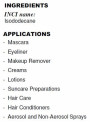
- Isododecane
- Butylene Glycol
These ingredients work by dissolving the makeup rather than relying primarily on surfactants. Formulas using these solvents are often bi-phase (oil/silicone phase and water phase) and are very effective at removing stubborn or waterproof makeup.
pH Level
Regardless of the approach you choose, the ideal pH level for products used around the eyes and lips is similar to that of the skin, which is typically between 5 and 6. Ensuring the pH is within this range helps maintain the skin's natural barrier and minimizes irritation.
In summary, you can adapt your current formula by removing Coco-Wash™ for a gentler micellar solution, or you can create a new solvent-based formula using ingredients like Cyclopentasiloxane, Isododecane, and Butylene Glycol for more effective makeup dissolution, especially for waterproof products. Always ensure the final product's pH is between 5-6.
Related Products Mentioned
Propylene Glycol (USP)
Phenoxyethanol (Extra Pure)
Coco Wash™ (PEG-7 Glyceryl Cocoate)
Isododecane (Germany)