Adding Actives and Preservatives to Homemade Natural Face Masks
Question
Regarding homemade face masks made from natural ingredients (like avocado, honey, banana, yogurt):
- Can I add active ingredients from the whitening, anti-age, or acne groups (just one type of ingredient)?
- Can I add preservatives to extend the shelf life of the mask?
Answer
Adding Actives and Preservatives to Homemade Face Masks
Face masks made from natural ingredients like avocado, honey, banana, and yogurt are beneficial for the skin. However, because they are made from fresh ingredients, they have a short shelf life and are easily susceptible to microbial contamination, even though honey has some natural antibacterial properties.
Adding Actives (Whitening, Anti-age, Acne)
It is possible to add whitening, anti-age, or acne active ingredients to your mask, but you must consider crucial factors such as pH level and the water or oil content of your mask formula.
- Compatibility: Each active ingredient has an optimal pH range for its function and stability. Adding these ingredients to a natural mask with an unstable pH may render the active ingredients ineffective or cause them to degrade quickly.
- Solubility: Some ingredients are water-soluble, while others are oil-soluble. You need to ensure that the ingredient you choose can be well dispersed within the mask's texture.
Examples of ingredients you might consider (but compatibility with the formula must be checked):
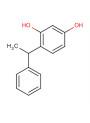
- Whitening Group: Such as Hexylresorcinol AF (water-soluble) or Phenylethyl Resorcinol (highly oil-soluble).
- Anti-age Group: Such as various peptides like Pep®-Mican or Pep®-PP4 (water-soluble).
- Acne Group: Such as Pep®-Acne (water-soluble) or Acne-TT™ (oil-soluble tea tree extract).
Adding active ingredients to a natural mask that has not undergone controlled manufacturing processes can lead to unpredictable efficacy and other potential issues.
Adding Preservatives
Masks made from fresh ingredients have a high water content, which is an ideal condition for microbial growth, causing the mask to spoil quickly. Adding a preservative can help extend the shelf life.
However, when choosing a preservative, you must consider:
- Compatibility with the Formula: Each preservative works best within a specific pH range. For example, NaturePreserve™ Ultra works well at pH 3-6, while Mild Preserved™ COS and NaturePreserve™ LB2 work well at pH 2-8 and 2.0-6.5, respectively. You must know the pH of your mask to choose a suitable preservative.
- Usage Rate: The preservative must be used at the recommended concentration to be effective in preventing microbial growth.
Even with the addition of a preservative, because it is a homemade formula that has not undergone a Challenge Test to confirm the preservative's effectiveness in that specific formula, and given the risks of contamination during preparation and storage, it is recommended to use homemade masks immediately or store them in the refrigerator and use within 1-2 days. Attempting to extend the shelf life with a preservative in an unstable and difficult-to-control formula may not yield the desired results and might not be as safe as intended.
In conclusion, while it is theoretically possible to add active ingredients and preservatives, in practice, for homemade masks made from fresh ingredients, controlling factors such as pH, ingredient compatibility, and cleanliness during preparation is challenging. This means adding these ingredients may not achieve the desired efficacy, and adding a preservative may not extend the shelf life safely and effectively compared to commercially produced products. Using fresh homemade masks immediately is generally the safest way to benefit from the nutrients in the natural ingredients.
Related Products Mentioned


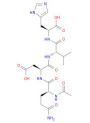
Pep®-Mican (Acetyl Tetrapeptide-9)

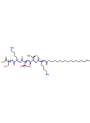
Hexylresorcinol AF (e.q. Hentowhite)