Adding Actives to Cream/Mask Bases: Solubility, Dispersion, and Day/Night Suitability
Question
For Absolue Soft Cream Base and Water Sleeping Mask Base, what is the maximum percentage of water-soluble active ingredients that can be added? Can oil-soluble active ingredients, such as Perfect C, be added directly, and if so, how? Which of these two bases is more suitable for formulating a night cream versus a day cream?
Answer
Information on Absolue Soft Cream Base and Water Sleeping Mask Base
Here is information regarding your questions about Absolue Soft Cream Base (compare to Lancome) and Water Sleeping Mask Base (compare to Laneige):
1. Adding Water-Soluble Active Ingredients
- Absolue Soft Cream Base: This base is designed to accept various active ingredients. While a specific maximum percentage for water-soluble actives is not provided, the base's recommended usage rate is 90-100%, suggesting that up to 10% of other ingredients, including water-soluble actives, can typically be added.
- Water Sleeping Mask Base: This base is also ready to accept various active ingredients in almost every form. The description indicates a usage rate of 1-100% for the base itself, implying significant flexibility for adding other ingredients. The exact percentage of water-soluble actives you can add will depend on the specific active ingredient and the desired final texture and stability of your formulation. It can generally incorporate a good amount of water-soluble ingredients.
In both cases, it's recommended to add ingredients gradually and observe the stability and texture of the final product.
2. Adding Oil-Soluble Active Ingredients Directly (like Perfect C)
- Both Absolue Soft Cream Base and Water Sleeping Mask Base are described as water-soluble bases. Adding oil-soluble active ingredients like Perfect-C (Ascorbyl Tetraisopalmitate) directly to these bases is not the standard or recommended method.
- Perfect-C is an oil-soluble Vitamin C derivative. Its description indicates it should be mixed in the oil phase or during the cream-making process (emulsification). Adding it directly to a finished water-based or primarily water-based cream base will likely result in poor dispersion, separation, or instability of the formulation.
- To incorporate oil-soluble actives into these types of bases, you would typically need a method to properly emulsify or disperse the oil-soluble ingredient within the water-based system, which might require additional ingredients or processing and could potentially alter the base's intended texture and stability.
3. Suitability for Day vs. Night Cream
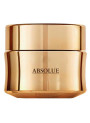
- Absolue Soft Cream Base: The description explicitly states that this base "Can coat the skin well as a night, suitable for applying before bedtime." This indicates it is primarily designed and suitable for use as a night cream.
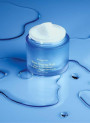
- Water Sleeping Mask Base: Similarly, the description mentions that this base "Can coat the skin well as a night / sleeping mask, suitable for applying before bed." This also points towards its suitability for use as a night cream or sleeping mask.
Based on the product descriptions, both bases are highlighted for their ability to coat the skin well and suitability for nighttime application. This suggests they are more suitable for night creams or sleeping masks, which often have richer textures and are designed for overnight repair, rather than lighter day creams which may require different properties like faster absorption or compatibility with SPF.
It is always advisable to perform small-scale tests when adding active ingredients to pre-made bases to ensure compatibility, stability, and desired performance.