Adding Actives to Skin Barrier Cream Base
Question
Can Epidermal Growth Factor (EGF), Repair Activator™ Liquid, and Salmon DNA (PDRN) be added to a Skin Barrier Cream Base, and what factors should be considered regarding mixing, usage rates, pH, and stability?
Answer
Yes, it is generally possible to add Epidermal Growth Factor (EGF) 5%, Repair Activator™ Liquid 10%, and Salmon DNA (PDRN, Polydeoxyribonucleotide, 5000ppm Solution) 10% to the Skin Barrier Cream Base.
Here are some points to consider:
- Skin Barrier Cream Base: This base is designed to restore the skin barrier and is emulsifier-free. It can be used as a base and mixed with other ingredients.
- Epidermal Growth Factor (EGF): The recommended usage rate for EGF is 1-5%. Your proposed 5% is within this range. EGF is water-soluble and should be added at the final step of your formulation, ensuring the temperature is below 40°C (ideally 25°C). For optimal stability, the final formula pH should be between 3 and 5. You should check the pH of your final mixture after adding EGF.
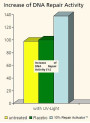
- Repair Activator™ Liquid: The recommended usage rate for Repair Activator™ (both BG and WS versions) is 5-100%. Your proposed 10% is well within this range. It is water-soluble and should be mixed in at the final step, avoiding heat.
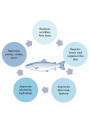
- Salmon DNA (PDRN, 5000ppm Solution): The recommended usage rate for this Salmon DNA solution is 1-20%, with 10% being the recommended concentration. Your proposed 10% is exactly the recommended rate. It is water-soluble and should be dissolved in water, avoiding heat.
Mixing: Add the EGF, Repair Activator, and Salmon DNA solutions to the Skin Barrier Cream Base at the final step, ensuring the base temperature is suitable for EGF (below 40°C). Mix thoroughly until fully incorporated.
Important: Adding a total of 25% active ingredients might affect the texture and stability of the Skin Barrier Cream Base. It is highly recommended to make a small test batch first to check for compatibility, stability (no separation), and desired texture before making a large batch. Also, verify the final pH for EGF stability.